
Residential Entry Security Solutions Compared: Smart Locks, Video Entry, and Gate Control
Choosing between smart locks, video entry, and gate control sounds simple until daily life gets involved. Security, convenience, visitor management, and failure risk rarely matter in equal ways.
That is why residential entry security solutions should be compared as systems, not gadgets. A front door lock solves one problem. A video entry panel solves another. Gate control changes the outer boundary.
In practical terms, the best setup depends on where entry risk begins, how many people use the property, and how much control you want over visitors, deliveries, and remote access.
What do residential entry security solutions actually include?
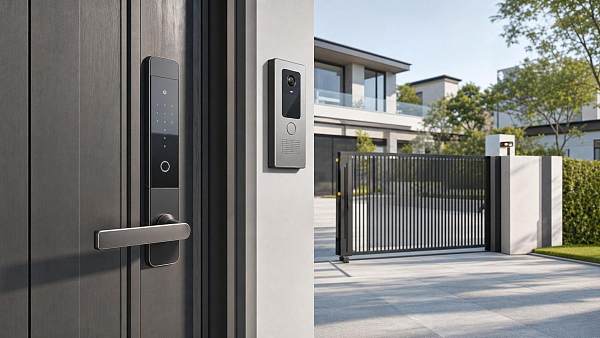
The phrase usually covers the hardware and control methods used to protect the path from outside space into private living space.
Most residential entry security solutions fall into three common layers.
- Smart locks secure the door itself and manage credentials such as PINs, fingerprints, cards, or mobile access.
- Video entry systems verify visitors before the door is opened.
- Gate control secures the property perimeter before someone even reaches the building entrance.
This layered view matters because physical security works best when delay, detection, and controlled access support each other.
Industry platforms such as SHPS often analyze these categories together for exactly that reason. Mechanical lock strength, biometric reliability, and access control logic affect one another in real use.
So when people search for residential entry security solutions, they are often asking a broader question: where should protection start, and how much intelligence should the system include?
Are smart locks enough for most homes, or do they leave gaps?
For many homes, a well-built smart lock is the most direct upgrade. It improves convenience while adding better access visibility than a standard mechanical deadbolt.
The main strength is control over credentials. Temporary PINs, audit trails, remote unlocking, and biometric access reduce key copying and simplify day-to-day entry.
But a smart lock does not see who is outside unless a camera or intercom supports it. It also cannot protect a driveway gate or shared entry route.
Another common misunderstanding is that “smart” always means “stronger.” It may not. The electronics can be advanced while the lock body, cylinder, or strike reinforcement remains average.
A better buying habit is to check four things together:
- Mechanical resistance against forced entry
- Credential security, including anti-spoofing features
- Battery backup behavior and emergency override
- App reliability, update support, and local fail-safe operation
SHPS frequently highlights this balance between mechanical structure and digital access. That is useful because a weak cylinder can cancel out a very advanced unlocking method.
When does video entry make more sense than a smarter lock?
Video entry becomes more valuable when the bigger risk is uncertain visitors rather than lost keys.
This is common in homes with frequent deliveries, service visits, shared entrances, elderly occupants, or long periods away from the property.
A video entry system adds visual verification before release. That changes the security decision from “Can someone unlock?” to “Should this person be allowed in?”
In real use, that distinction is important. Many entry incidents happen because a resident opens the door too quickly, not because a lock was defeated.
A stronger video entry setup usually includes clear night visibility, stable mobile alerts, two-way audio, event recording, and fast response without app delays.
Need a simpler comparison? The table below shows where each option usually fits best.
For apartments and single-entry homes, video entry often improves judgment more than it improves physical resistance. That is still valuable, especially when social engineering is the real concern.
Where does gate control fit into residential entry security solutions?
Gate control matters when the property has a meaningful outer boundary. Think long driveways, walled homes, multi-vehicle access, or private compounds.
Its biggest advantage is distance. It creates a controlled checkpoint before someone reaches the front door, garage, or private courtyard.
That said, gate control is not automatically the best choice. It only adds value when the perimeter is real, usable, and supported by safe hardware positioning.
The stronger residential entry security solutions at this level usually combine motor control, credential access, obstacle detection, and remote release with clear emergency behavior.
Lessons from commercial access control also apply here. SHPS often covers system logic, safety sensing, and integration quality because automation without reliable detection can create new risks.
In other words, gate control is less about replacing the door lock and more about moving your decision point farther away from the home itself.
What mistakes cause disappointment after installation?
Most disappointment comes from buying by feature count instead of by entry scenario.
A lock with fingerprint access may sound ideal, but poor weather sealing or weak mobile stability can make it annoying within weeks.
A video entry unit may offer sharp images, yet still fail if visitor notifications arrive late or audio is unclear.
Gate systems can underperform when sensors are badly placed, vehicles queue awkwardly, or manual override is difficult during power loss.
Before choosing residential entry security solutions, it helps to check these practical points:
- How many entry events happen each day?
- Do visitors need screening or only credentialed access?
- Is the concern forced entry, key misuse, tailgating, or unknown callers?
- What happens during battery drain, network outage, or mains failure?
- Can the system still work safely without the app?
These questions sound basic, but they usually reveal whether a single device will work or whether layered residential entry security solutions make more sense.
How should you decide between one device and a layered setup?
A single device is enough when entry is simple, the property line is close to the door, and the main issue is replacing keys with better control.
A layered approach is smarter when access decisions happen in stages. That may include a gate, then a path, then a lobby, then the main door.
More commonly, the right answer is not “Which product wins?” but “Which combination closes the biggest gap first?”
For many homes, that sequence looks like this:
- Upgrade the main lock if key control or access tracking is weak.
- Add video entry if visitor uncertainty is frequent.
- Add gate control only when the perimeter itself needs controlled access.
That sequence keeps spending tied to actual risk. It also matches a broader SHPS perspective: strong physical security depends on correct layering, not on one impressive specification.
If you are comparing residential entry security solutions now, start by mapping your entry path from street to interior door. Then identify where uncertainty, delay, and unauthorized access are most likely to happen.
Once that is clear, comparing smart locks, video entry, and gate control becomes much easier. You are no longer buying features. You are choosing the right control point for the way the property is actually used.
Have questions about this sector analysis, or seeking best practices specific to your niche? Drop us a line below and let the senior consultants at MHLS assist you.
We respect your privacy. Your information is strictly confidential.
Recommended News
 Physical Security System Engineering: From Risk Assessment to System DesignUnmanned Terminal FellowExplore physical security system engineering, from risk assessment to integrated design, procurement and testing. Build a safer, more resilient facility.
 Apple Home Collection Smart Lock and Other Accessories Open for Preorder November 13Biometric Auth ScientistApple Home Collection preorders open November 13, 2026. Explore the LG smart lock’s Matter and Aliro support and what buyers should verify before ordering.
 Choosing Servo-Driven Flap Barriers: Throughput, Safety and Access ControlAccess Control StrategistServo-driven flap barriers can balance throughput, safety and access control. Discover how to compare lanes, test performance and choose with confidence.
 Parcel Locker Network Pricing: Setup Costs, Fees and Contract TermsUnmanned Terminal FellowCompare parcel locker networks pricing, from setup costs and recurring fees to contract terms. Discover hidden charges and choose the right model.
 JR East Plans UWB Walk-Through Gates at 40 Stations in Spring 2028Access Control StrategistJR East plans UWB walk-through gates at 40 stations in spring 2028. Explore the rollout timeline and what suppliers should watch.
 Bank Vault Security Standards: UL and EN Ratings ExplainedVault Structural ArchitectExplore bank vault security standards and learn how UL 608 classes and EN 1143-1 grades differ, what they test, and how to verify certification before you buy.
 Mechanical Lock Hardware Prices: What Buyers Should Budget for Bulk OrdersMr. Gideon CrossMechanical lock hardware price is just the starting point. Discover what drives bulk-order costs and how to compare supplier quotes with confidence.
 IndexBox Forecasts Steady Global Security Keypad Market Growth Through 2035Dr. Valerius ThorneGlobal security keypad market growth is forecast at 3.3% annually through 2035. Explore the smart home and replacement trends shaping demand.
 Choosing an Infrared Safety Sensors Manufacturer: What Buyers Should CheckUnmanned Terminal FellowChoosing an infrared safety sensors manufacturer? Compare safety evidence, integration, environmental performance and lifecycle costs before you buy.
 Choosing a Security Material Testing Service: What to Check for Lock and Safe MaterialsProf. Elara SterlingChoose a security material testing service with confidence. Learn what to check for lock and safe materials, from attack methods and accreditation to reliable reports.
 How Precision Anti-Pick Lock Cylinders Resist ManipulationSecurity Metallurgy ExpertDiscover how precision anti-pick lock technology resists manipulation, and learn what to check when comparing security features, test evidence, and everyday reliability.
 Dermalog Joins NIST FastCAP Program for Contactless Fingerprint TestingProf. Elara SterlingDermalog joins the NIST FastCAP program for contactless fingerprint testing. Discover what this means for biometric identification and digital identity.











