
How to Evaluate Finger Vein Recognition Suppliers for Secure Access Projects
A finger vein access project can look straightforward on a procurement sheet: reader, controller, software license, installation, and support. In practice, the selection decision reaches much further. A device that performs well in a controlled demonstration may struggle at a busy employee entrance, fail to integrate cleanly with an existing access control platform, or create an unplanned dependence on a proprietary cloud service.
That is why procurement teams comparing finger vein recognition suppliers should not treat biometric accuracy as the only buying criterion. The better question is whether the supplier can deliver dependable identity verification across the full operating life of the site—during enrolment, peak traffic, poor lighting, network interruptions, software upgrades, hardware replacement, and security audits.
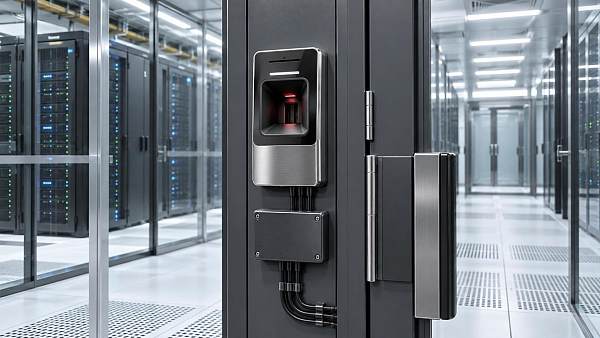
For offices, data centers, financial facilities, laboratories, government buildings, and other restricted environments, finger vein biometrics can offer a compelling combination of convenience and resistance to casual spoofing. Vein patterns are captured beneath the skin, generally using near-infrared illumination, rather than relying only on a visible surface image. But the quality of the underlying technology, implementation, integration, and support varies widely. A disciplined supplier evaluation process is essential.
Start with the access risk, not the reader specification
Before requesting quotations, define what the access point is protecting and what failure would mean. A reader installed at a staff-only office door has different requirements from a reader controlling entry to a server room, vault corridor, pharmaceutical storage area, or financial operations center.
Procurement teams should work with security, IT, facilities, and compliance stakeholders to classify each opening or lane. Consider whether the site needs one-factor biometric access, biometric verification combined with a card or PIN, anti-passback rules, time-zone restrictions, visitor controls, or a two-person access workflow. A high-security door may also require integration with door contacts, request-to-exit devices, alarms, interlocks, turnstiles, or mantrap systems.
This early exercise prevents a common purchasing mistake: selecting the same biometric terminal for every location because its unit price looks attractive. The lowest-cost reader may be acceptable for attendance logging, yet inadequate for an exterior entrance, a high-throughput turnstile, or a regulated facility where audit trails and data governance matter.
Ask suppliers to prove the biometric performance that matters
Finger vein recognition is often presented as inherently secure because the biometric characteristic is internal. That is an advantage, but it does not remove the need to examine how a system captures, processes, and matches the biometric signal. Buyers should request clear technical explanations rather than accepting broad statements about “high accuracy” or “advanced AI.”
Useful questions include:
- What capture method is used: contact, touchless, guided finger placement, or a hybrid approach?
- How does the reader handle finger rotation, inconsistent positioning, cold hands, wet skin, minor cuts, or reduced circulation?
- What false acceptance and false rejection performance can the supplier document under stated test conditions?
- Can matching thresholds be configured by application risk level, and who has permission to change them?
- How are failed attempts logged, monitored, and escalated?
- Is liveness assessment built into the sensor and algorithm, or is it only described in marketing material?
False rejection rate deserves as much attention as false acceptance rate. A reader that rarely admits the wrong person but repeatedly rejects authorized staff can create queues, workarounds, and frustration. In high-security settings, those workarounds may become a security issue of their own, especially when staff begin holding doors open for colleagues or requesting an emergency override too often.
Ask shortlisted suppliers to run a pilot using realistic users and conditions. Include people with different hand sizes, job roles, and work patterns. If the installation will serve staff coming in from rain, cold weather, production areas, or outdoor loading zones, test those conditions rather than relying on a clean showroom demonstration.
Look beyond “anti-spoofing” claims
Suppliers may describe finger vein systems as difficult to copy because veins are not easily visible. That is directionally true, but procurement should still examine the entire attack path. A secure project depends on more than whether a sensor can distinguish a live finger from a simple replica.
Review physical tamper protection, secure boot capability, encryption of communications, firmware signing, administrator authentication, and protection of biometric templates. Determine what happens if a reader is removed from a wall, a network cable is disconnected, or an attacker attempts to substitute another device. For critical openings, it may be appropriate to keep access decisions within a protected controller architecture rather than relying solely on a terminal at the door.
Template handling is another decisive area. A supplier should be able to explain whether biometric data is stored as an encrypted template, where it resides, how it is backed up, how it is deleted when a person leaves, and whether template export is possible. Raw biometric images should not be retained unless there is a clearly justified operational reason and an appropriate legal basis.
For multinational projects, ask how the system supports local privacy rules, internal data-retention policies, consent procedures where required, and subject access requests. Biometric data is sensitive personal data in many jurisdictions. A technically strong reader can still become a poor procurement decision if the supplier cannot support the organization’s privacy and governance obligations.
Integration is often where projects become expensive
Many access projects already have an installed ecosystem: door controllers, access management software, visitor systems, identity directories, elevator control, CCTV, HR databases, and building management platforms. The selected finger vein device must fit into that ecosystem without forcing an unnecessary replacement of reliable infrastructure.
When evaluating finger vein recognition suppliers, ask for an integration map rather than a generic assurance that the product is “open.” Identify the exact communication methods available, such as Wiegand, OSDP, TCP/IP, REST API, SDK, ONVIF-related workflows where relevant, or proprietary middleware. Open Supervised Device Protocol support can be particularly important where supervised, encrypted reader-controller communication is part of the security design.
Integration should be demonstrated during the proof of concept, not deferred until after a purchase order is issued. Require the supplier or system integrator to show user enrolment, credential revocation, event reporting, forced-door alarms, and recovery after network interruption within the intended environment.
Compare total cost of ownership, not just reader price
Finger vein hardware may cost more than a basic card reader, but the procurement comparison should reflect the system’s expected life and operational burden. A low upfront price can be quickly eroded by recurring platform fees, complex enrolment, high support dependence, replacement parts, or expensive integration licenses.
Build a five-year or project-life cost model that separates one-time and recurring spending. One-time items may include site survey, mounting accessories, wiring changes, controller upgrades, reader installation, software configuration, integration development, enrolment stations, training, and acceptance testing. Recurring costs may include cloud subscriptions, per-user licenses, support contracts, firmware maintenance, replacement devices, and connectivity charges.
Also ask whether biometric templates can be migrated if the organization later changes software or hardware. This is a sensitive issue: templates are not always interoperable between biometric engines, and re-enrolment may be unavoidable. A supplier that is transparent about this limitation is often more credible than one that implies seamless portability without explaining the technical conditions.
For large deployments, request tiered pricing by volume, but avoid making volume discount the sole negotiation target. Better commercial protections may include agreed spare-part availability, published support response categories, fixed pricing for additional readers over a defined period, documentation rights, and a clear process for handling discontinued products.
Assess hardware durability in the actual environment
A biometric reader is a physical security component, not merely an IT endpoint. Its enclosure, sensor window, mounting method, cable routing, relay interfaces, and power tolerance all influence reliability.
Indoor executive offices may need a discreet device with a polished user experience. Industrial sites may need resistance to dust, vibration, cleaning chemicals, gloves, or frequent shifts. Outdoor or semi-outdoor entrances require realistic assessment of temperature range, moisture exposure, sunlight, and ingress protection. For turnstiles and speed gates, installation geometry matters: users must be able to present a finger naturally without stopping the flow of people.
Request product documentation covering operating conditions, ingress ratings where applicable, expected maintenance procedures, cleaning guidance, warranty scope, and availability of replacement sensors or mounting kits. If the device includes a screen or touch interface, ask how it withstands repeated use and whether it remains usable when wearing protective equipment.
Certifications and compliance readiness should be verified, not assumed
The necessary approvals depend on country, deployment setting, and the surrounding access system. A supplier may need to provide evidence related to electrical safety, electromagnetic compatibility, radio equipment where wireless functions are used, environmental requirements, cybersecurity practices, or local data protection obligations.
Do not simply ask, “Are you certified?” Request the relevant certificates, test reports, declarations, model numbers, issuing bodies, and validity dates. Confirm that the document applies to the exact product version being quoted. If the deployment involves a protective door, turnstile, safe area, or fire-rated opening, biometric hardware compliance is only one part of a broader system review.
Measure supplier capability, not only product capability
The most capable device can still produce a weak outcome if the supplier cannot support commissioning, troubleshooting, upgrades, or spare-part planning. This is especially important for cross-border procurement, where language, time zones, customs processes, and local installation capability can turn a small fault into a prolonged access problem.
Evaluate the supplier’s technical team with practical questions. Who provides second-line support? Is remote diagnostics available? How are firmware vulnerabilities communicated and patched? Can the supplier train local integrators? What is the escalation path for a critical access outage? Are installation manuals, wiring diagrams, API documents, and configuration guides available before contract award?
References can be helpful, but they should be relevant. A successful small-office deployment does not automatically validate a supplier for a multi-site financial institution or data center. Seek evidence of experience in comparable environments, while respecting customer confidentiality.
A practical shortlist and pilot process
For most procurement teams, a staged decision is safer than attempting to choose from brochures alone. Begin with a requirements document that distinguishes mandatory conditions from desirable features. Shortlist suppliers based on technical fit, commercial transparency, integration readiness, and support reach. Then conduct a structured pilot with pre-agreed acceptance criteria.
Those criteria should cover successful enrolment, recognition speed, user acceptance, failed-read handling, door release logic, event logging, offline behavior, security administration, and integration with the chosen platform. Record exceptions rather than dismissing them as minor demonstrations issues. A pilot is valuable precisely because it reveals the friction that specification sheets cannot show.
The right finger vein solution is not necessarily the one with the longest feature list. It is the one that gives the organization a clear security model, acceptable user experience, manageable lifecycle cost, and a supplier relationship that remains workable after installation day. By assessing biometric performance, data protection, integration, durability, compliance evidence, and support as one connected decision, buyers can select a system that protects restricted spaces without creating unnecessary operational risk.
Have questions about this sector analysis, or seeking best practices specific to your niche? Drop us a line below and let the senior consultants at MHLS assist you.
We respect your privacy. Your information is strictly confidential.
Recommended News
 Physical Security Infrastructure Cost: Budgeting for Installation and MaintenanceUnmanned Terminal FellowUnderstand physical security infrastructure cost and build a smarter budget for installation, maintenance, and long-term ownership.
 Financial Facility Security: Choosing Vault Doors for Bank BranchesVault Structural ArchitectStrengthen financial facility security with the right bank vault door. Explore certification, installation, locking controls and maintenance before you buy.
 MACO Acquires Majority Stake in Fingerprint Access Provider ekeyProf. Elara SterlingMACO acquires a majority stake in ekey, bringing fingerprint access and door hardware closer together. Discover what the deal could mean for smart buildings.
 Physical Security System Engineering: From Risk Assessment to System DesignUnmanned Terminal FellowExplore physical security system engineering, from risk assessment to integrated design, procurement and testing. Build a safer, more resilient facility.
 Apple Home Collection Smart Lock and Other Accessories Open for Preorder November 13Biometric Auth ScientistApple Home Collection preorders open November 13, 2026. Explore the LG smart lock’s Matter and Aliro support and what buyers should verify before ordering.
 Choosing Servo-Driven Flap Barriers: Throughput, Safety and Access ControlAccess Control StrategistServo-driven flap barriers can balance throughput, safety and access control. Discover how to compare lanes, test performance and choose with confidence.
 Parcel Locker Network Pricing: Setup Costs, Fees and Contract TermsUnmanned Terminal FellowCompare parcel locker networks pricing, from setup costs and recurring fees to contract terms. Discover hidden charges and choose the right model.
 JR East Plans UWB Walk-Through Gates at 40 Stations in Spring 2028Access Control StrategistJR East plans UWB walk-through gates at 40 stations in spring 2028. Explore the rollout timeline and what suppliers should watch.
 Bank Vault Security Standards: UL and EN Ratings ExplainedVault Structural ArchitectExplore bank vault security standards and learn how UL 608 classes and EN 1143-1 grades differ, what they test, and how to verify certification before you buy.
 Mechanical Lock Hardware Prices: What Buyers Should Budget for Bulk OrdersMr. Gideon CrossMechanical lock hardware price is just the starting point. Discover what drives bulk-order costs and how to compare supplier quotes with confidence.
 IndexBox Forecasts Steady Global Security Keypad Market Growth Through 2035Dr. Valerius ThorneGlobal security keypad market growth is forecast at 3.3% annually through 2035. Explore the smart home and replacement trends shaping demand.
 Choosing an Infrared Safety Sensors Manufacturer: What Buyers Should CheckUnmanned Terminal FellowChoosing an infrared safety sensors manufacturer? Compare safety evidence, integration, environmental performance and lifecycle costs before you buy.











