How to Evaluate a Finger Vein Recognition Supplier for Secure Access Projects
Choosing a finger vein recognition supplier for a secure access project is rarely a simple hardware decision. It affects spoofing resistance, system uptime, user acceptance, integration cost, and the long-term credibility of the entire access control design.
That matters across the wider physical security market. In offices, financial facilities, logistics sites, data rooms, and restricted industrial areas, biometric access is now judged by operational evidence, not by marketing claims.
A strong evaluation process should test whether a finger vein recognition supplier can deliver reliable imaging, robust algorithms, stable devices, and practical deployment support. In platforms such as SHPS, this topic sits naturally beside smart locks, turnstiles, protective doors, and integrated access infrastructure.
Why finger vein recognition is receiving closer attention
Finger vein recognition uses near-infrared imaging to capture vein patterns beneath the skin. Because the feature is internal, it is generally harder to copy than surface fingerprints.
This does not mean every solution performs equally well. The real difference between one finger vein recognition supplier and another appears in image consistency, liveness capability, matching speed, and field stability.
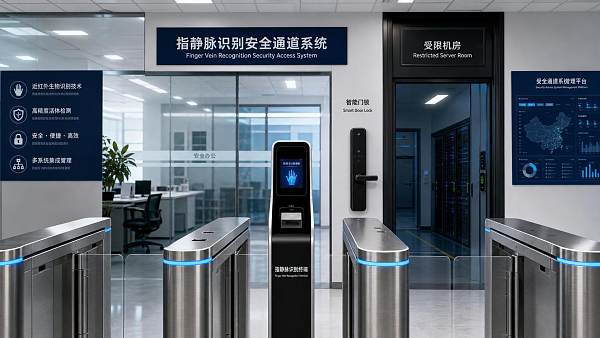
Interest is also rising because access projects are becoming more layered. A biometric reader may now work with speed gates, smart locks, anti-tailgating systems, visitor software, and cloud-based audit platforms.
As a result, the supplier is no longer judged only by a sensor module. It is judged by how well the full solution fits a physical security environment.
What a capable supplier should really provide
A credible finger vein recognition supplier should provide more than a biometric claim sheet. The value lies in measurable technical performance and predictable project support.
In practice, evaluation usually starts with four layers: sensor quality, algorithm quality, hardware engineering, and integration readiness. Weakness in any one layer can undermine the whole deployment.
Sensor and imaging quality
The sensor must capture stable vein images across different skin conditions, finger sizes, placement habits, and ambient light conditions. Poor imaging creates false rejects long before algorithm tuning can help.
It is worth checking how the reader handles dry skin, cold fingers, minor rotation, and partial misalignment. These are common field realities, not edge cases.
Algorithm and liveness capability
Matching accuracy should be reviewed using clear metrics, including FAR, FRR, and performance under different enrollment conditions. Numbers without test context are not very useful.
More important, ask how the supplier verifies liveness. A serious finger vein recognition supplier should explain how the system distinguishes real vascular patterns from presentation attacks or replay attempts.
Device reliability and lifecycle support
Access hardware often works in high-frequency environments. Readers at turnstiles, secure doors, or staff entrances must withstand repeated daily use without unstable capture performance.
That means enclosure durability, optical stability, firmware update control, and replacement policy all matter. A good biometric engine with weak hardware support still creates project risk.
How supplier evaluation changes by application scenario
The best finger vein recognition supplier for one project may not be the best fit for another. Evaluation standards should reflect traffic volume, security level, and integration complexity.
This is why evaluation should begin with the security workflow, not with the product brochure. The supplier must fit the site logic as well as the biometric requirement.
Technical questions that reveal supplier quality
A useful assessment often depends on the questions asked. Strong suppliers usually answer with data, test methods, and deployment examples rather than broad claims.
- What capture success rate is achieved on first attempt under normal site conditions?
- How are FAR and FRR measured, and under what enrollment sample size?
- What anti-spoofing or liveness methods are built into the device and software stack?
- How are biometric templates stored, encrypted, and transmitted?
- Which protocols, SDKs, or APIs are available for access controllers, gates, and smart locks?
- What is the firmware maintenance process, and how are security patches managed?
- What installation guidance exists for lane width, reader height, hand positioning, and user flow?
These questions help separate a general biometric vendor from a finger vein recognition supplier with real secure access experience.
Integration matters as much as biometric accuracy
In many projects, the reader is only one node in a wider security system. It may connect to door controllers, elevator permissions, alarm logic, visitor databases, or time-based access rules.
That is why SHPS often frames biometrics within a larger physical security context. A reader that performs well in isolation may still create bottlenecks if it integrates poorly with turnstiles, lockers, or smart building platforms.
A dependable finger vein recognition supplier should offer practical documentation, response mapping, SDK support, and integration references. The goal is smooth operation, not only a successful demo.
Points often missed during integration review
- Latency between successful authentication and door or gate release
- Fallback modes during network interruption or controller failure
- User enrollment workflow across multiple devices or locations
- Event log compatibility with compliance and investigation needs
Compliance, privacy, and proof of readiness
Biometric evaluation now extends beyond recognition performance. Buyers increasingly look for evidence of data handling discipline, product testing, and export readiness.
A qualified finger vein recognition supplier should explain device certifications, electrical safety compliance, biometric data protection measures, and regional deployment limitations where relevant.
It also helps to ask for case evidence. That may include installed references, failure reports, maintenance intervals, and examples of integration with secure doors, safes, access platforms, or speed gates.
Usually, the most convincing proof is operational consistency over time. A supplier with mature deployment history tends to speak clearly about failure modes as well as success cases.
A practical way to compare suppliers
A structured comparison prevents decisions from being driven by headline accuracy numbers alone. It also makes internal review easier when multiple stakeholders are involved.
- Define the threat model, user volume, and environmental constraints first.
- Shortlist each finger vein recognition supplier against integration and compliance requirements.
- Run a pilot using realistic enrollment conditions and normal user behavior.
- Score performance across capture quality, false rejects, latency, and maintenance burden.
- Review support responsiveness, firmware policy, and spare part availability.
This approach turns supplier selection into a risk-control exercise rather than a feature comparison exercise.
What to do next
The right finger vein recognition supplier is the one that proves fit across security level, user flow, hardware reliability, and integration depth. Accuracy claims matter, but field performance matters more.
The most useful next step is to build a supplier checklist based on real deployment conditions. That usually includes imaging tests, liveness validation, API review, compliance evidence, and pilot-based scoring.
When evaluated in that wider SHPS-style framework of smart hardware and physical security systems, supplier choice becomes clearer. The decision then supports not only access control, but the resilience of the entire protected environment.
Have questions about this sector analysis, or seeking best practices specific to your niche? Drop us a line below and let the senior consultants at MHLS assist you.
We respect your privacy. Your information is strictly confidential.
Recommended News
 Physical Security System Engineering: From Risk Assessment to System DesignUnmanned Terminal FellowExplore physical security system engineering, from risk assessment to integrated design, procurement and testing. Build a safer, more resilient facility.
 Apple Home Collection Smart Lock and Other Accessories Open for Preorder November 13Biometric Auth ScientistApple Home Collection preorders open November 13, 2026. Explore the LG smart lock’s Matter and Aliro support and what buyers should verify before ordering.
 Choosing Servo-Driven Flap Barriers: Throughput, Safety and Access ControlAccess Control StrategistServo-driven flap barriers can balance throughput, safety and access control. Discover how to compare lanes, test performance and choose with confidence.
 Parcel Locker Network Pricing: Setup Costs, Fees and Contract TermsUnmanned Terminal FellowCompare parcel locker networks pricing, from setup costs and recurring fees to contract terms. Discover hidden charges and choose the right model.
 JR East Plans UWB Walk-Through Gates at 40 Stations in Spring 2028Access Control StrategistJR East plans UWB walk-through gates at 40 stations in spring 2028. Explore the rollout timeline and what suppliers should watch.
 Bank Vault Security Standards: UL and EN Ratings ExplainedVault Structural ArchitectExplore bank vault security standards and learn how UL 608 classes and EN 1143-1 grades differ, what they test, and how to verify certification before you buy.
 Mechanical Lock Hardware Prices: What Buyers Should Budget for Bulk OrdersMr. Gideon CrossMechanical lock hardware price is just the starting point. Discover what drives bulk-order costs and how to compare supplier quotes with confidence.
 IndexBox Forecasts Steady Global Security Keypad Market Growth Through 2035Dr. Valerius ThorneGlobal security keypad market growth is forecast at 3.3% annually through 2035. Explore the smart home and replacement trends shaping demand.
 Choosing an Infrared Safety Sensors Manufacturer: What Buyers Should CheckUnmanned Terminal FellowChoosing an infrared safety sensors manufacturer? Compare safety evidence, integration, environmental performance and lifecycle costs before you buy.
 Choosing a Security Material Testing Service: What to Check for Lock and Safe MaterialsProf. Elara SterlingChoose a security material testing service with confidence. Learn what to check for lock and safe materials, from attack methods and accreditation to reliable reports.
 How Precision Anti-Pick Lock Cylinders Resist ManipulationSecurity Metallurgy ExpertDiscover how precision anti-pick lock technology resists manipulation, and learn what to check when comparing security features, test evidence, and everyday reliability.
 Dermalog Joins NIST FastCAP Program for Contactless Fingerprint TestingProf. Elara SterlingDermalog joins the NIST FastCAP program for contactless fingerprint testing. Discover what this means for biometric identification and digital identity.