
SASO Adds Class 3 Liveness Test for Finger Vein Locks
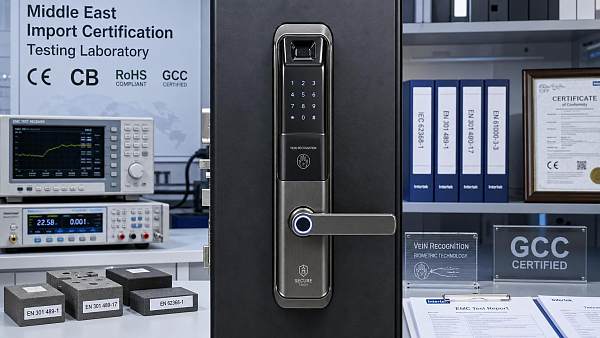
On July 10, 2026, Saudi Arabia's SASO notified GCC member states of an immediate supplemental certification requirement for imported finger vein locks. In addition to the existing ISO/IEC 19795-2 testing requirement, these products must now also pass ISO/IEC 30107-3:2026 Class 3 liveness attack testing. With no transition period and with goods already shipped also subject to supplementary testing or return, this development deserves close attention from manufacturers, exporters, importers, certification teams, and supply chain operators involved in biometric lock products headed to the Middle East.
What the New Requirement Confirms
According to the information provided, SASO informed GCC member states on July 10, 2026 that finger vein locks are now subject to an urgent additional certification requirement. The original ISO/IEC 19795-2 testing requirement remains in place, but it is no longer sufficient on its own for this product category.
The added requirement is ISO/IEC 30107-3:2026 Class 3 liveness attack testing. The stated attack scenarios include 3D-printed silicone fake fingers, infrared thermal simulation, and multispectral replay attacks.
The rule takes effect immediately. There is no transition period. Products that have already been shipped must also complete the supplementary testing; otherwise, they face return shipment.
Where the Immediate Pressure May Appear
Export and import decisions are affected first
From an industry perspective, traders and direct import-export operators may face the fastest operational impact because the requirement applies immediately and also reaches goods already in transit or already shipped. The main pressure points are shipment readiness, clearance risk, and document completeness. What deserves closer attention is whether existing certification files for finger vein locks only cover ISO/IEC 19795-2 and therefore fall short under the new condition.
Manufacturing and product compliance teams face a narrower pass path
For manufacturers and internal compliance teams, the impact is likely to center on testing arrangements, product validation, and certification scheduling. Analysis shows that the newly specified Class 3 liveness attacks are not a procedural add-on in name only; they define concrete attack methods that must be addressed in testing. That means product teams need to pay attention to whether current models, technical files, and test preparation are aligned with the added requirement rather than assuming prior test history is enough.
Supply chain and delivery management may see timing disruptions
Supply chain service providers, logistics coordinators, and delivery planners may be affected through revised timelines and shipment handling decisions. Because already shipped goods must also be supplemented with testing or face return, the key business links under pressure are handover timing, customer delivery expectations, and contingency planning for goods that may not move forward under the original schedule.
Procurement and downstream project users may need to reassess acceptance timing
For buyers, distributors, and downstream application-side users, the practical impact may appear in procurement confirmation, delivery commitments, and acceptance planning. Observably, the core issue is less about product interest and more about whether a finger vein lock can still be delivered and accepted under the new certification condition without delay or additional documentation steps.
What Companies Should Watch Now
Separate confirmed rules from possible later interpretation
The confirmed facts are clear: SASO has added ISO/IEC 30107-3:2026 Class 3 liveness attack testing for finger vein locks, the change is immediate, and shipped goods are not exempt. What deserves closer attention is whether any later official wording, implementation detail, or document practice further clarifies how the requirement is applied in real cases. Companies should avoid treating possible future clarification as if it already exists.
Review every in-scope shipment, including goods already dispatched
The absence of a transition period makes shipment review an immediate practical task. Analysis shows that the highest-risk point is not only future exports but also goods that have already left origin. Enterprises should focus on identifying which shipments involve finger vein locks, what testing records are currently held, and whether supplementary testing preparation is already needed to avoid return risk.
Recheck test files against the newly named attack scenarios
The event summary explicitly names 3D-printed silicone fake fingers, infrared thermal simulation, and multispectral replay attacks. For companies handling certification and product files, this means attention should be placed on whether existing test documentation and coordination with testing parties actually address the newly required Class 3 liveness attack scope, rather than relying on older compliance assumptions.
Prepare customer and partner communication around lead time and compliance status
For sales teams, project coordinators, and channel partners, the practical issue is communication discipline. Because the rule applies immediately and can affect already shipped goods, contract performance timing, expected arrival schedules, and compliance representations may all need to be reviewed carefully. The priority is to communicate what is confirmed, what is pending, and what documentation is being updated.
Why This Looks Like More Than a Routine Test Update
Analysis shows that this development should not be read as a simple extension of an existing filing checklist. The combination of an immediate effective date, no transition period, and application to goods already shipped suggests a stricter compliance posture around imported finger vein locks. At the same time, it is more appropriate to understand this as a clear regulatory signal within the scope of the provided information, not as a basis for broader conclusions beyond this product category or beyond the stated SASO notice.
Observably, the most important industry takeaway for now is execution risk. The issue is not only whether the new requirement exists, but how quickly companies can realign testing, documentation, shipment review, and customer communication under an immediate rule change.
How the Industry Should Read This at This Stage
At this stage, the update is best understood as an immediate compliance change with direct operational consequences for finger vein lock trade into the relevant market. It also carries a longer-view signal that liveness attack resistance is being treated as a concrete certification threshold, not merely a technical talking point. Still, based on the information provided, a measured reading is necessary: the confirmed result is the added testing requirement and its immediate enforcement, while broader market effects still need continued observation.
Basis of This Article and What Still Needs Verification
This article is based on the user-provided news title, event date, and event summary. It is written from those inputs only and does not add unverified data, market figures, company names, or external policy details.
For this type of development, source categories typically worth checking include official notices, corporate announcements, industry association updates, authoritative media reporting, and standard-related documents. However, a specific official source link was not provided in the input, so the exact official publication path still requires ongoing verification.
Areas that merit continued follow-up include any later official wording on implementation practice, document handling, and the practical application of the supplementary testing requirement to affected shipments.
Have questions about this sector analysis, or seeking best practices specific to your niche? Drop us a line below and let the senior consultants at MHLS assist you.
We respect your privacy. Your information is strictly confidential.
Recommended News
 Physical Security System Engineering: From Risk Assessment to System DesignUnmanned Terminal FellowExplore physical security system engineering, from risk assessment to integrated design, procurement and testing. Build a safer, more resilient facility.
 Apple Home Collection Smart Lock and Other Accessories Open for Preorder November 13Biometric Auth ScientistApple Home Collection preorders open November 13, 2026. Explore the LG smart lock’s Matter and Aliro support and what buyers should verify before ordering.
 Choosing Servo-Driven Flap Barriers: Throughput, Safety and Access ControlAccess Control StrategistServo-driven flap barriers can balance throughput, safety and access control. Discover how to compare lanes, test performance and choose with confidence.
 Parcel Locker Network Pricing: Setup Costs, Fees and Contract TermsUnmanned Terminal FellowCompare parcel locker networks pricing, from setup costs and recurring fees to contract terms. Discover hidden charges and choose the right model.
 JR East Plans UWB Walk-Through Gates at 40 Stations in Spring 2028Access Control StrategistJR East plans UWB walk-through gates at 40 stations in spring 2028. Explore the rollout timeline and what suppliers should watch.
 Bank Vault Security Standards: UL and EN Ratings ExplainedVault Structural ArchitectExplore bank vault security standards and learn how UL 608 classes and EN 1143-1 grades differ, what they test, and how to verify certification before you buy.
 Mechanical Lock Hardware Prices: What Buyers Should Budget for Bulk OrdersMr. Gideon CrossMechanical lock hardware price is just the starting point. Discover what drives bulk-order costs and how to compare supplier quotes with confidence.
 IndexBox Forecasts Steady Global Security Keypad Market Growth Through 2035Dr. Valerius ThorneGlobal security keypad market growth is forecast at 3.3% annually through 2035. Explore the smart home and replacement trends shaping demand.
 Choosing an Infrared Safety Sensors Manufacturer: What Buyers Should CheckUnmanned Terminal FellowChoosing an infrared safety sensors manufacturer? Compare safety evidence, integration, environmental performance and lifecycle costs before you buy.
 Choosing a Security Material Testing Service: What to Check for Lock and Safe MaterialsProf. Elara SterlingChoose a security material testing service with confidence. Learn what to check for lock and safe materials, from attack methods and accreditation to reliable reports.
 How Precision Anti-Pick Lock Cylinders Resist ManipulationSecurity Metallurgy ExpertDiscover how precision anti-pick lock technology resists manipulation, and learn what to check when comparing security features, test evidence, and everyday reliability.
 Dermalog Joins NIST FastCAP Program for Contactless Fingerprint TestingProf. Elara SterlingDermalog joins the NIST FastCAP program for contactless fingerprint testing. Discover what this means for biometric identification and digital identity.











