
Saudi NaID Upgrade Sets 2026 Deadline for Vein Lock Encryption
On July 1, 2026, SASO announced an upgrade to the NaID national identity authentication platform to V3.2, introducing a concrete compliance change for finger vein locks used in government, financial, and healthcare sites. The update matters not only as a technical interface requirement, but as a certification and market-access condition: affected devices must complete end-to-end biometric encryption protocol integration under BEEP v2.1 and pass localized validation by a SASO-authorized laboratory before December 31, 2026, or they will not obtain SASO CoC certification. For manufacturers, exporters, buyers, certification teams, and delivery planners, this shifts attention from product function alone to integration readiness, test arrangements, and documentation timing.
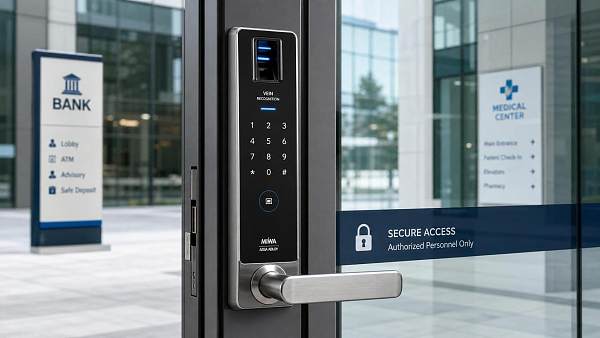
What the SASO announcement confirms
The confirmed facts are limited but commercially significant. SASO stated on July 1, 2026 that the NaID national identity authentication platform was upgraded to version V3.2. Under this change, all finger vein locks connected to government, financial, and healthcare premises must complete integration with the end-to-end biometric encryption transmission protocol BEEP v2.1 by December 31, 2026. The same devices must also pass localized validation through a SASO-authorized laboratory. Devices that do not complete this process in time will be unable to obtain SASO CoC certification.
Where the pressure is likely to appear first
Product and system suppliers face a narrower compliance path
From an industry perspective, suppliers of finger vein access control equipment are the most directly exposed because the announced change links protocol integration and local validation to certification eligibility. The practical effect is likely to fall on firmware or software alignment, technical file preparation, test scheduling, and coordination between device teams and any integration counterpart involved in NaID connectivity. What deserves closer attention is that certification risk now appears tied to both technical conformity and validation readiness, not only to hardware shipment.
Export and channel operations may need to reassess delivery timing
For exporters and channel partners serving the relevant application scenarios, the impact is likely to show up in order confirmation, shipment planning, and project delivery commitments. If a product has not completed the required BEEP v2.1 integration or localized validation, the inability to obtain SASO CoC certification may affect whether the product can move forward in the target market. Analysis shows that teams handling quotations, tenders, and shipment windows should pay closer attention to certification status, technical declarations, and whether a device is intended for government, financial, or healthcare deployment.
Procurement and project owners may tighten specification checks
Buyers, project integrators, and end-user procurement functions may also feel the effect because the rule change gives them a clearer basis for reviewing supplier eligibility. Observably, this could influence how technical specifications, bid documents, and supplier qualification reviews are written or interpreted. The main operational concern is whether the proposed equipment can demonstrate compatibility with the announced protocol requirement and progress toward SASO-authorized local validation before the deadline.
Testing and certification service participants may see earlier engagement
Certification support teams and testing-related service providers are likely to be drawn into the process earlier, since localized validation is expressly required. Analysis shows that documentation completeness, test coordination, and sequencing between integration work and laboratory verification may become more important in the months leading up to the deadline. This is not yet evidence of a broader market bottleneck, but it is a clear signal that compliance work may need to start well before final delivery.
What companies should review now
Check whether the affected device scope applies to current projects
Companies should first separate general biometric access products from finger vein locks intended for government, financial, and healthcare locations covered by the announced requirement. This matters because the compliance consequence described by SASO is specific: failure to complete integration and localized validation in time means the device cannot obtain SASO CoC certification.
Revisit technical files and certification preparation
What deserves closer attention is whether current technical documents, interface descriptions, test materials, and certification files are sufficient to support BEEP v2.1 integration and local laboratory validation. The input does not provide detailed execution rules, so it would be premature to treat any single document set as definitively sufficient. Still, companies have reason to review whether their existing compliance package can support the announced path.
Adjust procurement and delivery assumptions around the deadline
Analysis shows that the December 31, 2026 deadline should be treated as a planning constraint for affected projects. For supply chain and commercial teams, this may influence procurement timing, supplier selection, delivery commitments, and after-sales preparation. In practice, contracts and project schedules may need to reflect the possibility that certification progress, laboratory validation, and technical integration timing all become gating items.
Monitor execution language beyond the headline requirement
The announcement establishes a clear direction, but the input does not include fuller detail on implementation language, supporting documentation standards, or how the requirement may appear in future tender or compliance materials. It is more appropriate to understand this as a rule change with direct certification consequences, while continuing to monitor how the requirement is expressed in operational practice.
Why this looks like an execution signal, not just a technical update
Observably, this development is more than a platform version update because the requirement is tied to SASO CoC certification. That connection gives the announcement immediate relevance for market access, project qualification, and delivery planning in the affected application sectors. At the same time, analysis shows that the market still needs to watch how the rule is implemented in certification workflows, laboratory validation practice, and procurement documentation. In that sense, the change already carries practical compliance weight, but some parts of the execution path still require close observation rather than assumption.
How this update is best understood at this stage
The industry significance of this announcement lies in its combination of a technical protocol requirement, a fixed compliance deadline, and a direct certification consequence. For affected finger vein lock products, this is better understood as an active compliance and market-entry signal rather than a background policy development. A cautious reading remains necessary: the core obligation is clear from the provided information, while the detailed execution rhythm, documentation expectations, and market response still need to be tracked through subsequent implementation.
Basis of this article and points that still require verification
This article is generated from the user-provided news title, event date, and event summary. For events of this type, relevant source categories typically include official announcements, regulator publications, trade or customs authority information, industry association notices, standards organization materials, and reporting by authoritative media. No specific official source link was provided in the input, so the exact official publication link remains to be verified. Further observation is still needed on detailed implementation language, certification interpretation, tender-document changes, industry feedback, and how affected companies complete execution before the stated deadline.
Have questions about this sector analysis, or seeking best practices specific to your niche? Drop us a line below and let the senior consultants at MHLS assist you.
We respect your privacy. Your information is strictly confidential.
Recommended News
 Physical Security System Engineering: From Risk Assessment to System DesignUnmanned Terminal FellowExplore physical security system engineering, from risk assessment to integrated design, procurement and testing. Build a safer, more resilient facility.
 Apple Home Collection Smart Lock and Other Accessories Open for Preorder November 13Biometric Auth ScientistApple Home Collection preorders open November 13, 2026. Explore the LG smart lock’s Matter and Aliro support and what buyers should verify before ordering.
 Choosing Servo-Driven Flap Barriers: Throughput, Safety and Access ControlAccess Control StrategistServo-driven flap barriers can balance throughput, safety and access control. Discover how to compare lanes, test performance and choose with confidence.
 Parcel Locker Network Pricing: Setup Costs, Fees and Contract TermsUnmanned Terminal FellowCompare parcel locker networks pricing, from setup costs and recurring fees to contract terms. Discover hidden charges and choose the right model.
 JR East Plans UWB Walk-Through Gates at 40 Stations in Spring 2028Access Control StrategistJR East plans UWB walk-through gates at 40 stations in spring 2028. Explore the rollout timeline and what suppliers should watch.
 Bank Vault Security Standards: UL and EN Ratings ExplainedVault Structural ArchitectExplore bank vault security standards and learn how UL 608 classes and EN 1143-1 grades differ, what they test, and how to verify certification before you buy.
 Mechanical Lock Hardware Prices: What Buyers Should Budget for Bulk OrdersMr. Gideon CrossMechanical lock hardware price is just the starting point. Discover what drives bulk-order costs and how to compare supplier quotes with confidence.
 IndexBox Forecasts Steady Global Security Keypad Market Growth Through 2035Dr. Valerius ThorneGlobal security keypad market growth is forecast at 3.3% annually through 2035. Explore the smart home and replacement trends shaping demand.
 Choosing an Infrared Safety Sensors Manufacturer: What Buyers Should CheckUnmanned Terminal FellowChoosing an infrared safety sensors manufacturer? Compare safety evidence, integration, environmental performance and lifecycle costs before you buy.
 Choosing a Security Material Testing Service: What to Check for Lock and Safe MaterialsProf. Elara SterlingChoose a security material testing service with confidence. Learn what to check for lock and safe materials, from attack methods and accreditation to reliable reports.
 How Precision Anti-Pick Lock Cylinders Resist ManipulationSecurity Metallurgy ExpertDiscover how precision anti-pick lock technology resists manipulation, and learn what to check when comparing security features, test evidence, and everyday reliability.
 Dermalog Joins NIST FastCAP Program for Contactless Fingerprint TestingProf. Elara SterlingDermalog joins the NIST FastCAP program for contactless fingerprint testing. Discover what this means for biometric identification and digital identity.











