
China Customs Ties Smart Lock Exports to FCC/CE IDs
From June 24, 2026, China Customs has begun applying a new export traceability requirement to selected smart lock products through the Single Window system, bringing Networked Hotel Locks and Finger Vein Locks into a tighter documentation chain. For exporters, manufacturers, compliance teams, and overseas project buyers, the update matters because certificate identifiers and production-batch QR codes now become part of customs declaration consistency, with any missing or mismatched information likely to affect inspection time and delivery reliability.
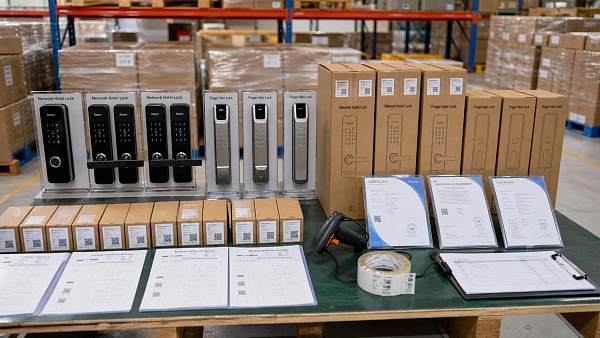
What the new customs requirement changes
According to the information provided, the General Administration of Customs of China launched a smart hardware export traceability module in the Single Window system at 00:00 on June 24, 2026. The first group of covered products includes high-security electronic locks such as Networked Hotel Locks and Finger Vein Locks.
When filing export declarations for these products, companies must upload an FCC ID or a CE DoC number and link that information to a production-batch QR code. If the traceability binding is missing or if the declared information does not match, the shipment will trigger automated inspection control, and the average inspection cycle will be extended to 72 hours.
The provided event summary also states that this is already having a notable effect on delivery stability for hotel lock projects in Europe, the United States, and the Middle East.
Where the operational pressure is likely to appear
Export declarations now depend more heavily on document consistency
From an industry perspective, direct trading companies are likely to feel the change first at the customs filing stage. The practical issue is not only whether a shipment has certification documents, but whether the FCC ID or CE DoC number submitted in the system is correctly tied to the corresponding production-batch QR code. What deserves closer attention is that an inconsistency now appears to carry a direct customs-timing consequence rather than remaining only a back-office compliance issue.
Manufacturing and packaging workflows face tighter traceability demands
Analysis shows that manufacturers of covered lock categories may be affected most in batch control and outbound preparation. Because the export declaration must connect certificate identifiers with batch-level QR information, any gap between production records, packaging labels, and export paperwork could increase the chance of automated inspection control. The operational impact is therefore likely to show up before goods leave the factory, not only after customs submission.
Project delivery teams may need to absorb longer timing buffers
For suppliers serving hotel projects in Europe, the United States, and the Middle East, the stated average extension of inspection time to 72 hours matters because project-based lock deliveries often depend on installation schedules and phased site handovers. Observably, even a short customs delay can create knock-on pressure in shipping coordination, receiving arrangements, and customer-side delivery commitments.
Supply chain service providers will need cleaner handoff data
Freight forwarders, customs brokers, and related service partners may also be affected because declaration accuracy now depends on data passed from factories and exporters. The point to watch is whether service providers receive complete certificate numbers and correct batch QR references early enough to avoid last-minute filing errors.
What companies should check now
Confirm which shipments fall within the first covered categories
Companies should first verify whether current or near-term export orders involve Networked Hotel Locks, Finger Vein Locks, or other high-security electronic locks that may already be included in the first rollout. In practical terms, shipment screening becomes important before booking and declaration preparation begin.
Recheck how certificate numbers connect to batch QR records
What deserves closer attention is the internal link between compliance documents and production data. Businesses handling affected products should review whether FCC ID or CE DoC information is recorded in a way that can be matched reliably to each production batch QR code used for export.
Separate policy wording from day-to-day execution risk
Analysis shows that the policy signal and the operational burden are related but not identical. The rule itself concerns traceability submission and consistency, while the business risk appears in delayed inspection and delivery instability. Companies should therefore focus not only on whether documents exist, but on whether the declaration workflow can produce consistent data every time.
Prepare customer communication around lead-time variability
For teams serving overseas hotel projects, it is more appropriate to treat customs timing as a variable that now needs earlier communication. Where shipments are time-sensitive, sales, project, and logistics teams may need to build contingency language into delivery planning and customer updates.
Why this looks like more than a one-off filing tweak
As an editorial observation, this update is better understood as a stronger traceability signal rather than a routine formality change. The confirmed facts do not show how broadly the module will expand beyond the first covered products, but they do indicate that customs is linking export declarations more closely to certification identifiers and batch-level traceability for high-security smart lock categories.
Observably, the immediate issue is short-term execution risk: companies can face longer inspections if information is missing or inconsistent. At the same time, the structure of the requirement suggests a longer-term compliance direction worth monitoring, especially for exporters whose products already rely on certification-based market access in Europe, the United States, and the Middle East.
How this update is best understood at this stage
At this stage, it is more appropriate to understand the development as both an immediate operational change and an ongoing industry signal. The immediate change is clear: certain smart lock exports now require certificate-number and batch-QR linkage in customs filing, and mismatches can extend inspection time. The broader implication still needs continued observation, particularly in how consistently the rule is enforced across shipments and whether coverage expands to additional smart hardware categories.
Basis of this article and what still needs verification
This article is based on the user-provided news title, event date, and event summary. For this type of industry update, relevant source categories would typically include official customs notices, company statements, industry association updates, authoritative media coverage, and standards or compliance-related documentation.
No specific official source link was provided in the input, so the underlying official wording and any follow-up implementation details still need ongoing verification. The next points worth tracking are whether customs issues more detailed operating guidance, whether the first covered product scope changes, and whether additional declaration or traceability requirements are clarified in later updates.
Have questions about this sector analysis, or seeking best practices specific to your niche? Drop us a line below and let the senior consultants at MHLS assist you.
We respect your privacy. Your information is strictly confidential.
Recommended News
 Parcel Locker Network Pricing: Setup Costs, Fees and Contract TermsUnmanned Terminal FellowCompare parcel locker networks pricing, from setup costs and recurring fees to contract terms. Discover hidden charges and choose the right model.
 JR East Plans UWB Walk-Through Gates at 40 Stations in Spring 2028Access Control StrategistJR East plans UWB walk-through gates at 40 stations in spring 2028. Explore the rollout timeline and what suppliers should watch.
 Bank Vault Security Standards: UL and EN Ratings ExplainedVault Structural ArchitectExplore bank vault security standards and learn how UL 608 classes and EN 1143-1 grades differ, what they test, and how to verify certification before you buy.
 Mechanical Lock Hardware Prices: What Buyers Should Budget for Bulk OrdersMr. Gideon CrossMechanical lock hardware price is just the starting point. Discover what drives bulk-order costs and how to compare supplier quotes with confidence.
 IndexBox Forecasts Steady Global Security Keypad Market Growth Through 2035Dr. Valerius ThorneGlobal security keypad market growth is forecast at 3.3% annually through 2035. Explore the smart home and replacement trends shaping demand.
 Choosing an Infrared Safety Sensors Manufacturer: What Buyers Should CheckUnmanned Terminal FellowChoosing an infrared safety sensors manufacturer? Compare safety evidence, integration, environmental performance and lifecycle costs before you buy.
 Choosing a Security Material Testing Service: What to Check for Lock and Safe MaterialsProf. Elara SterlingChoose a security material testing service with confidence. Learn what to check for lock and safe materials, from attack methods and accreditation to reliable reports.
 How Precision Anti-Pick Lock Cylinders Resist ManipulationSecurity Metallurgy ExpertDiscover how precision anti-pick lock technology resists manipulation, and learn what to check when comparing security features, test evidence, and everyday reliability.
 Dermalog Joins NIST FastCAP Program for Contactless Fingerprint TestingProf. Elara SterlingDermalog joins the NIST FastCAP program for contactless fingerprint testing. Discover what this means for biometric identification and digital identity.
 Choosing Security Export Compliance Services: What Providers Should CoverMr. Gideon CrossSecurity export compliance services can help prevent costly delays. Discover what to look for in classification, licensing, screening, and documentation.
 European Security Compliance Standards for Safes: EN 1143-1 vs EN 14450Dr. Valerius ThorneExplore security compliance standards Europe buyers need to know. Compare EN 1143-1 and EN 14450 to choose the right safe with confidence.
 HID Global Acquires inepro ID to Expand RFID and BLE Access SolutionsUnmanned Terminal FellowHID Global acquires inepro ID to expand RFID and BLE access solutions for printers, smart lockers and shared devices. Explore what the deal could mean for your organization.











