
EU EN 1303:2026 Takes Effect for Smart Lock Exports
On July 27, 2026, the EU moved the lock sector into a new compliance phase as the revised EN 1303:2026 standard formally took effect, replacing EN 1303:2015 and triggering renewed CE type testing for new smart lock export orders. For smart lock manufacturers, exporters, certification teams, component suppliers, and buyers serving the European market, this matters because the update is not limited to a paperwork change: it raises the bar on electromagnetic interference resistance, mechanical durability, anti-drill and anti-pry material performance, and the security of network-connected components, with particular relevance for connected products such as Networked Hotel Locks and 3D Facial Smart Locks.
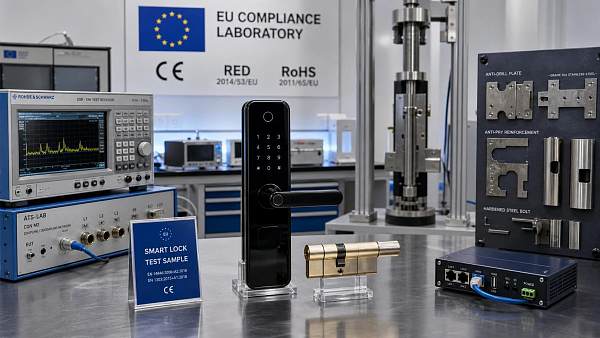
What the new EU measure formally changes
According to the information provided, the Official Journal of the European Union (OJEU) published Regulation (EU) 2026/1289 on July 27, 2026, putting the revised lock standard EN 1303:2026 into force and replacing EN 1303:2015.
The confirmed changes include stricter requirements for electronic lock bodies in four areas: EMC resistance, mechanical durability of at least 200,000 cycles, anti-drill and anti-pry material grading, and the security of network-connected components.
The update is described as especially relevant to connected products, including Networked Hotel Locks and 3D Facial Smart Locks. From the same date, new export orders must complete CE type testing under the new version of the standard, while products that have already obtained certification are given a six-month transition period.
Where the pressure is likely to appear first in the supply chain
Export-facing smart lock manufacturers will face immediate testing implications
From an industry perspective, the most direct impact falls on manufacturers shipping smart locks to the EU. The reason is straightforward: new export orders can no longer rely on the previous testing basis and must move to CE type testing under EN 1303:2026. In practical terms, the pressure point is product compliance scheduling, especially for models that include electronic lock bodies or network-connected functions.
Certification and compliance teams will need to reassess existing product files
Analysis shows that internal compliance teams and external certification service providers are likely to focus on whether current technical documentation, test planning, and product scope still align with the revised standard. The six-month transition period matters here, because previously certified products are not immediately invalidated, but their ongoing export arrangements may still require close review against the new timing and testing expectations.
Component and materials suppliers may be drawn into product revalidation
What deserves closer attention is the upstream effect on suppliers tied to lock body electronics, structural materials, and connected modules. Because the confirmed changes strengthen requirements around EMC, durability, anti-drill and anti-pry performance, and networked component security, suppliers may be asked for updated technical support documents or product-level coordination during re-testing, even though the formal compliance obligation sits with the finished product exporter.
Buyers and channel partners may see delivery and specification adjustments
For buyers, distributors, and project-side procurement teams serving the EU market, the likely effect is not only regulatory but operational. Products specified under the earlier standard may need to be reviewed against new testing status, and delivery planning for new orders may be influenced by certification lead times. This is particularly relevant for connected lock categories identified in the update.
Operational points companies should track now
Separate confirmed legal effect from internal assumptions
Companies should distinguish between what is already confirmed and what still requires internal assessment. The confirmed point is that EN 1303:2026 has replaced EN 1303:2015 and that new export orders must undergo CE type testing under the revised standard. Internal teams should avoid treating older test coverage as automatically sufficient without a documented review.
Map products by connectivity and certification status
Observably, the products most exposed to immediate review are connected lock models, especially those similar to the categories explicitly mentioned in the provided information. A practical first step is to sort export products by whether they are network-connected, whether they use electronic lock bodies, and whether they are already certified and therefore within the six-month transition window.
Check order timing against the transition period
The transition arrangement creates a timing issue rather than a blanket answer. For already certified products, the six-month window may affect shipment planning, customer communication, and documentary readiness. For new export orders, the requirement is more immediate, so sales, operations, and compliance teams should align on which models can proceed only after retesting.
Prepare supplier and customer communication around documentation
What deserves closer attention is how quickly companies can organize the supporting materials needed for re-testing and order confirmation. This includes coordination with suppliers where components relate to EMC performance, mechanical durability, material resistance, or network-connected security functions, as well as communication with EU-side customers on certification status and delivery expectations.
Why this should be read as more than a routine revision
Analysis shows that this development is better understood as an immediate compliance change with longer-term product implications. The immediate result is clear: new smart lock export orders for the EU must be tested under EN 1303:2026. The longer-term signal, based on the confirmed scope of the update, is that connected lock products are facing closer scrutiny not only for physical security performance but also for electronic and network-related reliability.
It is more appropriate to understand this as a concrete regulatory change that also signals where future product expectations may continue to tighten. At the same time, it remains necessary to keep observation separate from fact: the provided information confirms the new requirements and transition period, but broader market outcomes still need continued tracking rather than assumption.
How the market is likely to frame this change
At this stage, the most balanced reading is that EN 1303:2026 is not simply a new label on an old approval path. It creates a direct testing consequence for new EU-bound smart lock orders and raises the practical importance of EMC performance, durability, material resistance, and network-connected security in product preparation and export execution.
For the industry, this is best viewed as a short-term compliance adjustment that also carries a longer-term product development signal. The clearest takeaway is not to overstate the outcome, but to recognize that the regulatory threshold for smart lock access to the EU market has become more demanding from July 27, 2026 onward.
Basis of this article and what still needs verification
This article is based on the user-provided news title, event date, and event summary concerning the entry into force of EN 1303:2026, the replacement of EN 1303:2015, the strengthened requirements for EMC, durability, anti-drill and anti-pry materials, and network-connected component security, as well as the testing and transition arrangements described for EU smart lock exports.
For this type of industry update, source categories usually relevant for ongoing verification include official notices, standard-related documents, industry association updates, company compliance disclosures, and reporting by authoritative trade or business media. A specific official source link was not provided in the input, so the exact document trail should continue to be verified. Follow-up attention should remain on formal wording updates, implementation details for affected product categories, and any clarifications that influence certification timing or export execution.
Have questions about this sector analysis, or seeking best practices specific to your niche? Drop us a line below and let the senior consultants at MHLS assist you.
We respect your privacy. Your information is strictly confidential.
Recommended News
 Parcel Locker Network Pricing: Setup Costs, Fees and Contract TermsUnmanned Terminal FellowCompare parcel locker networks pricing, from setup costs and recurring fees to contract terms. Discover hidden charges and choose the right model.
 JR East Plans UWB Walk-Through Gates at 40 Stations in Spring 2028Access Control StrategistJR East plans UWB walk-through gates at 40 stations in spring 2028. Explore the rollout timeline and what suppliers should watch.
 Bank Vault Security Standards: UL and EN Ratings ExplainedVault Structural ArchitectExplore bank vault security standards and learn how UL 608 classes and EN 1143-1 grades differ, what they test, and how to verify certification before you buy.
 Mechanical Lock Hardware Prices: What Buyers Should Budget for Bulk OrdersMr. Gideon CrossMechanical lock hardware price is just the starting point. Discover what drives bulk-order costs and how to compare supplier quotes with confidence.
 IndexBox Forecasts Steady Global Security Keypad Market Growth Through 2035Dr. Valerius ThorneGlobal security keypad market growth is forecast at 3.3% annually through 2035. Explore the smart home and replacement trends shaping demand.
 Choosing an Infrared Safety Sensors Manufacturer: What Buyers Should CheckUnmanned Terminal FellowChoosing an infrared safety sensors manufacturer? Compare safety evidence, integration, environmental performance and lifecycle costs before you buy.
 Choosing a Security Material Testing Service: What to Check for Lock and Safe MaterialsProf. Elara SterlingChoose a security material testing service with confidence. Learn what to check for lock and safe materials, from attack methods and accreditation to reliable reports.
 How Precision Anti-Pick Lock Cylinders Resist ManipulationSecurity Metallurgy ExpertDiscover how precision anti-pick lock technology resists manipulation, and learn what to check when comparing security features, test evidence, and everyday reliability.
 Dermalog Joins NIST FastCAP Program for Contactless Fingerprint TestingProf. Elara SterlingDermalog joins the NIST FastCAP program for contactless fingerprint testing. Discover what this means for biometric identification and digital identity.
 Choosing Security Export Compliance Services: What Providers Should CoverMr. Gideon CrossSecurity export compliance services can help prevent costly delays. Discover what to look for in classification, licensing, screening, and documentation.
 European Security Compliance Standards for Safes: EN 1143-1 vs EN 14450Dr. Valerius ThorneExplore security compliance standards Europe buyers need to know. Compare EN 1143-1 and EN 14450 to choose the right safe with confidence.
 HID Global Acquires inepro ID to Expand RFID and BLE Access SolutionsUnmanned Terminal FellowHID Global acquires inepro ID to expand RFID and BLE access solutions for printers, smart lockers and shared devices. Explore what the deal could mean for your organization.











