
Hotel Lock Systems in Europe: How to Compare Offline, Online, and Mobile Access Options
Why hotel lock decisions in Europe now carry more weight
Choosing among hotel lock systems Europe involves more than comparing opening methods or software features.
The real choice affects guest arrival, staff workflow, retrofit planning, data visibility, and the property’s physical security posture.
Across Europe, hotels face mixed building ages, varied fire and access requirements, tighter operating budgets, and rising expectations for contactless service.
That is why hotel lock systems Europe are now reviewed as part of a broader access control and risk management strategy.
From the SHPS perspective, this topic sits at the intersection of smart hardware, mechanical security, electronic reliability, and deployment practicality.
A hotel door lock is not an isolated product.
It is a frontline security device connected to credentials, door hardware, maintenance routines, and often wider building systems.
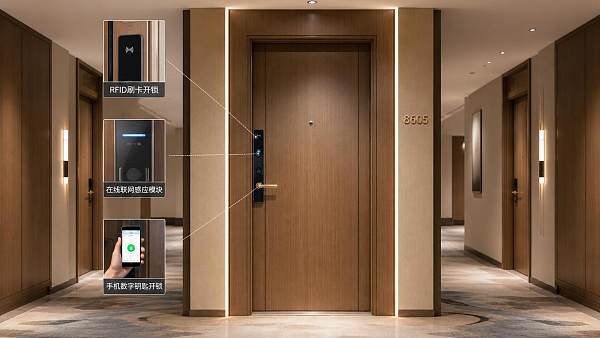
Understanding offline, online, and mobile access options helps clarify where convenience supports security and where it may create new responsibilities.
Three access models, three operating logics
Most hotel lock systems Europe fall into three broad categories: offline, online, and mobile-enabled access.
Each model can work well, but each is built around a different operational logic.
Offline lock systems
Offline systems store permissions at the lock or on the guest credential.
They usually rely on RFID cards, encoder stations, and periodic manual updates.
This model remains common in limited-service hotels, older properties, and cost-sensitive renovation projects.
Online lock systems
Online systems connect locks or gateways to a network for real-time status, remote authorization, and event visibility.
They support faster incident response and stronger operational control, especially across multi-property portfolios.
Mobile access systems
Mobile access uses smartphones as credentials, usually through Bluetooth, NFC, or cloud-issued digital keys.
In practice, mobile access is often layered onto an online platform rather than deployed as a completely separate system.
Simple comparisons can be misleading.
The right fit depends on the building, staffing model, guest profile, and how much control the operator wants after installation.
What the market is really comparing
When buyers assess hotel lock systems Europe, the most useful questions are rarely about headline features alone.
They are about risk, continuity, and the cost of operating the system over time.
This is where a broader physical security view matters.
SHPS often emphasizes that electronic locks must be judged alongside lock body durability, cylinder quality, credential lifecycle, and failure recovery planning.
Security is both mechanical and digital
A polished user interface does not compensate for weak door-side hardware.
In hotel lock systems Europe, physical attack resistance still matters, especially for perimeter rooms, service areas, and mixed-use properties.
The lock case, handle endurance, spindle design, anti-tamper features, and emergency opening method all deserve attention.
So does battery behavior under heavy use.
On the digital side, the main concerns are credential encryption, audit trails, update control, network resilience, and revocation speed.
Mobile credentials add another layer.
A lost phone is different from a lost card, but both require clear operational policies.
The strongest systems treat mechanical integrity and digital governance as one security chain, not two separate topics.
Where each model usually makes the most sense
No single architecture suits every hotel format.
The most practical comparisons start with operating conditions rather than vendor claims.
- Offline systems often fit smaller properties, seasonal operations, or buildings where cabling and network upgrades are difficult.
- Online systems are usually stronger for large hotels, high room turnover, and properties needing central visibility.
- Mobile access suits brands focused on self-check-in, app-led journeys, and lower front desk dependency.
- Hybrid setups are increasingly common, combining card access with mobile keys and selective online coverage.
In Europe, older urban properties often benefit from staged modernization.
That can mean retaining some offline doors while moving guest rooms or premium floors to connected access control.
This phased approach reduces disruption while preserving an upgrade path.
Cost should be measured beyond installation
The apparent price gap between hotel lock systems Europe can narrow or widen once lifetime costs are added.
Initial hardware is only one part of the budget.
What changes total ownership cost
- Door preparation and compatibility with existing mortise standards
- Battery replacement cycles and maintenance labor
- Software licensing, cloud fees, and support contracts
- Staff training and incident handling time
- Future integration with PMS, elevators, parking, or common-area access
A lower-cost offline solution may remain the best answer in some buildings.
But if card replacement, manual audits, and room-status blind spots are frequent, online capability can improve operating efficiency enough to justify the shift.
Questions worth asking before selecting a supplier
Supplier evaluation for hotel lock systems Europe should go deeper than product brochures and showroom demonstrations.
The best comparisons test whether the system will still perform well after years of daily room turnover.
- What European project references exist for similar building types and door conditions?
- Which standards, durability tests, and emergency opening protocols are documented?
- How are firmware updates, credential revocation, and system recovery handled?
- What happens if the network fails, batteries drain, or a mobile credential cannot be delivered?
- How well does the lock platform integrate with wider physical security infrastructure?
This wider view reflects the SHPS approach.
Locks, credentials, access software, and building entry systems should be reviewed as one operational environment.
A practical path to the right choice
A useful decision process begins with the property itself.
Map door types, room turnover, staffing levels, guest journey targets, and the expected upgrade horizon.
Then compare hotel lock systems Europe against those realities, not against marketing language.
Offline may be enough when simplicity and resilience matter most.
Online may deliver stronger control where visibility and rapid response are priorities.
Mobile access may create the best guest flow when digital engagement is already part of the operating model.
For the next step, build a comparison matrix that includes mechanical security, software governance, retrofit effort, service support, and long-term ownership cost.
That framework makes supplier discussions more precise and reduces the risk of choosing a system that fits the brochure better than the building.
Have questions about this sector analysis, or seeking best practices specific to your niche? Drop us a line below and let the senior consultants at MHLS assist you.
We respect your privacy. Your information is strictly confidential.
Recommended News
 Physical Security Infrastructure Cost: Budgeting for Installation and MaintenanceUnmanned Terminal FellowUnderstand physical security infrastructure cost and build a smarter budget for installation, maintenance, and long-term ownership.
 Financial Facility Security: Choosing Vault Doors for Bank BranchesVault Structural ArchitectStrengthen financial facility security with the right bank vault door. Explore certification, installation, locking controls and maintenance before you buy.
 MACO Acquires Majority Stake in Fingerprint Access Provider ekeyProf. Elara SterlingMACO acquires a majority stake in ekey, bringing fingerprint access and door hardware closer together. Discover what the deal could mean for smart buildings.
 Physical Security System Engineering: From Risk Assessment to System DesignUnmanned Terminal FellowExplore physical security system engineering, from risk assessment to integrated design, procurement and testing. Build a safer, more resilient facility.
 Apple Home Collection Smart Lock and Other Accessories Open for Preorder November 13Biometric Auth ScientistApple Home Collection preorders open November 13, 2026. Explore the LG smart lock’s Matter and Aliro support and what buyers should verify before ordering.
 Choosing Servo-Driven Flap Barriers: Throughput, Safety and Access ControlAccess Control StrategistServo-driven flap barriers can balance throughput, safety and access control. Discover how to compare lanes, test performance and choose with confidence.
 Parcel Locker Network Pricing: Setup Costs, Fees and Contract TermsUnmanned Terminal FellowCompare parcel locker networks pricing, from setup costs and recurring fees to contract terms. Discover hidden charges and choose the right model.
 JR East Plans UWB Walk-Through Gates at 40 Stations in Spring 2028Access Control StrategistJR East plans UWB walk-through gates at 40 stations in spring 2028. Explore the rollout timeline and what suppliers should watch.
 Bank Vault Security Standards: UL and EN Ratings ExplainedVault Structural ArchitectExplore bank vault security standards and learn how UL 608 classes and EN 1143-1 grades differ, what they test, and how to verify certification before you buy.
 Mechanical Lock Hardware Prices: What Buyers Should Budget for Bulk OrdersMr. Gideon CrossMechanical lock hardware price is just the starting point. Discover what drives bulk-order costs and how to compare supplier quotes with confidence.
 IndexBox Forecasts Steady Global Security Keypad Market Growth Through 2035Dr. Valerius ThorneGlobal security keypad market growth is forecast at 3.3% annually through 2035. Explore the smart home and replacement trends shaping demand.
 Choosing an Infrared Safety Sensors Manufacturer: What Buyers Should CheckUnmanned Terminal FellowChoosing an infrared safety sensors manufacturer? Compare safety evidence, integration, environmental performance and lifecycle costs before you buy.











