
How to Evaluate Mortise Lock Systems for Hotels: Key Criteria for Guest Room Security
What Procurement Teams Are Really Buying When They Compare Hotel Mortise Lock Systems
Choosing reliable mortise lock systems for hotels is not just a hardware decision. It is a risk decision tied to guest room security, life-safety compliance, operating continuity, and the hidden cost of service calls over the life of the property. Many buyers start with finish, brand familiarity, or whether the lock works with an RFID card platform. Those factors matter, but they sit on top of a more basic question: is the lockset mechanically sound enough for hotel duty, and can it keep performing after years of repeated use, staff turnover, door sag, humidity changes, battery events, and aggressive handling?
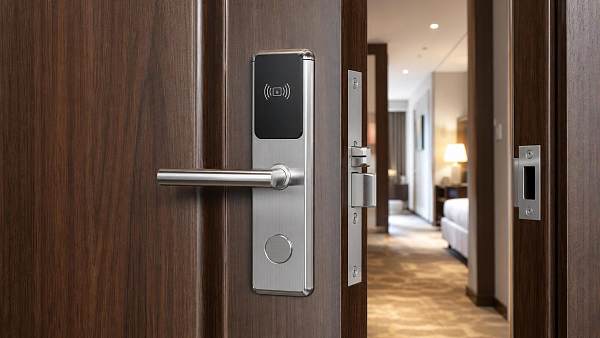
In hotel projects, “mortise lock system” usually refers to more than the lock body alone. It includes the mortise case installed inside the door, latch and deadbolt configuration, trim, inside and outside lever sets, cylinder or electronic credential method, strike, door status sensing in some cases, and the software or audit layer if the solution is electronic. That broader view matters, because procurement problems often come from interface failures between parts that were technically compatible on paper but not stable in field conditions.
A good evaluation starts by separating two layers: the mechanical security platform and the access method. Hotels sometimes focus heavily on credentials, mobile keys, BLE, or PMS integration. Yet if the mortise chassis is weak, poorly finished, or intolerant of installation variation, the access layer will not rescue the door from high maintenance or premature replacement.
The Lock Body Comes First
For guest room doors, the mortise case is the working heart of the system. Buyers should look closely at latchbolt construction, deadbolt presence where applicable, anti-friction features, retraction smoothness, and the durability of internal components under repeated cycling. A hotel guest room door may be operated many times per day, by guests, housekeeping, maintenance staff, and security personnel. Over time, that means the lock body is judged less by brochure claims and more by how well it tolerates real misuse: half-latched doors, lever slamming, carts striking the edge, or handles being forced while the deadbolt is thrown.
In practice, one of the most important distinctions is whether the lock has been engineered for hospitality duty rather than adapted from a light commercial format. A lock designed for intermittent office use may look acceptable at sample stage but wear differently in a hotel. Procurement teams should ask about cycle testing, but they should also read that information carefully. A high cycle number is useful only if the tested configuration resembles the delivered configuration, including trim, electronics, handing, and latch type.
Door preparation compatibility is another common blind spot. Mortise locks for hotels are often selected late in a renovation, after door specs have already been frozen. If backset, case size, front plate dimensions, spindle geometry, strike alignment, or handing assumptions do not match the existing door set, the result can be field modification, reduced fire-door integrity, or visible patchwork that hurts both security and appearance.
Security Is Not Just About Forced Entry Resistance
When buyers discuss guest room security, forced entry is only one part of the picture. A hotel lock should also be evaluated for key control, credential control, override hierarchy, audit traceability if electronic, and resistance to routine abuse by unauthorized users with partial access. The question is not simply whether the door can be kicked or pried. It is whether the lock architecture limits avoidable exposure during everyday operations.
For mechanical override cylinders, the cylinder platform deserves serious attention. The quality of the mortise chassis means little if key duplication is poorly controlled or if the cylinder is vulnerable to basic picking, impressioning, or unauthorized copying because procurement treated the override path as a minor accessory. In many hotel programs, the cylinder is specified only for emergency access and therefore downgraded. That can be a mistake, especially where master key structures are complex and rekeying events are costly.
Electronic systems add another layer. Audit trail availability, event storage, staff credential segmentation, lost-card handling, and emergency opening logic are all part of security performance. Buyers should clarify whether offline guest room locks can store enough audit data for meaningful incident review and whether lock time synchronization depends on frequent staff card updates or a networked gateway model. Those details shape how usable the system is after deployment, not just how advanced it sounds during vendor presentations.
Fire-Rated Doors Change the Evaluation
Hotel guest room openings are often part of a fire door assembly, which means the lock cannot be treated as a standalone security product. It must fit the tested and compliant door assembly requirements applicable to the project jurisdiction. Procurement teams should verify not only that a lock model is described as suitable for fire-rated openings, but also that the specific door, frame, hardware preparation, and installed configuration remain within the scope of recognized listing or certification conditions.
This matters during retrofits. Reusing old door leaves while changing to a different mortise format can create compliance and performance issues if additional cutting, enlarged prep, or non-matching strike geometry affects the assembly. Fire rating, egress performance, and self-latching behavior need to be considered together. A lock that performs well for access control but compromises positive latching on a warped or settling door is not acceptable in hotel use.
Electronic Compatibility Should Be Evaluated as an Operating System, Not a Feature List
Many hotel lock discussions become dominated by credential technology: magnetic stripe, RFID, BLE mobile access, or multi-technology readers. Those choices matter, but the procurement decision should focus on how the entire system behaves in the property. Does it integrate with the property management system being used? How are cards encoded during check-in? What happens when batteries are low, a room goes out of sync, or a guest changes rooms? How are staff permissions issued, revoked, and audited across shifts?
A technically capable lock can become operationally expensive if front desk workflows are awkward or if maintenance staff need proprietary tools for every minor intervention. Hotels with multiple properties should also consider whether the lock platform supports standardization across brands, regions, or service models. A system that is manageable in a 120-room urban hotel may become inefficient in a resort environment with dispersed buildings and slower service access.
Battery strategy deserves more scrutiny than it usually gets. Buyers should ask about expected battery service intervals under actual use conditions, low-power warning behavior, emergency power procedures at the door, and whether battery replacement can be done quickly without losing programming integrity. These are not secondary maintenance details. They shape guest experience and labor cost.
What to Compare Beyond the Sample Board
Sample boards can be misleading because they favor surface impressions: trim appearance, reader style, handle feel. Those are relevant for brand standards, but they do not show tolerance to abuse, field serviceability, or supply continuity. A more useful comparison is below.
Common Procurement Mistakes
One recurring mistake is assuming all mortise platforms with similar dimensions perform similarly. They do not. Internal metallurgy, spring design, follower strength, trim interface, and tolerance control can differ significantly even where installation prep is nominally the same.
Another is evaluating lock security without considering the door and frame condition. A robust mortise case installed on a misaligned frame or deteriorated door edge may still produce latch failures, guest complaints, and excessive force on the handle. In renovations, some lock complaints are really opening-condition problems.
There is also a tendency to overvalue software polish and undervalue parts logistics. For hotels, the ability to obtain replacement readers, escutcheons, mortise cases, cylinders, strikes, and programming support over many years can matter more than having the newest unlocking method.
A Practical Decision Framework
For most procurement teams, the most defensible path is to narrow candidates in this order: confirm door and code compatibility, verify the mechanical platform, review credential and override architecture, test operating workflow, then assess finish, appearance, and commercial terms. That order keeps the decision grounded in real performance rather than presentation quality.
When comparing mortise lock systems for hotels, the best question is not “Which lock has the most features?” It is “Which system will remain secure, serviceable, and manageable across the actual life of this property?” Buyers who keep that frame usually make better decisions. They avoid treating the guest room door as a simple access point and start evaluating it as a long-term security assembly with direct impact on safety, operations, and brand trust.
That is the difference between buying a hotel lock and selecting a hotel locking system. The first can be done from a catalog. The second requires disciplined review of mechanical integrity, compliance fit, override control, electronic behavior, and maintenance reality. In hospitality, that distinction shows up very quickly after opening day.
Have questions about this sector analysis, or seeking best practices specific to your niche? Drop us a line below and let the senior consultants at MHLS assist you.
We respect your privacy. Your information is strictly confidential.
Recommended News
 Physical Security Infrastructure Cost: Budgeting for Installation and MaintenanceUnmanned Terminal FellowUnderstand physical security infrastructure cost and build a smarter budget for installation, maintenance, and long-term ownership.
 Financial Facility Security: Choosing Vault Doors for Bank BranchesVault Structural ArchitectStrengthen financial facility security with the right bank vault door. Explore certification, installation, locking controls and maintenance before you buy.
 MACO Acquires Majority Stake in Fingerprint Access Provider ekeyProf. Elara SterlingMACO acquires a majority stake in ekey, bringing fingerprint access and door hardware closer together. Discover what the deal could mean for smart buildings.
 Physical Security System Engineering: From Risk Assessment to System DesignUnmanned Terminal FellowExplore physical security system engineering, from risk assessment to integrated design, procurement and testing. Build a safer, more resilient facility.
 Apple Home Collection Smart Lock and Other Accessories Open for Preorder November 13Biometric Auth ScientistApple Home Collection preorders open November 13, 2026. Explore the LG smart lock’s Matter and Aliro support and what buyers should verify before ordering.
 Choosing Servo-Driven Flap Barriers: Throughput, Safety and Access ControlAccess Control StrategistServo-driven flap barriers can balance throughput, safety and access control. Discover how to compare lanes, test performance and choose with confidence.
 Parcel Locker Network Pricing: Setup Costs, Fees and Contract TermsUnmanned Terminal FellowCompare parcel locker networks pricing, from setup costs and recurring fees to contract terms. Discover hidden charges and choose the right model.
 JR East Plans UWB Walk-Through Gates at 40 Stations in Spring 2028Access Control StrategistJR East plans UWB walk-through gates at 40 stations in spring 2028. Explore the rollout timeline and what suppliers should watch.
 Bank Vault Security Standards: UL and EN Ratings ExplainedVault Structural ArchitectExplore bank vault security standards and learn how UL 608 classes and EN 1143-1 grades differ, what they test, and how to verify certification before you buy.
 Mechanical Lock Hardware Prices: What Buyers Should Budget for Bulk OrdersMr. Gideon CrossMechanical lock hardware price is just the starting point. Discover what drives bulk-order costs and how to compare supplier quotes with confidence.
 IndexBox Forecasts Steady Global Security Keypad Market Growth Through 2035Dr. Valerius ThorneGlobal security keypad market growth is forecast at 3.3% annually through 2035. Explore the smart home and replacement trends shaping demand.
 Choosing an Infrared Safety Sensors Manufacturer: What Buyers Should CheckUnmanned Terminal FellowChoosing an infrared safety sensors manufacturer? Compare safety evidence, integration, environmental performance and lifecycle costs before you buy.











