
How to Evaluate a Smart Lock Integration System for Multi-Site Access Control
Choosing a smart lock integration system for multi-site access control is rarely a simple feature comparison. The real question is whether one platform can manage different buildings, lock types, user groups, and security policies without creating operational gaps.
That matters across offices, residential portfolios, logistics sites, mixed-use developments, and restricted infrastructure. In physical security, weak integration often shows up later as inconsistent permissions, delayed incident response, fragmented data, and higher maintenance effort.
A strong evaluation should connect software logic with hardware reality. Smart locks, mechanical override structures, access platforms, biometric verification, and building workflows all have to work together under normal use and under stress.
What the system is really being asked to do
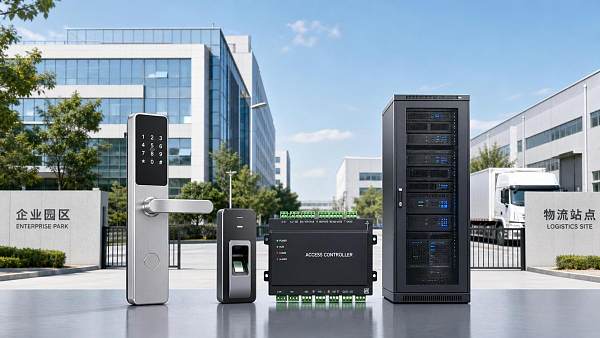
At a basic level, a smart lock integration system links door hardware with credential issuance, policy control, event logging, and administration tools. In a multi-site environment, that connection has to stay reliable across many entry points and many operating conditions.
The evaluation becomes more complex when the estate includes different lock technologies. One site may use fingerprint smart locks, another may use mobile credentials, and a third may still rely on mechanical cylinders with electronic audit support.
This is why the smart lock integration system should be reviewed as part of a wider physical security architecture. It is not just a door-opening tool. It is a control layer connecting identity, hardware status, access history, and local enforcement.
In practice, the best systems reduce the distance between policy and execution. A permission change made centrally should reach the right doors, the right users, and the right schedules without manual correction.
Why industry attention is increasing
Distributed properties are becoming harder to secure with isolated systems. Real estate portfolios, campus facilities, parcel locker networks, and service depots often expand faster than their access control standards.
At the same time, expectations are changing. Operators want remote visibility, cleaner audit trails, lower rekeying costs, and faster credential changes. Insurers and compliance teams also expect better evidence of who accessed what, when, and under which authority.
The SHPS industry context reflects this shift clearly. Physical security is no longer only about lock strength or single-device performance. It now combines mechanical resistance, biometric reliability, IoT connectivity, software governance, and deployment discipline.
That broader view is important when evaluating a smart lock integration system. A platform may look capable in a product demo, yet still perform poorly when faced with mixed building infrastructure, unstable connectivity, or strict site-level rules.
Interoperability is the first real test
Interoperability should be tested before interface design or dashboard aesthetics. The core issue is whether the smart lock integration system can connect with the building technologies already in place.
That often includes access control panels, visitor systems, building management platforms, identity providers, elevator controls, turnstiles, and parcel locker networks. Compatibility claims are common, but deployment details are where risk appears.
Useful questions include protocol support, API maturity, event synchronization logic, and offline behavior. It also helps to confirm whether integrations are native, partner-built, or custom-developed for each project.
A mature smart lock integration system should not force every site into the same hardware profile. It should manage variation without breaking policy consistency.
Security architecture matters more than convenience claims
Access convenience has value, but security architecture is where the evaluation earns its depth. The platform should define how credentials are issued, protected, revoked, and audited across all connected locations.
This includes encryption in transit and at rest, trusted device enrollment, role-based permissions, administrator segregation, and event integrity. If mobile credentials or biometrics are involved, spoofing resistance and liveness controls also matter.
Mechanical fallback deserves equal attention. Many smart lock deployments still rely on override cylinders, emergency access paths, or protected door hardware. Those components should be documented within the same risk model, not treated as separate afterthoughts.
From a physical security perspective, software trust cannot compensate for weak door construction or poor hardware selection. A good smart lock integration system supports layered protection rather than assuming digital controls solve every problem.
Signs of a stronger architecture
- Credential revocation reaches remote sites quickly and predictably.
- Audit logs are time-synchronized and hard to alter.
- Door states, tamper signals, and access denials are visible centrally.
- The system supports least-privilege administration.
- Fallback modes are defined for network, power, and device failure.
Credential management across multiple properties
Credential management is often where administrative burden becomes visible. A multi-site platform should support centralized policy while still allowing local exceptions for hours, zones, contractors, and temporary access.
The smart lock integration system should make it easy to map users to locations, roles, and schedules. It should also support clean offboarding, guest expiration, and rapid response to lost phones, cards, or compromised credentials.
Where biometric smart locks are used, enrollment workflows need particular care. Template storage location, matching method, privacy controls, and re-enrollment procedures all affect operational quality.
Consistency matters here. If one property uses strict naming, schedules, and approval chains while another uses ad hoc rules, the platform may technically integrate but still fail as an enterprise control system.
Scalability should be measured operationally
Scalability is not just the number of doors a vendor lists in documentation. It is the ability of the smart lock integration system to keep administration, reporting, firmware control, and incident handling manageable as the estate expands.
The practical test is whether adding a new building creates a repeatable workflow or a custom project. That includes device onboarding, policy inheritance, event mapping, and maintenance scheduling.
Watch for hidden scaling limits. Some systems support many doors but struggle with cross-site reports, API rate limits, or mass credential updates. Others depend on manual firmware intervention that becomes expensive at portfolio level.
This is especially relevant in environments such as student housing, co-working, logistics lockers, distributed branches, and mixed commercial portfolios where device counts grow unevenly over time.
Site conditions can change the right answer
The best smart lock integration system for one site type may be the wrong one for another. Door material, fire compliance, power availability, traffic volume, and weather exposure all influence hardware and software decisions.
A logistics locker network may prioritize remote uptime, cellular resilience, and audit visibility. A high-security records room may place more weight on reinforced doors, anti-tamper alerts, and tightly controlled override procedures.
Commercial offices often need integration with visitor workflows and elevators. Residential portfolios may care more about turnover speed, mobile credentials, and after-hours support. Restricted infrastructure may demand stronger segmentation and approval controls.
That is why scenario testing is useful. Instead of asking whether a platform is good in general, assess how it behaves in your highest-risk and highest-friction use cases.
A practical evaluation framework
A disciplined review usually combines document analysis, field validation, and workflow testing. Marketing claims should be treated as starting points, not proof.
- Map all site types, door classes, and credential methods first.
- List required integrations, including building, identity, and reporting systems.
- Test normal workflows such as onboarding, transfer, suspension, and emergency access.
- Review failure modes for network loss, battery depletion, and controller outage.
- Check audit detail, export quality, and event correlation across sites.
- Confirm certification, cybersecurity process, and firmware support commitments.
SHPS-style market intelligence is useful at this stage because it helps connect product-level claims with broader evidence. Compliance readiness, hardware design logic, biometric performance, and deployment experience should all influence the final judgment.
What to do before making a final selection
Before selecting a smart lock integration system, define the operating model as clearly as the feature list. That means deciding who owns credentials, who approves exceptions, how incidents are reviewed, and which sites need stricter control layers.
Then compare vendors against the same technical matrix. Look beyond opening methods and user interface polish. Focus on interoperability, resilience, audit quality, lifecycle support, and the fit between digital access control and physical security design.
A short pilot across different site profiles usually reveals more than a single showroom demonstration. It also creates a better basis for judging whether the smart lock integration system can support expansion without introducing blind spots.
The next useful step is to turn these criteria into a weighted evaluation sheet. Once the priorities are visible, it becomes easier to compare systems in a way that reflects actual risk, not just product presentation.
Have questions about this sector analysis, or seeking best practices specific to your niche? Drop us a line below and let the senior consultants at MHLS assist you.
We respect your privacy. Your information is strictly confidential.
Recommended News
 Parcel Locker Network Pricing: Setup Costs, Fees and Contract TermsUnmanned Terminal FellowCompare parcel locker networks pricing, from setup costs and recurring fees to contract terms. Discover hidden charges and choose the right model.
 JR East Plans UWB Walk-Through Gates at 40 Stations in Spring 2028Access Control StrategistJR East plans UWB walk-through gates at 40 stations in spring 2028. Explore the rollout timeline and what suppliers should watch.
 Bank Vault Security Standards: UL and EN Ratings ExplainedVault Structural ArchitectExplore bank vault security standards and learn how UL 608 classes and EN 1143-1 grades differ, what they test, and how to verify certification before you buy.
 Mechanical Lock Hardware Prices: What Buyers Should Budget for Bulk OrdersMr. Gideon CrossMechanical lock hardware price is just the starting point. Discover what drives bulk-order costs and how to compare supplier quotes with confidence.
 IndexBox Forecasts Steady Global Security Keypad Market Growth Through 2035Dr. Valerius ThorneGlobal security keypad market growth is forecast at 3.3% annually through 2035. Explore the smart home and replacement trends shaping demand.
 Choosing an Infrared Safety Sensors Manufacturer: What Buyers Should CheckUnmanned Terminal FellowChoosing an infrared safety sensors manufacturer? Compare safety evidence, integration, environmental performance and lifecycle costs before you buy.
 Choosing a Security Material Testing Service: What to Check for Lock and Safe MaterialsProf. Elara SterlingChoose a security material testing service with confidence. Learn what to check for lock and safe materials, from attack methods and accreditation to reliable reports.
 How Precision Anti-Pick Lock Cylinders Resist ManipulationSecurity Metallurgy ExpertDiscover how precision anti-pick lock technology resists manipulation, and learn what to check when comparing security features, test evidence, and everyday reliability.
 Dermalog Joins NIST FastCAP Program for Contactless Fingerprint TestingProf. Elara SterlingDermalog joins the NIST FastCAP program for contactless fingerprint testing. Discover what this means for biometric identification and digital identity.
 Choosing Security Export Compliance Services: What Providers Should CoverMr. Gideon CrossSecurity export compliance services can help prevent costly delays. Discover what to look for in classification, licensing, screening, and documentation.
 European Security Compliance Standards for Safes: EN 1143-1 vs EN 14450Dr. Valerius ThorneExplore security compliance standards Europe buyers need to know. Compare EN 1143-1 and EN 14450 to choose the right safe with confidence.
 HID Global Acquires inepro ID to Expand RFID and BLE Access SolutionsUnmanned Terminal FellowHID Global acquires inepro ID to expand RFID and BLE access solutions for printers, smart lockers and shared devices. Explore what the deal could mean for your organization.











