
Mobile Access Control Solutions vs Keycards: Which Fits Retrofit Projects Better?
Mobile Access Control Solutions vs Keycards: Which Fits Retrofit Projects Better?
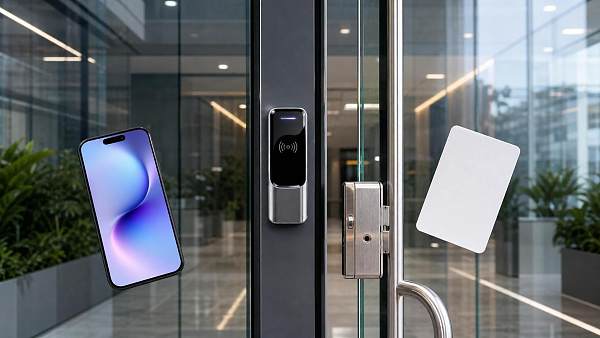
For retrofit projects, the access credential choice shapes budget, schedule, and user experience from day one.
That decision usually comes down to mobile access control solutions or traditional keycards.
Both can secure doors, manage permissions, and connect with building workflows.
But retrofit environments are rarely clean-sheet deployments.
Older wiring, mixed door hardware, phased occupancy, and limited downtime change the evaluation.
In practice, the better option depends less on trend appeal and more on site conditions.
This guide compares mobile access control solutions and keycards through a retrofit lens.
The focus stays on installation complexity, compatibility, risk, operating cost, and rollout speed.
Why Retrofit Projects Need a Different Access Strategy
New buildings let teams design readers, locks, network paths, and user journeys together.
Retrofit projects inherit existing doors, controllers, cabling routes, and fire-life-safety constraints.
That makes every change more conditional.
A mobile credential program may reduce card issuance, yet still require reader replacement.
A keycard system may fit existing infrastructure, yet create long-term administrative drag.
The more obvious signal is this: retrofit success depends on minimizing disruption without locking in weak choices.
What Mobile Access Control Solutions Actually Change
Mobile access control solutions replace physical cards with smartphone-based credentials.
Users typically enter through Bluetooth, NFC, QR workflows, or app-based authentication.
For retrofit sites, the appeal is immediate.
Credentials can be issued remotely, changed quickly, and revoked without collecting plastic cards.
This is especially useful in multi-tenant buildings, hybrid offices, campuses, and managed facilities.
Temporary contractors and phased renovation crews also benefit from remote provisioning.
However, mobile access control solutions are not automatically plug-and-play.
Reader compatibility, app policy, mobile device diversity, and network dependencies all matter.
Core strengths in retrofit settings
- Remote credential issuance speeds phased occupancy and contractor onboarding.
- Lost phone events are often easier to manage than lost cards.
- Audit trails can become richer when linked to user identity and device events.
- Touchless entry supports hygiene goals and smoother traffic flow.
- Credential updates avoid the cost of printing, distributing, and recollecting cards.
Where Keycards Still Hold an Edge
Keycards remain common because they are familiar, simple, and widely supported.
In many retrofit projects, that installed base is a major advantage.
If existing controllers and readers already support secure card technologies, the upgrade path may be lighter.
That can shorten deployment time and reduce retraining pressure on occupants.
Keycards also work well for visitors, third-party staff, and users without approved smartphones.
This matters in healthcare, industrial, public sector, and unionized operating environments.
The downside is operational friction.
Cards are lost, shared, damaged, and frequently reissued.
Over time, those small events add up across large portfolios.
Installation Complexity: The Real Retrofit Decider
This is where many selection discussions become more concrete.
Project teams often assume mobile access control solutions mean less hardware change.
Sometimes that is true, but only when current readers support the chosen mobile credential standard.
If they do not, door-by-door reader replacement may still be required.
In older facilities, that can trigger extra work on backboxes, power budgets, and controller firmware.
Keycards can be easier when compatible readers are already installed.
But if the site still uses low-security legacy card formats, keeping them may extend risk rather than reduce cost.
A practical survey should review these items before selection:
- Reader model, protocol support, and encryption capability.
- Door type, lock hardware, and code compliance constraints.
- Controller age, firmware limits, and software licensing status.
- Network availability for cloud-connected mobile access control solutions.
- Occupancy phasing and acceptable downtime windows.
Security and Credential Control Compared
Security is not just about the credential format.
It includes issuance policy, revocation speed, user behavior, and attack surface.
Mobile access control solutions usually improve administrative control.
Permissions can be updated centrally, often in real time.
That helps when project zones open gradually or tenant layouts shift during renovation.
Phones also support stronger user verification when paired with biometrics or device security policies.
Still, mobile introduces concerns around personal device policies, app access, and battery dependence.
Keycards avoid some of that complexity, but they are easier to lend or clone when based on weak technologies.
For retrofit decisions, the stronger question is not mobile versus card.
It is whether the chosen credential model raises security from the current baseline.
User Adoption, Policy, and Daily Operations
A technically sound system can still fail if users resist it.
This is why mobile access control solutions need policy alignment early.
Bring-your-own-device rules, privacy concerns, and union agreements can slow approval.
Some users prefer cards simply because they separate personal devices from workplace access.
On the other hand, many office users already expect phone-based entry.
That expectation is growing in premium residential, coworking, and mixed-use assets.
Operationally, mobile access control solutions reduce badge printing and front-desk handling.
Yet most retrofit sites still need fallback credentials for visitors, exceptions, and device failures.
That means the most workable model is often blended rather than absolute.
Cost Comparison Beyond the Initial Quote
Retrofit budgets are usually tight, so first-cost comparisons get attention.
But a better selection model looks at five-year operating impact.
Keycards may cost less upfront when current readers stay in place.
Mobile access control solutions may cost more initially if new readers or software subscriptions are needed.
However, mobile access control solutions can lower recurring costs tied to card stock, reissuance, and manual administration.
Use this decision frame during procurement:
- Separate door hardware costs from credential management costs.
- Model reissuance rates for staff turnover and visitor traffic.
- Price software, cloud fees, and support escalation paths.
- Include training, policy rollout, and help-desk impact.
- Account for future expansion across more doors or buildings.
Which Option Fits Better by Retrofit Scenario
The answer becomes clearer when tied to actual project conditions.
A Practical Selection Path
For most retrofit projects, mobile access control solutions fit better when flexibility matters most.
They are particularly strong where occupant turnover is high and remote administration saves time.
Keycards still make sense when existing secure infrastructure is usable and user policy is conservative.
In many real projects, the smartest answer is a controlled hybrid rollout.
Start by auditing doors, reader capability, controller limits, and occupancy patterns.
Then test mobile access control solutions on selected doors with clear fallback options.
That approach keeps renovation schedules moving while protecting future upgrade options.
When the goal is retrofit efficiency with long-term control, selection should follow infrastructure reality, not market fashion.
Have questions about this sector analysis, or seeking best practices specific to your niche? Drop us a line below and let the senior consultants at MHLS assist you.
We respect your privacy. Your information is strictly confidential.
Recommended News
 Parcel Locker Network Pricing: Setup Costs, Fees and Contract TermsUnmanned Terminal FellowCompare parcel locker networks pricing, from setup costs and recurring fees to contract terms. Discover hidden charges and choose the right model.
 JR East Plans UWB Walk-Through Gates at 40 Stations in Spring 2028Access Control StrategistJR East plans UWB walk-through gates at 40 stations in spring 2028. Explore the rollout timeline and what suppliers should watch.
 Bank Vault Security Standards: UL and EN Ratings ExplainedVault Structural ArchitectExplore bank vault security standards and learn how UL 608 classes and EN 1143-1 grades differ, what they test, and how to verify certification before you buy.
 Mechanical Lock Hardware Prices: What Buyers Should Budget for Bulk OrdersMr. Gideon CrossMechanical lock hardware price is just the starting point. Discover what drives bulk-order costs and how to compare supplier quotes with confidence.
 IndexBox Forecasts Steady Global Security Keypad Market Growth Through 2035Dr. Valerius ThorneGlobal security keypad market growth is forecast at 3.3% annually through 2035. Explore the smart home and replacement trends shaping demand.
 Choosing an Infrared Safety Sensors Manufacturer: What Buyers Should CheckUnmanned Terminal FellowChoosing an infrared safety sensors manufacturer? Compare safety evidence, integration, environmental performance and lifecycle costs before you buy.
 Choosing a Security Material Testing Service: What to Check for Lock and Safe MaterialsProf. Elara SterlingChoose a security material testing service with confidence. Learn what to check for lock and safe materials, from attack methods and accreditation to reliable reports.
 How Precision Anti-Pick Lock Cylinders Resist ManipulationSecurity Metallurgy ExpertDiscover how precision anti-pick lock technology resists manipulation, and learn what to check when comparing security features, test evidence, and everyday reliability.
 Dermalog Joins NIST FastCAP Program for Contactless Fingerprint TestingProf. Elara SterlingDermalog joins the NIST FastCAP program for contactless fingerprint testing. Discover what this means for biometric identification and digital identity.
 Choosing Security Export Compliance Services: What Providers Should CoverMr. Gideon CrossSecurity export compliance services can help prevent costly delays. Discover what to look for in classification, licensing, screening, and documentation.
 European Security Compliance Standards for Safes: EN 1143-1 vs EN 14450Dr. Valerius ThorneExplore security compliance standards Europe buyers need to know. Compare EN 1143-1 and EN 14450 to choose the right safe with confidence.
 HID Global Acquires inepro ID to Expand RFID and BLE Access SolutionsUnmanned Terminal FellowHID Global acquires inepro ID to expand RFID and BLE access solutions for printers, smart lockers and shared devices. Explore what the deal could mean for your organization.











