
Multi-Site Access Control Systems: Measuring Centralized Management ROI
A centralized platform pays for itself only when it removes repeated local work and gives security teams usable control across sites. Buying multi-site access control systems simply to place every door on one dashboard is rarely enough. The business case becomes credible when the system shortens onboarding and offboarding, applies policies consistently, reduces site visits for routine changes, supports investigations with reliable event records, and can grow without forcing a controller replacement at every new facility.
The first procurement question is therefore not, “Which platform has the most features?” It is, “Which operating costs and control gaps can centralized management realistically change in our estate?” A distributed office network, warehouse portfolio, retail chain, campus, or mixed-use property group will produce different answers.
Start ROI With the Work That Is Repeated at Every Location
Local access control often appears inexpensive because the existing doors, readers, and controllers may still work. Its hidden cost is the operating model around it. Separate site databases mean separate badge updates, visitor permissions, reporting practices, technician calls, and exceptions when an employee moves between locations. The same action is performed many times, usually by people with different levels of security training.
Centralized management changes that model. A designated team can create an identity once, assign access through a role or group, apply a time schedule, and remove access from a single place. That does not eliminate local security responsibility. Each site may still need authority for emergency decisions, deliveries, and facilities issues. It does reduce duplication in routine administration and makes the ownership of access decisions clearer.
Before asking suppliers for pricing, map the current process for five ordinary events:
- A new employee needs access to a primary location and a second site.
- An employee changes department, shift, or work location.
- A contractor needs temporary access outside normal hours.
- A credential is lost, or a worker leaves unexpectedly.
- A security or HR team needs to investigate a disputed access event.
For each event, identify who makes the change, which systems they touch, how long approval and activation take, and whether the outcome can be checked later. This exercise usually exposes whether the expected return will come from labor savings, faster risk response, stronger auditability, or all three.
Build a Cost Model That Includes the Full Deployment
The acquisition price of readers and software is only one part of the investment. A useful comparison separates one-time implementation cost from recurring operating cost, then tests both against the life of the system. An apparently lower-cost bid can become expensive if it requires manual data updates, proprietary replacement hardware, frequent onsite configuration, or extensive custom integration maintenance.
Do not force a return calculation into a single percentage if the inputs are weak. A more defensible method is to state the assumptions explicitly: the volume of access changes, the people involved, the frequency of travel or technician visits, the cost of maintaining parallel records, and the consequences of delayed revocation. The finance team can then use its own investment thresholds without turning uncertain security outcomes into invented precision.
Risk reduction belongs in the decision, but it should be handled honestly. Better audit trails, consistent schedules, and quicker credential revocation reduce exposure; they do not guarantee that no incident will occur. Describe the operational control that improves and the failure mode it addresses. That is more useful than assigning an arbitrary monetary value to every avoided event.
Centralization Is Valuable Only If Local Operations Still Work
A common mistake is to assume that centralized means cloud-only, always-online, or remotely dependent for every door decision. The architecture should be tested against practical conditions. A local controller should continue enforcing its stored permissions during a temporary network interruption. The central platform should later reconcile events and configuration changes without creating conflicting records.
Ask suppliers to demonstrate what happens when the site connection fails, power is interrupted, a controller is replaced, or a credential database change is made during an outage. Also establish which doors must fail secure, which must allow safe egress, and which require special emergency procedures. These are physical security and life-safety decisions, not merely software settings.
Mixed estates require additional discipline. Older doors may use different controller protocols, wiring standards, credential technologies, or lock hardware. Reusing viable infrastructure can lower initial cost, but only when the integration preserves the functions needed for centralized administration, event reporting, and secure remote support. A gateway that merely displays basic events may not support the same policy controls as native hardware.
For a phased program, group sites by operational value and technical readiness rather than geography alone. A high-turnover warehouse, a site with sensitive records, or a location that generates frequent access changes may deliver more value early than a small office located nearby. Early phases should also validate the identity model and support process before the deployment reaches its largest sites.
The Identity Model Determines Whether Administration Actually Shrinks
Central software cannot correct a weak access model by itself. If permissions are assigned door by door to individual people, centralization may simply move a large manual workload into one interface. The stronger approach is to define roles, site zones, schedules, and approval rules that reflect how the organization operates.
For example, an employee may receive a base role for their assigned site, a time-limited entitlement for a project room, and a temporary cross-site permission for travel. A contractor may need access only to a service entrance during an agreed window. These are different policy objects and should not be managed as a long list of permanent exceptions.
Integration with a reliable identity or HR source can remove duplicate data entry, but it is not automatically beneficial. Procurement teams should clarify the source of truth for name, employment status, department, manager, site assignment, and credential status. They should also define what happens when data is incomplete, a manager has not approved access, or an urgent access request falls outside the normal workflow. Automation without exception handling can create delays or grant inappropriate access at scale.
Compare Suppliers on Operational Proof, Not Feature Lists
Most platforms can show cardholders, doors, schedules, and reports in a demonstration. The differentiators emerge when a buyer asks for evidence around daily administration and future change. A suitable supplier should be able to map the proposed architecture to the organization’s sites, identify hardware dependencies, and explain who will operate each layer after handover.
Use scenario-based evaluation during selection. Give each shortlisted supplier the same tasks: revoke an employee’s access across all assigned facilities; issue a temporary visitor pass with a defined expiry; apply a schedule to a group at selected sites; find the access history associated with a specific door and time period; and explain how the system behaves during a communications outage. The goal is not to reward the fastest demonstration. It is to reveal configuration effort, permission granularity, audit quality, and operational limits.
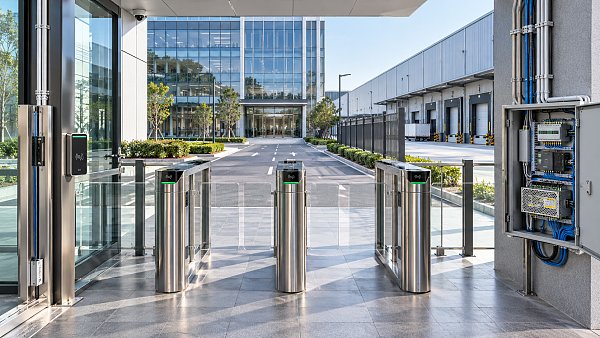
Where the program includes speed gates, turnstiles, biometric readers, smart locks, or parcel locker networks, confirm that the platform can govern the intended workflow rather than simply connect to the device. A turnstile installation may need anti-tailgating event handling and visitor throughput rules. A biometric deployment needs enrollment, privacy, liveness detection, fallback credentials, and exception procedures. Smart parcel lockers may require delivery permissions and operator-specific audit records. A single management view is useful only when these device-level events remain actionable.
SHPS procurement research can be useful at this stage because access control platforms sit alongside related physical security elements such as electronic locks, turnstiles, biometric entry devices, and connected locker infrastructure. The procurement objective is not to make every device identical; it is to understand where common identity, event, and support requirements justify integration.
Measure Results After Go-Live, Not Only Before Approval
An ROI case should become an operating scorecard. Establish a baseline before migration, then review whether the intended changes occurred after each rollout phase. Useful measures are process-based: time to activate approved access, time to revoke access, number of manual changes per site, number of credentials that require reissue, access exceptions awaiting resolution, audit-report preparation effort, and avoidable technician visits.
Also measure adoption quality. If local managers keep spreadsheets because the centralized system is difficult to use, the organization has not achieved control consolidation. If administrators create broad “temporary” groups because approvals are slow, the access model is becoming less secure despite better software. These patterns are early warnings that training, workflow design, or delegated administration needs adjustment.
Retention of event records also needs a practical policy. Security teams may need detailed histories for investigations, while IT teams must manage storage, search performance, and access to sensitive personnel information. Decide who can view records, who can export them, and how access to the platform itself is reviewed. Centralizing door control without protecting administrative privileges introduces a different concentration of risk.
When a Centralized System Is the Wrong Immediate Purchase
Centralization is not always the first investment to make. A small organization with stable staffing, few controlled openings, and no recurring cross-site access may gain little from an enterprise platform. A site with unreliable power, poor network resilience, failing locks, or unresolved life-safety issues should address those foundations before adding sophisticated management software.
It may also be premature when the organization has not decided who approves access or who owns the credential lifecycle. In that situation, a system can make inconsistent policies faster rather than better. A limited pilot, a door and network survey, and a basic access governance design are often more valuable than purchasing the largest available license tier.
The sound procurement sequence is straightforward: define the business workflows, assess door and network readiness, standardize identities and permission rules, evaluate suppliers against real scenarios, and phase the rollout around high-value sites. Centralized management then becomes an operational investment with traceable outcomes, rather than a costly dashboard layered over fragmented local practices.
Have questions about this sector analysis, or seeking best practices specific to your niche? Drop us a line below and let the senior consultants at MHLS assist you.
We respect your privacy. Your information is strictly confidential.
Recommended News
 Physical Security System Engineering: From Risk Assessment to System DesignUnmanned Terminal FellowExplore physical security system engineering, from risk assessment to integrated design, procurement and testing. Build a safer, more resilient facility.
 Apple Home Collection Smart Lock and Other Accessories Open for Preorder November 13Biometric Auth ScientistApple Home Collection preorders open November 13, 2026. Explore the LG smart lock’s Matter and Aliro support and what buyers should verify before ordering.
 Choosing Servo-Driven Flap Barriers: Throughput, Safety and Access ControlAccess Control StrategistServo-driven flap barriers can balance throughput, safety and access control. Discover how to compare lanes, test performance and choose with confidence.
 Parcel Locker Network Pricing: Setup Costs, Fees and Contract TermsUnmanned Terminal FellowCompare parcel locker networks pricing, from setup costs and recurring fees to contract terms. Discover hidden charges and choose the right model.
 JR East Plans UWB Walk-Through Gates at 40 Stations in Spring 2028Access Control StrategistJR East plans UWB walk-through gates at 40 stations in spring 2028. Explore the rollout timeline and what suppliers should watch.
 Bank Vault Security Standards: UL and EN Ratings ExplainedVault Structural ArchitectExplore bank vault security standards and learn how UL 608 classes and EN 1143-1 grades differ, what they test, and how to verify certification before you buy.
 Mechanical Lock Hardware Prices: What Buyers Should Budget for Bulk OrdersMr. Gideon CrossMechanical lock hardware price is just the starting point. Discover what drives bulk-order costs and how to compare supplier quotes with confidence.
 IndexBox Forecasts Steady Global Security Keypad Market Growth Through 2035Dr. Valerius ThorneGlobal security keypad market growth is forecast at 3.3% annually through 2035. Explore the smart home and replacement trends shaping demand.
 Choosing an Infrared Safety Sensors Manufacturer: What Buyers Should CheckUnmanned Terminal FellowChoosing an infrared safety sensors manufacturer? Compare safety evidence, integration, environmental performance and lifecycle costs before you buy.
 Choosing a Security Material Testing Service: What to Check for Lock and Safe MaterialsProf. Elara SterlingChoose a security material testing service with confidence. Learn what to check for lock and safe materials, from attack methods and accreditation to reliable reports.
 How Precision Anti-Pick Lock Cylinders Resist ManipulationSecurity Metallurgy ExpertDiscover how precision anti-pick lock technology resists manipulation, and learn what to check when comparing security features, test evidence, and everyday reliability.
 Dermalog Joins NIST FastCAP Program for Contactless Fingerprint TestingProf. Elara SterlingDermalog joins the NIST FastCAP program for contactless fingerprint testing. Discover what this means for biometric identification and digital identity.











