
Residential Access Control Systems: Types, Entry Methods, and Best-Fit Use Cases
Residential access control systems have moved far beyond a lock, a key, or a basic keypad. In residential projects today, entry security is tied to user flow, building operations, remote management, and long-term risk control. That is why system choice now affects not only safety, but also installation planning, service life, tenant experience, and how easily a property can adapt to future upgrades.
For housing developments, apartment towers, gated communities, and mixed-use compounds, the challenge is rarely about adding more hardware. It is about selecting the right level of control for each entrance, matching entry methods to actual residents, and avoiding a mismatch between technology promise and operational reality.
Why residential access control systems matter more now
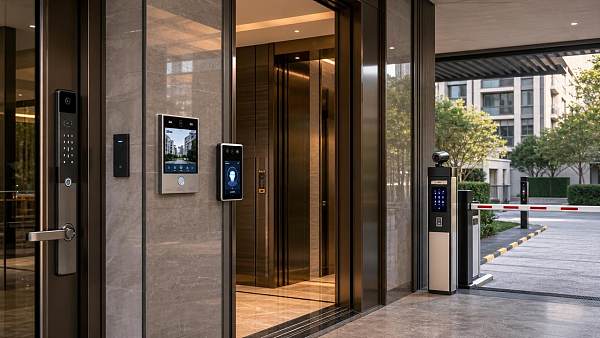
Residential security has become more layered. Main gates, lobby doors, elevator access, side entrances, parcel rooms, and parking entries all create separate control points. Each point needs a response that is secure enough, but still practical for daily use.
At the same time, users expect frictionless entry. They want to enter with a card, phone, fingerprint, or face, without waiting, repeated failures, or complicated visitor handling. That expectation pushes residential access control systems toward smarter integration.
From an industry perspective, this shift also connects with broader physical security trends. Platforms such as SHPS track how biometric smart locks, mechanical lock cylinders, anti-tailgating systems, IoT connectivity, and access control platforms are converging into practical building solutions.
This matters because residential access control systems no longer stand alone. They increasingly sit beside video intercoms, smart parcel lockers, protective doors, elevator permissions, and cloud-based credential management.
What the system really includes
A residential access control system is the combination of hardware, software, credentials, and rules that decide who can enter, where, and when. In simple terms, it turns a residential entrance into a managed decision point.
That decision point may cover a single apartment door, but more often it covers multiple layers:
- perimeter gates and vehicle entries
- pedestrian access at community entrances
- building lobbies and corridor doors
- elevator floor permissions
- shared amenities, storage rooms, and parcel areas
The strongest designs treat these layers as one coordinated system. A front gate may use license plate recognition, a lobby may use face or card authentication, and an apartment door may still rely on a smart lock with a mechanical override.
That mix is often more effective than using one entry method everywhere.
Main system types seen in residential projects
Not every property needs the same architecture. The best-fit model depends on project scale, occupancy pattern, staffing level, and expected integration with other building systems.
Standalone door-level systems
These are common in small buildings, private villas, and low-complexity retrofits. Control logic stays at the door or lock. Setup is straightforward, and cost is relatively contained.
The trade-off is limited central visibility. Credential changes, audit records, and multi-door coordination are usually weaker than networked systems.
Networked building access systems
These systems link multiple readers, controllers, and locks through one management platform. They suit mid-rise apartments, gated compounds, and projects with several managed entry points.
They support centralized permissions, visitor records, time-based access, and easier expansion. They also make it simpler to connect lobbies, side doors, garages, and shared facilities.
Cloud-managed and app-connected systems
These are gaining ground in new developments. Remote administration, digital credential issuance, and software updates reduce on-site handling. For properties with frequent turnover, this can improve operational speed.
Still, cloud convenience should be checked against cybersecurity controls, connectivity stability, and fallback operation during outages.
Hybrid systems with mechanical backup
In many projects, the most resilient residential access control systems combine electronics with strong mechanical security. A biometric smart lock may still depend on a high-quality lock body and anti-picking cylinder.
This hybrid approach matters when assessing life safety, emergency access, and maintenance risk over the full asset cycle.
Entry methods and where each one fits
Entry credentials shape the daily experience of a system. They also influence spoofing risk, replacement cost, and support workload. A short comparison makes planning easier.
In practice, one method rarely solves everything. Cards may work well at the community gate, while biometric door locks are more suitable for private unit access.
Where biometrics are used, attention should go beyond convenience. Liveness detection, false acceptance control, environmental performance, and enrollment quality all influence real reliability.
Best-fit use cases across residential environments
The value of residential access control systems becomes clearer when viewed by property type rather than by technology label alone.
Single-family homes and villas
A smart lock, video intercom, and reinforced mechanical core usually form the baseline. Here, convenience and simple administration matter more than multi-zone central control.
Apartment buildings
These projects need layered control. Main entry, lift access, unit doors, and utility spaces should be treated separately. Lost credential handling and visitor flow become key design factors.
Gated communities
Vehicle and pedestrian access must work together. Turnstiles, gate barriers, remote visitor approval, and anti-tailgating measures often play a larger role than unit-level locks alone.
Mixed-use residential developments
These environments need clearer separation of public, semi-public, and private zones. Residential access control systems should integrate with retail hours, office circulation, and delivery management.
This is also where adjacent technologies tracked by SHPS become relevant, including smart parcel lockers, protective doors, and broader smart building security platforms.
What to evaluate before locking in a system
Good selection starts with operating conditions, not product brochures. Several questions usually reveal whether a solution fits the project or only looks advanced on paper.
- How many controlled entry points exist today, and how many may be added later?
- Which doors need fast throughput, and which need stronger identity verification?
- What is the plan for visitors, deliveries, contractors, and emergency access?
- How will the system perform during power loss or network interruption?
- What mechanical protection remains if electronics fail or are attacked?
- Which certifications, audit records, and integration capabilities are required?
The last point deserves more attention than it often gets. Residential access control systems sit in a compliance-sensitive space that touches life safety, privacy, data handling, and local building regulations.
A stronger procurement process also checks component quality. Lock bodies, cylinders, door structure, reader durability, controller protection, and software support should be assessed together, not in isolation.
A practical way to move from comparison to decision
A useful next step is to map entrances by risk level, traffic volume, and user type. That quickly shows where a simple credential works, where biometrics add value, and where mechanical reinforcement still matters most.
Then compare residential access control systems through a wider lens: security performance, resident convenience, maintenance burden, integration depth, and upgrade flexibility over several years.
For projects that involve multiple vendors, it also helps to track intelligence from platforms such as SHPS, where technology analysis, compliance context, and supplier visibility can support clearer shortlisting and more defensible specifications.
The strongest decision is rarely the most complex system. It is the one that fits the building, supports daily operation, resists predictable risks, and remains manageable long after installation is complete.
- biometric smart locks
- mechanical lock cylinders
- smart parcel lockers
- access control systems
- anti-tailgating systems
- residential access control
- access control platforms
- smart building security
- physical security
- protective doors
- liveness detection
- biometric door locks
- residential access control systems
Have questions about this sector analysis, or seeking best practices specific to your niche? Drop us a line below and let the senior consultants at MHLS assist you.
We respect your privacy. Your information is strictly confidential.
Recommended News
 Physical Security System Engineering: From Risk Assessment to System DesignUnmanned Terminal FellowExplore physical security system engineering, from risk assessment to integrated design, procurement and testing. Build a safer, more resilient facility.
 Apple Home Collection Smart Lock and Other Accessories Open for Preorder November 13Biometric Auth ScientistApple Home Collection preorders open November 13, 2026. Explore the LG smart lock’s Matter and Aliro support and what buyers should verify before ordering.
 Choosing Servo-Driven Flap Barriers: Throughput, Safety and Access ControlAccess Control StrategistServo-driven flap barriers can balance throughput, safety and access control. Discover how to compare lanes, test performance and choose with confidence.
 Parcel Locker Network Pricing: Setup Costs, Fees and Contract TermsUnmanned Terminal FellowCompare parcel locker networks pricing, from setup costs and recurring fees to contract terms. Discover hidden charges and choose the right model.
 JR East Plans UWB Walk-Through Gates at 40 Stations in Spring 2028Access Control StrategistJR East plans UWB walk-through gates at 40 stations in spring 2028. Explore the rollout timeline and what suppliers should watch.
 Bank Vault Security Standards: UL and EN Ratings ExplainedVault Structural ArchitectExplore bank vault security standards and learn how UL 608 classes and EN 1143-1 grades differ, what they test, and how to verify certification before you buy.
 Mechanical Lock Hardware Prices: What Buyers Should Budget for Bulk OrdersMr. Gideon CrossMechanical lock hardware price is just the starting point. Discover what drives bulk-order costs and how to compare supplier quotes with confidence.
 IndexBox Forecasts Steady Global Security Keypad Market Growth Through 2035Dr. Valerius ThorneGlobal security keypad market growth is forecast at 3.3% annually through 2035. Explore the smart home and replacement trends shaping demand.
 Choosing an Infrared Safety Sensors Manufacturer: What Buyers Should CheckUnmanned Terminal FellowChoosing an infrared safety sensors manufacturer? Compare safety evidence, integration, environmental performance and lifecycle costs before you buy.
 Choosing a Security Material Testing Service: What to Check for Lock and Safe MaterialsProf. Elara SterlingChoose a security material testing service with confidence. Learn what to check for lock and safe materials, from attack methods and accreditation to reliable reports.
 How Precision Anti-Pick Lock Cylinders Resist ManipulationSecurity Metallurgy ExpertDiscover how precision anti-pick lock technology resists manipulation, and learn what to check when comparing security features, test evidence, and everyday reliability.
 Dermalog Joins NIST FastCAP Program for Contactless Fingerprint TestingProf. Elara SterlingDermalog joins the NIST FastCAP program for contactless fingerprint testing. Discover what this means for biometric identification and digital identity.











