UL Revises ANSI/UL 294 for Networked Hotel Locks
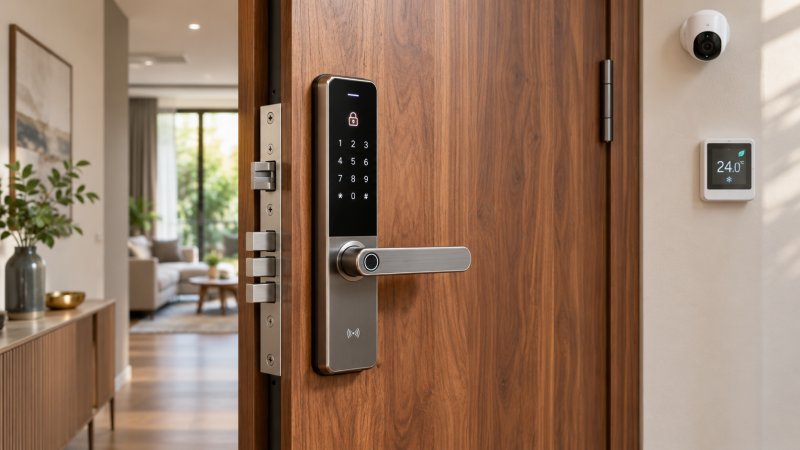
On July 8, 2026, UL released the fourth edition of ANSI/UL 294-2026, introducing a new compliance threshold for networked hotel locks: built-in cryptographic modules must meet FIPS 140-3 Level 2, while key rotation and remote firmware signature verification are also required. Because the rule applies to all new production batches manufactured from October 1, 2026, this update is immediately relevant to hotel procurement teams in North America, lock manufacturers, export suppliers, and development teams assessing product timelines and cost impacts.

What the revised standard now requires
According to the provided event information, UL issued the fourth edition of ANSI/UL 294-2026 on July 8, 2026. The revision makes FIPS 140-3 Level 2 compliance mandatory for the cryptographic modules embedded in Networked Hotel Locks.
The same revision also requires these products to support key rotation and remote firmware signature verification. The new rule applies to all newly produced batches manufactured on or after October 1, 2026.
The provided summary further states that the revision directly affects procurement specifications used by North American hotel management groups, as well as the bill of materials and development schedules of Chinese exporters.
Where the pressure is likely to appear first
Hotel procurement specifications are likely to tighten quickly
From an industry perspective, hotel management groups and procurement teams in North America are among the first stakeholders likely to feel the impact. The reason is straightforward: once a production-date-based requirement takes effect, purchasing specifications, supplier qualification criteria, and technical review items may need to reflect the new encryption, key management, and firmware verification requirements.
What deserves closer attention is the procurement stage itself. Buyers may need to distinguish between legacy inventory and new production batches, while also paying closer attention to whether supplier documentation clearly addresses the revised standard requirements.
Manufacturers face direct product and engineering adjustments
Analysis shows that manufacturers of networked hotel locks are likely to be affected at the product design and development level. The requirement for a FIPS 140-3 Level 2 cryptographic module is not only a feature matter; it directly touches component selection, embedded security architecture, firmware workflows, and compliance preparation.
The additional requirements for key rotation and remote firmware signature verification also point to software and lifecycle management implications. For engineering teams, the main issue is likely to be how these functions are integrated into products that are already planned for production within a short timeline.
Chinese export suppliers may see BOM and lead-time pressure
Based on the provided information, Chinese exporters are directly affected in two areas: BOM cost and development cycle. This suggests pressure on sourcing, component decisions, and project planning, especially for products intended for the North American hospitality market.
Observably, the business impact may not be limited to hardware cost alone. Export-oriented suppliers may also need to pay closer attention to customer communication, compliance evidence, and delivery commitments for batches produced after the effective date.
Practical issues companies should track now
Separate existing inventory from post-October production
What deserves closer attention is the production cutoff built into the rule. Since the requirement applies to new batches produced from October 1, 2026, companies involved in supply, procurement, and project delivery should closely track how products are dated, classified, and documented in actual transactions.
Review whether product definitions match the networked scope
For manufacturers and channel partners, one immediate task is to clarify which products fall within the Networked Hotel Locks category in their portfolio and customer programs. That distinction matters because the compliance burden described in the provided summary is tied to that specific product type.
Prepare for customer questions on security functions, not only certification language
Analysis shows that buyers may focus not only on whether a product aligns with ANSI/UL 294-2026, but also on whether the product can demonstrate the required security functions in practical terms. In this case, key rotation and remote firmware signature verification are explicit points in the revision and are likely to become part of technical discussions and procurement reviews.
Align cost, engineering, and delivery discussions early
Because the provided summary explicitly mentions BOM cost and development cycle impacts, companies should pay attention to cross-functional coordination. Commercial teams, sourcing teams, and development teams may need a shared view of how the revised requirement affects quotations, lead times, and customer commitments for North America-bound products.
Why this looks like more than a short-term specification update
Observably, this development can be read as more than a routine standards revision for a narrow product category. The explicit inclusion of cryptographic module level, key rotation, and remote firmware signature verification signals that security functions in connected access control products are being defined with greater precision at the product requirement level.
At the same time, it is more appropriate to understand this as a confirmed compliance change with broader strategic implications still unfolding, rather than as a fully settled market outcome. The rule itself is clear in the provided information, but how quickly procurement language, supplier qualification practices, and product roadmaps adjust remains something the industry still needs to watch.
How the market should read this update
In practical terms, this is already a concrete change for any business tied to networked hotel locks intended for North America after October 1, 2026. The immediate significance lies in compliance scope, product configuration, and project planning rather than in abstract policy signaling.
From an industry perspective, the update is best understood as both a near-term operational requirement and a longer-term signal that security capabilities in connected hospitality access devices are receiving closer scrutiny. That does not by itself determine market outcomes, but it does raise the threshold for product readiness, procurement alignment, and delivery planning.
Basis of this article and what still needs verification
This article is based on the user-provided news title, event date, and event summary. The confirmed factual basis used here includes the release date of July 8, 2026, UL's publication of the fourth edition of ANSI/UL 294-2026, the requirement for FIPS 140-3 Level 2 cryptographic modules in Networked Hotel Locks, the added requirements for key rotation and remote firmware signature verification, the October 1, 2026 production-date applicability, and the stated impact on North American hotel procurement specifications and Chinese exporters' BOM cost and development cycle.
For this type of industry update, relevant source categories typically include official notices, standards organization documents, company statements, industry association information, and reporting by authoritative trade media. A specific official source link was not provided in the input, so the exact source document path still requires ongoing verification. Follow-up attention should remain on any official clarifications, implementation wording, and downstream procurement or supplier documentation updates related to the revised standard.
Have questions about this sector analysis, or seeking best practices specific to your niche? Drop us a line below and let the senior consultants at MHLS assist you.
We respect your privacy. Your information is strictly confidential.
Recommended News
 Physical Security Infrastructure Cost: Budgeting for Installation and MaintenanceUnmanned Terminal FellowUnderstand physical security infrastructure cost and build a smarter budget for installation, maintenance, and long-term ownership.
 Financial Facility Security: Choosing Vault Doors for Bank BranchesVault Structural ArchitectStrengthen financial facility security with the right bank vault door. Explore certification, installation, locking controls and maintenance before you buy.
 MACO Acquires Majority Stake in Fingerprint Access Provider ekeyProf. Elara SterlingMACO acquires a majority stake in ekey, bringing fingerprint access and door hardware closer together. Discover what the deal could mean for smart buildings.
 Physical Security System Engineering: From Risk Assessment to System DesignUnmanned Terminal FellowExplore physical security system engineering, from risk assessment to integrated design, procurement and testing. Build a safer, more resilient facility.
 Apple Home Collection Smart Lock and Other Accessories Open for Preorder November 13Biometric Auth ScientistApple Home Collection preorders open November 13, 2026. Explore the LG smart lock’s Matter and Aliro support and what buyers should verify before ordering.
 Choosing Servo-Driven Flap Barriers: Throughput, Safety and Access ControlAccess Control StrategistServo-driven flap barriers can balance throughput, safety and access control. Discover how to compare lanes, test performance and choose with confidence.
 Parcel Locker Network Pricing: Setup Costs, Fees and Contract TermsUnmanned Terminal FellowCompare parcel locker networks pricing, from setup costs and recurring fees to contract terms. Discover hidden charges and choose the right model.
 JR East Plans UWB Walk-Through Gates at 40 Stations in Spring 2028Access Control StrategistJR East plans UWB walk-through gates at 40 stations in spring 2028. Explore the rollout timeline and what suppliers should watch.
 Bank Vault Security Standards: UL and EN Ratings ExplainedVault Structural ArchitectExplore bank vault security standards and learn how UL 608 classes and EN 1143-1 grades differ, what they test, and how to verify certification before you buy.
 Mechanical Lock Hardware Prices: What Buyers Should Budget for Bulk OrdersMr. Gideon CrossMechanical lock hardware price is just the starting point. Discover what drives bulk-order costs and how to compare supplier quotes with confidence.
 IndexBox Forecasts Steady Global Security Keypad Market Growth Through 2035Dr. Valerius ThorneGlobal security keypad market growth is forecast at 3.3% annually through 2035. Explore the smart home and replacement trends shaping demand.
 Choosing an Infrared Safety Sensors Manufacturer: What Buyers Should CheckUnmanned Terminal FellowChoosing an infrared safety sensors manufacturer? Compare safety evidence, integration, environmental performance and lifecycle costs before you buy.