US Tightens Entry Rules for Networked Hotel Locks
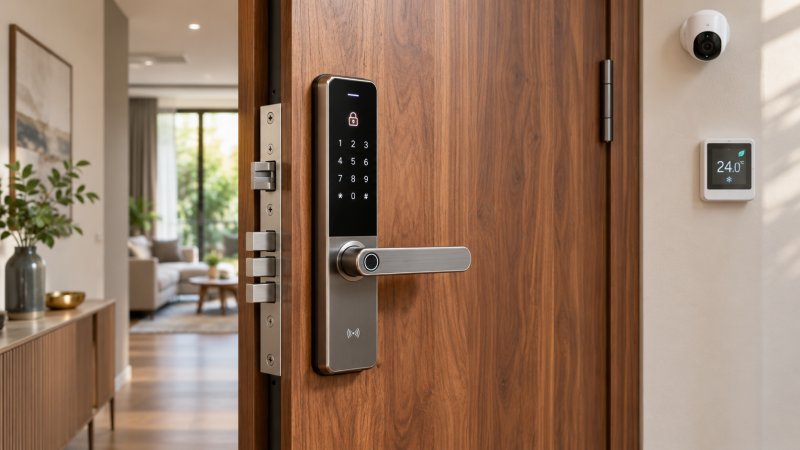
On July 12, 2026, U.S. Customs and Border Protection (CBP) updated its import compliance guidance and began stricter admission review for networked hotel electronic locks under HS 8301.40.90. For exporters, importers, smart lock manufacturers, hotel procurement teams, and cross-border compliance service providers, this is worth close attention because the requirement now links product safety review with information security documentation at the shipment level, and non-compliant batches may face detention and a 30-day remediation window.

What the new CBP requirement covers
According to the provided information, CBP updated its import compliance guidance on July 12, 2026. From that date, networked hotel electronic locks classified under HS 8301.40.90 are subject to enhanced entry review.
The updated requirement calls for every imported batch to be accompanied by both UL 1037 safety certification and a declaration related to ISO/IEC 27001 information security management.
The stated trigger for this change is a series of recent remote hijacking incidents involving hotel door locks. The measure is intended to prevent devices using unencrypted communication protocols from entering the U.S. market.
The provided information also states that Chinese exporters lacking UL certification, or failing to implement TLS 1.3 plus key rotation mechanisms, may face full-batch detention and a 30-day corrective period.
Where the immediate pressure is likely to appear
Shipment approval risk rises for exporters
From an industry perspective, direct trading companies exporting networked hotel locks to the United States are likely to feel the impact first. The reason is straightforward: the new review applies at the import batch level, so documentation readiness is no longer a secondary issue after production. The main pressure point will be pre-shipment compliance screening, document completeness, and the ability to show that the relevant certification and security declarations align with the goods being shipped.
Manufacturers face tighter coordination between hardware and security controls
For lock manufacturers, the issue is not limited to customs paperwork. Analysis shows that the requirement connects physical product compliance with cybersecurity expectations, especially where encrypted communications and key rotation are concerned. That means the affected business step is likely to be the interface between product design, firmware configuration, testing, and export documentation, rather than only final assembly or labeling.
Importers and buyers may reassess supplier readiness
U.S. importers, hotel buyers, and procurement teams may also need to pay closer attention to supplier qualification. Observably, a shipment detention risk affects not only customs clearance but also installation schedules, replacement planning, and project handover timing. What deserves closer attention is whether suppliers can provide consistent batch-level compliance materials, not merely general statements about product capability.
Supply chain service providers may see more pre-clearance work
Customs brokers, compliance consultants, and logistics coordinators are also within the impact range. Their exposure comes from the need to verify document sufficiency before cargo arrival and to manage remediation timelines if a batch is detained. In practice, the key change is likely to be earlier compliance review in the booking and shipping process, especially for goods declared under the affected HS code.
What companies should watch right now
Check whether product scope and HS classification match the rule
Companies dealing in connected hotel locking systems should first verify whether their products fall within HS 8301.40.90 as referenced in the provided information. This matters because the strengthened review is tied to that category, and classification accuracy will shape both document preparation and customs risk assessment.
Prepare shipment-level compliance files, not only corporate-level claims
What deserves closer attention is the phrase requiring submission for all imported batches. In practical terms, businesses should focus on whether each shipment can be supported by the required UL 1037 certification materials and the ISO/IEC 27001-related declaration in a way that customs can review clearly. The operational issue here is not abstract compliance posture, but whether documentation can travel with the goods in a usable form.
Review communication security controls against the stated risk point
The event summary directly references unencrypted communication protocols and notes the risk tied to missing TLS 1.3 plus key rotation mechanisms. For affected suppliers, this makes technical verification a current priority. Analysis shows that the policy signal is not only about certificates, but also about whether connected lock products can demonstrate alignment with the security threshold described in the provided information.
Plan for detention scenarios and customer communication
Since the provided information mentions full-batch detention and a 30-day remediation period for certain non-compliant Chinese exporters, businesses should prepare for delivery disruption scenarios. In operational terms, the focus should be on internal escalation paths, lead-time buffers, customer notification language, and supplier coordination if a shipment is challenged after arrival.
How this should be read at this stage
Analysis shows that this is more than a narrow customs paperwork update, because the requirement combines market-entry control with explicit attention to connected-device security. At the same time, it is more appropriate to understand this as a targeted regulatory tightening around a defined product category than as a confirmed shift across all smart access products.
Observably, the strongest current signal is that customs enforcement is being used to screen for both safety certification and baseline cybersecurity readiness where networked hotel locks are concerned. The broader industry implication still needs continued observation, especially regarding whether similar review logic appears in adjacent connected hardware categories.
Why the development matters beyond this shipment cycle
For the industry, the immediate meaning of this update is clear: entry compliance for networked hotel locks bound for the U.S. market can no longer be treated as a routine declaration exercise. It now appears tied to both recognized safety certification and demonstrable information security governance.
That said, it is more appropriate to understand this development as a concrete near-term compliance change with possible longer-term signaling value, rather than as a final indicator of a wider regulatory outcome. Companies involved in exports, sourcing, manufacturing, and project delivery should track implementation details closely while avoiding assumptions that go beyond the confirmed information.
Basis of this article and points for continued verification
This article is based on the user-provided news title, event date, and event summary. The specific official source link was not provided in the input, so the underlying wording and any later clarifications still require ongoing verification.
For this type of development, source categories typically worth monitoring include official customs notices, company compliance disclosures, industry association updates, authoritative media reporting, and standards-related documentation. The main follow-up points are whether CBP issues more detailed interpretive language, whether documentation expectations change in practice, and whether the review approach remains limited to networked hotel locks under HS 8301.40.90.
Have questions about this sector analysis, or seeking best practices specific to your niche? Drop us a line below and let the senior consultants at MHLS assist you.
We respect your privacy. Your information is strictly confidential.
Recommended News
 Physical Security System Engineering: From Risk Assessment to System DesignUnmanned Terminal FellowExplore physical security system engineering, from risk assessment to integrated design, procurement and testing. Build a safer, more resilient facility.
 Apple Home Collection Smart Lock and Other Accessories Open for Preorder November 13Biometric Auth ScientistApple Home Collection preorders open November 13, 2026. Explore the LG smart lock’s Matter and Aliro support and what buyers should verify before ordering.
 Choosing Servo-Driven Flap Barriers: Throughput, Safety and Access ControlAccess Control StrategistServo-driven flap barriers can balance throughput, safety and access control. Discover how to compare lanes, test performance and choose with confidence.
 Parcel Locker Network Pricing: Setup Costs, Fees and Contract TermsUnmanned Terminal FellowCompare parcel locker networks pricing, from setup costs and recurring fees to contract terms. Discover hidden charges and choose the right model.
 JR East Plans UWB Walk-Through Gates at 40 Stations in Spring 2028Access Control StrategistJR East plans UWB walk-through gates at 40 stations in spring 2028. Explore the rollout timeline and what suppliers should watch.
 Bank Vault Security Standards: UL and EN Ratings ExplainedVault Structural ArchitectExplore bank vault security standards and learn how UL 608 classes and EN 1143-1 grades differ, what they test, and how to verify certification before you buy.
 Mechanical Lock Hardware Prices: What Buyers Should Budget for Bulk OrdersMr. Gideon CrossMechanical lock hardware price is just the starting point. Discover what drives bulk-order costs and how to compare supplier quotes with confidence.
 IndexBox Forecasts Steady Global Security Keypad Market Growth Through 2035Dr. Valerius ThorneGlobal security keypad market growth is forecast at 3.3% annually through 2035. Explore the smart home and replacement trends shaping demand.
 Choosing an Infrared Safety Sensors Manufacturer: What Buyers Should CheckUnmanned Terminal FellowChoosing an infrared safety sensors manufacturer? Compare safety evidence, integration, environmental performance and lifecycle costs before you buy.
 Choosing a Security Material Testing Service: What to Check for Lock and Safe MaterialsProf. Elara SterlingChoose a security material testing service with confidence. Learn what to check for lock and safe materials, from attack methods and accreditation to reliable reports.
 How Precision Anti-Pick Lock Cylinders Resist ManipulationSecurity Metallurgy ExpertDiscover how precision anti-pick lock technology resists manipulation, and learn what to check when comparing security features, test evidence, and everyday reliability.
 Dermalog Joins NIST FastCAP Program for Contactless Fingerprint TestingProf. Elara SterlingDermalog joins the NIST FastCAP program for contactless fingerprint testing. Discover what this means for biometric identification and digital identity.