What to Check Before Choosing a Smart Lock Integration API for Property Systems
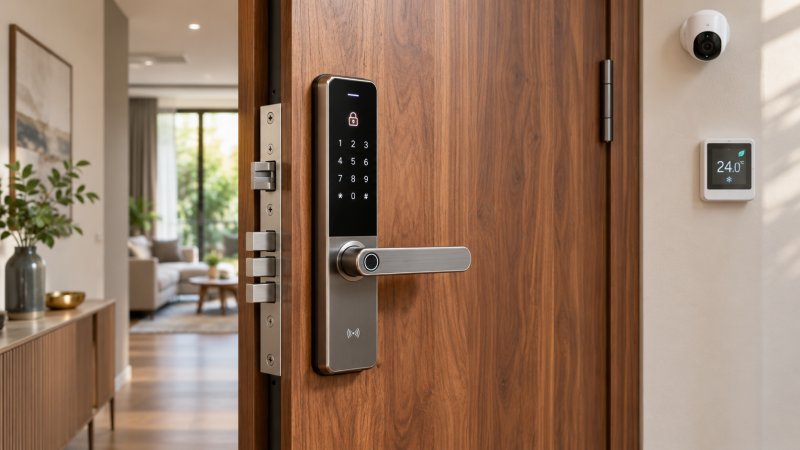
A smart lock integration API can look fine in a demo and still become a problem once it reaches a live property stack. For technical evaluators, the real work starts before procurement: checking how the API handles lock commands, user identity, event timing, failure states, and system boundaries. In property systems, this is not just about getting a door to unlock from software. It is about whether the integration will behave predictably across apartments, common areas, staff access, contractors, temporary credentials, and incident response.
The most expensive mistakes usually come from choosing an API that connects easily but does not fit the way the building actually operates. Below is the checklist I would use before committing to any smart lock integration API for PMS, access control, building apps, or mixed property management environments.
Start with the access model, not the endpoint list
Many teams begin by asking whether the API supports lock, unlock, create user, delete user, and fetch logs. That is too shallow. First map how access is supposed to work in the property:
- Resident credentials vs guest credentials
- Permanent staff vs shift-based staff
- Single-door access vs area-based permissions
- Scheduled access windows, revocation, and emergency override
Then check whether the API reflects that model cleanly. If the system only supports flat user-to-lock assignments, it may work for a small site and turn messy at portfolio scale. Property systems usually need grouping, role logic, validity periods, and a reliable way to revoke access without waiting for manual cleanup on each lock.
A common miss: the API can create credentials, but cannot express business rules like “housekeeping can enter units only during service windows” or “delivery access works only at selected parcel rooms.” If that logic must be rebuilt entirely in your middleware, the integration cost and failure surface grow quickly.
Check device compatibility at the lock-family level
“Supports smart locks” tells you almost nothing. Ask which lock families, firmware branches, communication paths, and deployment types are actually supported by the API. There is a big difference between an API that works with a cloud-connected apartment lock and one that also covers gateway-managed common doors, offline-capable units, or retrofit cylinders.
Look for these details in the technical documentation and device matrix:
- Which exact lock models are supported
- Whether support changes by firmware version
- Whether mobile credentials, PINs, cards, biometrics, or temporary codes are all exposed through the same API
- Whether the API behavior differs for online and intermittently connected devices
This matters because property portfolios are rarely uniform. If your integration strategy depends on one API but part of the building uses a different controller, gateway, or credential type, the operational model can split in ugly ways.

Find out where the control logic actually lives
Some smart lock integration APIs are thin wrappers around a vendor cloud. Others depend on local controllers, edge gateways, or a mixed architecture. You need to know this early because it changes latency, failure behavior, cybersecurity review, and even commissioning workflows.
Ask practical questions:
- When a credential is issued, where is it created first: cloud, gateway, controller, or lock?
- If internet connectivity drops, which functions continue to work locally?
- How are queued updates synchronized after reconnect?
- Does the API expose device state accurately, or only the last cloud-known state?
The wrong assumption here creates bad incident handling. A dashboard that says a door is secure because the cloud record looks healthy is not enough if the field device has been offline for hours.
Do not treat credential lifecycle as a small detail
Credential lifecycle is where property integrations either stay manageable or become support-heavy. Check how the API handles issuance, update, suspension, expiry, renewal, and deletion. These sound routine until you have lease changes, unit transfers, cleaners, contractors, and after-hours vendors all moving through the same system.
Useful checks include whether the API supports:
- Time-bounded credentials with precise start and end times
- Immediate revocation for compromised users or devices
- Bulk operations for move-ins, move-outs, or staffing changes
- Idempotent requests so repeated calls do not create duplicate access records
If the API cannot guarantee predictable credential state under retries or partial failures, your support team will end up troubleshooting access rights that look correct in one system and wrong at the door.
Look closely at events, logs, and timestamps
For property operations, event quality often matters more than command support. You need to know what happened, when it happened, and whether the event came from the lock, the controller, the gateway, or the cloud platform.
A usable API should make it possible to distinguish between events such as:
- Credential accepted vs door physically opened
- Remote unlock command sent vs command executed
- Access denied because of schedule vs denied because device was offline
- Battery alert vs communication fault
Also verify timestamp behavior. Ask what timezone is used, whether daylight saving changes are normalized, and whether delayed device uploads preserve original event time. These are not cosmetic details. If a tenant dispute, security review, or insurance-related timeline depends on logs, weak timestamp handling becomes a real liability.
Evaluate API security as part of physical security, not separate from it
A smart lock integration API sits on the line between software identity and physical entry. Review it accordingly. The baseline is clear enough: authentication method, authorization scope, token management, encryption in transit, auditability, and secret rotation. But the more useful questions are operational.
Can one integration account unlock every property in the portfolio? Can permissions be segmented by site, building, or organization? Are high-risk actions logged with actor identity and request source? If a credentialing service is compromised, what is the containment boundary?
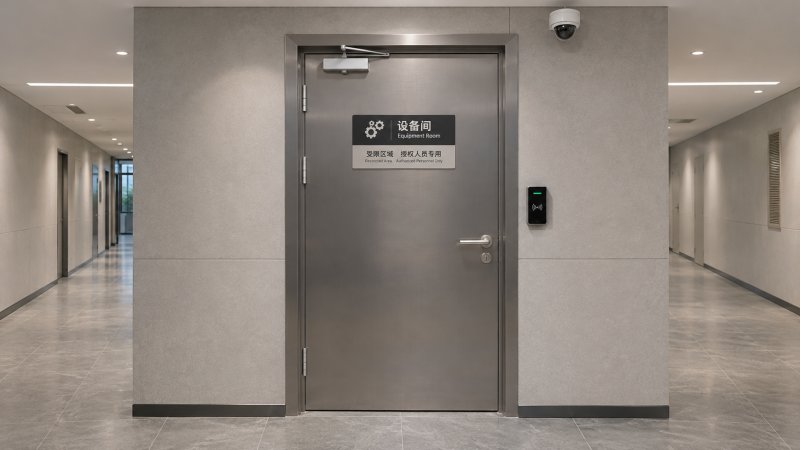
For environments that handle residential access, staff access, and restricted technical rooms together, broad API privileges are a design flaw, not a convenience.
Test failure modes before you trust the happy path
Most vendor demos show successful provisioning and smooth unlock flows. That is the least interesting part of the evaluation. Spend time on degraded conditions:
If the vendor cannot describe these behaviors clearly in docs or test environments, expect trouble during rollout.
Measure integration fit with the systems you already run
For property systems, the API rarely works alone. It usually needs to sync with PMS, resident apps, visitor management, identity providers, maintenance systems, and sometimes broader access control infrastructure. The key question is not “Does it have webhooks?” The key question is whether the objects and event model are stable enough to support reliable cross-system automation.
Check naming consistency, external IDs, webhook retry logic, ordering guarantees, and whether changes can be traced end to end. If a move-out in the PMS should trigger access revocation, you need to know exactly which object owns that state and how conflicts are resolved if the lock platform and property platform disagree.
Review operational scale, not just API rate limits
Rate limits matter, but operational scale is broader. A portfolio can generate bursts: tenant onboarding, seasonal staff changes, contractor windows, mass battery alerts, and emergency credential resets. Ask how the API behaves under bulk provisioning and high event volume. Does it throttle gracefully? Can it process batches? Are there asynchronous job states you can monitor?
This is where many integrations show their limits. An API that is fine for one building may struggle once hundreds of doors begin reporting state and accepting scheduled access changes every day.
Read the documentation like an operator, not a developer alone
Good documentation should do more than list endpoints. It should explain state transitions, device dependencies, event definitions, and error conditions in a way that helps engineering and operations stay aligned. Pay attention to whether the docs show:
- Clear error codes with actionable meaning
- Examples for provisioning, revocation, and device replacement
- Webhook schemas and retry expectations
- Release notes that show whether changes are controlled or disruptive
Thin docs usually mean hidden integration work. That hidden work becomes your problem later.
Check the compliance and deployment boundary
The right review depends on market, property type, and data flow. For example, if the integration touches biometric identity upstream, resident data, staff access records, or restricted-area entry logs, your evaluation has to define which system stores what, where, and for how long. Do not assume the smart lock API is only a transport layer. In some deployments, it becomes part of the auditable access record.
Ask for the architecture documents that show data residency, log retention behavior, and administrative access boundaries. Those are more useful than broad compliance claims because they let your team assess the actual deployment model being proposed.
Make the decision in the order that reduces risk
A practical selection sequence is simple. First confirm the API can represent your access model. Then verify supported devices and architecture. After that, pressure-test credential lifecycle, logging, and failure behavior. Only once those pass should you spend serious time on developer experience, pricing structure, and rollout planning.
If two vendors look similar, choose the one that gives you clearer state handling, cleaner revocation logic, and better visibility into what happened at the door. In property environments, that usually matters more than having a longer endpoint catalog. A smart lock integration API is a control surface for physical access. Evaluate it like one.
Have questions about this sector analysis, or seeking best practices specific to your niche? Drop us a line below and let the senior consultants at MHLS assist you.
We respect your privacy. Your information is strictly confidential.
Recommended News
 Physical Security System Engineering: From Risk Assessment to System DesignUnmanned Terminal FellowExplore physical security system engineering, from risk assessment to integrated design, procurement and testing. Build a safer, more resilient facility.
 Apple Home Collection Smart Lock and Other Accessories Open for Preorder November 13Biometric Auth ScientistApple Home Collection preorders open November 13, 2026. Explore the LG smart lock’s Matter and Aliro support and what buyers should verify before ordering.
 Choosing Servo-Driven Flap Barriers: Throughput, Safety and Access ControlAccess Control StrategistServo-driven flap barriers can balance throughput, safety and access control. Discover how to compare lanes, test performance and choose with confidence.
 Parcel Locker Network Pricing: Setup Costs, Fees and Contract TermsUnmanned Terminal FellowCompare parcel locker networks pricing, from setup costs and recurring fees to contract terms. Discover hidden charges and choose the right model.
 JR East Plans UWB Walk-Through Gates at 40 Stations in Spring 2028Access Control StrategistJR East plans UWB walk-through gates at 40 stations in spring 2028. Explore the rollout timeline and what suppliers should watch.
 Bank Vault Security Standards: UL and EN Ratings ExplainedVault Structural ArchitectExplore bank vault security standards and learn how UL 608 classes and EN 1143-1 grades differ, what they test, and how to verify certification before you buy.
 Mechanical Lock Hardware Prices: What Buyers Should Budget for Bulk OrdersMr. Gideon CrossMechanical lock hardware price is just the starting point. Discover what drives bulk-order costs and how to compare supplier quotes with confidence.
 IndexBox Forecasts Steady Global Security Keypad Market Growth Through 2035Dr. Valerius ThorneGlobal security keypad market growth is forecast at 3.3% annually through 2035. Explore the smart home and replacement trends shaping demand.
 Choosing an Infrared Safety Sensors Manufacturer: What Buyers Should CheckUnmanned Terminal FellowChoosing an infrared safety sensors manufacturer? Compare safety evidence, integration, environmental performance and lifecycle costs before you buy.
 Choosing a Security Material Testing Service: What to Check for Lock and Safe MaterialsProf. Elara SterlingChoose a security material testing service with confidence. Learn what to check for lock and safe materials, from attack methods and accreditation to reliable reports.
 How Precision Anti-Pick Lock Cylinders Resist ManipulationSecurity Metallurgy ExpertDiscover how precision anti-pick lock technology resists manipulation, and learn what to check when comparing security features, test evidence, and everyday reliability.
 Dermalog Joins NIST FastCAP Program for Contactless Fingerprint TestingProf. Elara SterlingDermalog joins the NIST FastCAP program for contactless fingerprint testing. Discover what this means for biometric identification and digital identity.