
Access Control Security Hardware Trends: What Buyers Should Watch in Compliance and Integration
Access control security hardware trends are becoming harder to ignore
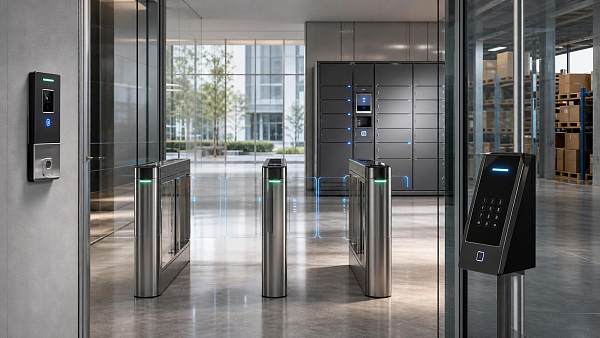
Access control security hardware trends now reflect a broader change in how physical security is specified, connected, and audited across buildings, logistics assets, and restricted spaces.
What used to be a hardware-led decision is moving toward a compliance and integration-led decision.
That shift matters because readers, locks, turnstiles, controllers, and cloud software no longer operate as isolated products.
They now sit inside larger ecosystems that include smart buildings, visitor management, parcel delivery, identity platforms, and cybersecurity controls.
Recent market signals show a clear pattern.
Teams are asking fewer questions about headline features and more questions about certification readiness, integration risk, maintenance cycles, and data handling.
This is why access control security hardware trends are no longer just about innovation speed.
They are also about whether a device can fit real operating environments without creating technical debt.
Across the SHPS coverage landscape, that pressure is visible in biometric smart locks, speed gates, infrared anti-tailgating systems, electronic locker locks, and access platforms.
Why compliance is moving closer to the center of buying decisions
A few years ago, compliance was often treated as a final checkpoint.
Now it is shaping shortlist decisions much earlier.
The reason is simple.
Security hardware is increasingly expected to prove not only function, but tested resilience, safe operation, and predictable interoperability.
For access systems, this may involve electrical safety, fire path requirements, egress rules, biometric privacy obligations, or software security controls.
In connected environments, documentation quality also matters more.
A supplier that can clearly explain test scope, firmware support, and integration boundaries usually creates less deployment friction.
That is especially relevant when comparing hardware across regions or export markets.
The same product family may need different approvals, interface expectations, or installation practices depending on application context.
- Biometric devices are facing closer review around liveness detection, spoof resistance, and personal data handling.
- Turnstiles and speed gates are seeing more attention on user safety, throughput control, and emergency release behavior.
- Smart locks are being examined for both credential security and mechanical fallback reliability.
- Locker networks are under pressure to show stable connectivity, tamper awareness, and service continuity.
In that sense, access control security hardware trends are being driven by risk visibility as much as by technology progress.
Integration has become a practical issue, not a future ambition
Another clear change is the decline of stand-alone thinking.
Access devices are now expected to exchange data with building management systems, identity services, mobile credentials, video platforms, and remote administration tools.
This sounds familiar, but the market has become less tolerant of weak integration claims.
Buyers increasingly want to know whether integration is native, certified, documented, or dependent on custom middleware.
That distinction affects deployment cost more than many initial quotations reveal.
A lower unit price can quickly lose appeal when field configuration, firmware exceptions, or API limitations start multiplying.
The stronger suppliers are responding with more structured interface strategies.
They are publishing protocol support, edge processing capabilities, event logging rules, and upgrade paths in a way that can be validated before rollout.
This is one of the most important access control security hardware trends because it changes total project exposure, not just product selection.
The hardware itself is also being judged more rigorously
Digital capability is important, but physical performance has not become less relevant.
In many cases, it is being reviewed more carefully because failures now carry both security and operational costs.
For example, a biometric lock with weak anti-spoofing controls creates one risk.
A biometric lock with poor mechanical durability creates another.
The market is rewarding solutions that can explain both dimensions clearly.
That includes lock body construction, anti-picking features, sensor consistency, environmental tolerance, and service life under repeated use.
In higher-security environments, the same logic extends further.
Questions about anti-drill materials, reinforced housings, secure door structures, and certified resistance are influencing how adjacent access products are evaluated.
SHPS has highlighted this convergence well.
Physical security engineering, mechanical locking structure, biometric reliability, and connected management are no longer separate conversations.
They are part of one deployment logic.
Where the impact shows up first
The effect of these access control security hardware trends is not evenly distributed.
Some environments feel the pressure earlier because they combine throughput, liability, and system complexity.
Commercial and mixed-use buildings
Integration expectations are rising fast here.
Entry hardware often needs to align with tenant access, visitor workflows, elevator permissions, and remote credential changes.
Logistics and parcel infrastructure
Smart parcel lockers and access points are being judged on uptime, lock reliability, audit trails, and network stability.
Simple remote opening is no longer enough.
Financial and restricted facilities
These sites remain sensitive to certified protection, event traceability, and controlled integration with broader security infrastructure.
Hardware credibility matters as much as software convenience.
Residential premium access
Biometric door locks, mobile credentials, and connected entrances are expanding.
Yet expectations around privacy, battery resilience, and fallback entry are also moving up.
What deserves closer attention before specifications are fixed
From recent demand patterns, several checkpoints now deserve earlier review.
- Verify whether certifications apply to the exact hardware configuration, not only to a related product family.
- Check how biometric templates, event data, and remote credentials are stored, transmitted, and deleted.
- Confirm protocol support and whether claimed integrations have live reference cases.
- Review firmware update policy, vulnerability response timing, and device support duration.
- Examine fallback modes, especially for network loss, power issues, or emergency release conditions.
- Assess maintenance needs for sensors, lock bodies, gate mechanics, and consumable components.
These points sound detailed, but that is exactly where many hidden costs sit.
The current phase of access control security hardware trends favors disciplined comparison over broad feature enthusiasm.
The next signals to watch are more operational than promotional
Looking ahead, the market will likely keep moving toward fewer isolated devices and more accountable security nodes.
That means better event intelligence, tighter cyber-physical coordination, and stronger proof of field reliability.
It also means marketing language will matter less than testability.
The suppliers gaining trust will be the ones that can explain how hardware behaves under stress, how software evolves, and how integration risk is contained.
For anyone tracking access control security hardware trends, the useful next step is not simply to watch product launches.
It is to map changing requirements across compliance, interoperability, and lifecycle support, then compare them against real deployment conditions.
That approach creates a clearer view of which technologies are genuinely ready, which claims need proof, and which risks can still be designed out early.
- biometric smart locks
- smart parcel lockers
- security infrastructure
- security hardware trends
- speed gates
- anti-tailgating systems
- physical security engineering
- infrared anti-tailgating systems
- physical security
- liveness detection
- biometric door locks
- security hardware
- access control security hardware
- electronic locker locks
- access control security hardware trends
Have questions about this sector analysis, or seeking best practices specific to your niche? Drop us a line below and let the senior consultants at MHLS assist you.
We respect your privacy. Your information is strictly confidential.
Recommended News
 Physical Security System Engineering: From Risk Assessment to System DesignUnmanned Terminal FellowExplore physical security system engineering, from risk assessment to integrated design, procurement and testing. Build a safer, more resilient facility.
 Apple Home Collection Smart Lock and Other Accessories Open for Preorder November 13Biometric Auth ScientistApple Home Collection preorders open November 13, 2026. Explore the LG smart lock’s Matter and Aliro support and what buyers should verify before ordering.
 Choosing Servo-Driven Flap Barriers: Throughput, Safety and Access ControlAccess Control StrategistServo-driven flap barriers can balance throughput, safety and access control. Discover how to compare lanes, test performance and choose with confidence.
 Parcel Locker Network Pricing: Setup Costs, Fees and Contract TermsUnmanned Terminal FellowCompare parcel locker networks pricing, from setup costs and recurring fees to contract terms. Discover hidden charges and choose the right model.
 JR East Plans UWB Walk-Through Gates at 40 Stations in Spring 2028Access Control StrategistJR East plans UWB walk-through gates at 40 stations in spring 2028. Explore the rollout timeline and what suppliers should watch.
 Bank Vault Security Standards: UL and EN Ratings ExplainedVault Structural ArchitectExplore bank vault security standards and learn how UL 608 classes and EN 1143-1 grades differ, what they test, and how to verify certification before you buy.
 Mechanical Lock Hardware Prices: What Buyers Should Budget for Bulk OrdersMr. Gideon CrossMechanical lock hardware price is just the starting point. Discover what drives bulk-order costs and how to compare supplier quotes with confidence.
 IndexBox Forecasts Steady Global Security Keypad Market Growth Through 2035Dr. Valerius ThorneGlobal security keypad market growth is forecast at 3.3% annually through 2035. Explore the smart home and replacement trends shaping demand.
 Choosing an Infrared Safety Sensors Manufacturer: What Buyers Should CheckUnmanned Terminal FellowChoosing an infrared safety sensors manufacturer? Compare safety evidence, integration, environmental performance and lifecycle costs before you buy.
 Choosing a Security Material Testing Service: What to Check for Lock and Safe MaterialsProf. Elara SterlingChoose a security material testing service with confidence. Learn what to check for lock and safe materials, from attack methods and accreditation to reliable reports.
 How Precision Anti-Pick Lock Cylinders Resist ManipulationSecurity Metallurgy ExpertDiscover how precision anti-pick lock technology resists manipulation, and learn what to check when comparing security features, test evidence, and everyday reliability.
 Dermalog Joins NIST FastCAP Program for Contactless Fingerprint TestingProf. Elara SterlingDermalog joins the NIST FastCAP program for contactless fingerprint testing. Discover what this means for biometric identification and digital identity.











