
Access Control Systems Manufacturer Checklist: Certifications, OEM Support, and Lead Time
What should you check first in an access control systems manufacturer?
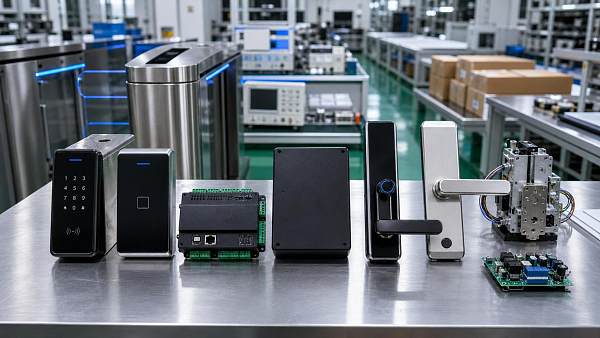
An access control systems manufacturer affects far more than unit price. It also shapes compliance, delivery stability, software fit, and after-sales workload.
In practical sourcing, the best starting point is not the catalog. It is the manufacturer’s ability to prove system readiness for real projects.
That means checking certifications, OEM support, engineering depth, production capacity, and lead time discipline before comparing appearance or headline features.
This matters even more in physical security. Access readers, controllers, turnstiles, smart locks, and door hardware usually depend on broader building systems.
A weak supplier can create hidden costs through failed integration, repeated firmware changes, or replacement delays after site acceptance.
Industry platforms such as SHPS highlight this wider view well. Physical security is rarely just one device. It connects credentials, mechanical locking, access lanes, and deployment conditions.
So the core question becomes simple: can this access control systems manufacturer deliver compliant hardware, support customization, and keep the timeline realistic?
Which certifications actually matter, and which ones are often misunderstood?
Certification review should focus on relevance, not quantity. A long certificate list looks reassuring, but mixed documents often hide gaps in critical areas.
For an access control systems manufacturer, the right certifications depend on the product scope and destination market.
For example, CE may be expected for certain markets, but it does not automatically confirm the same things as UL, FCC, RoHS, or fire-related testing.
If the supplier offers biometric terminals, ask whether testing covers spoof resistance, liveness performance, and environmental stability, not only electrical safety.
If turnstiles or speed gates are included, mechanical durability and user safety become just as important as electronics compliance.
A useful way to review documents is to separate them into four groups:
- Market entry certifications for the target region
- Electrical and EMC compliance for controllers and readers
- Environmental or durability testing for field conditions
- Product-specific safety records for lanes, locking devices, or biometric modules
Need to confirm something important? Ask whether the certificate belongs to the finished product, a key component, or only a previous model.
That distinction changes risk. Component approval does not guarantee final system compliance after enclosure changes, firmware updates, or power redesign.
The table below helps organize the certification review without getting lost in paperwork.
How do you judge OEM support beyond a simple “yes”?
Many suppliers say they provide OEM services. The real difference is how deep that support goes.
A capable access control systems manufacturer usually supports branding, housing changes, firmware adjustment, protocol alignment, and packaging control with documented processes.
A weaker one may only print a logo on the front panel.
In actual projects, OEM value appears when the hardware must fit existing door structures, card technologies, controller logic, or local installation standards.
This is common in mixed physical security environments. A building may combine access readers, smart locks, anti-tailgating lanes, parcel lockers, and remote software management.
That broader integration view is consistent with how SHPS tracks smart hardware markets. Hardware decisions usually affect adjacent systems.
Ask for evidence in three forms: past OEM cases, engineering response time, and change control records.
If a supplier cannot explain how it manages custom firmware versions, sample approval, and version traceability, future support may become messy.
A practical OEM review often includes these points:
- Supported credential formats and communication protocols
- Ability to adjust enclosures, finishes, or mounting methods
- Firmware customization rules and minimum order thresholds
- Pilot sample process and approval timeline
- Spare parts policy for custom versions
When does customization help, and when does it increase sourcing risk?
Customization is useful when it solves a real fit problem. It becomes risky when it changes too many variables at once.
For instance, customizing the housing color or logo is usually low risk. Changing controller logic, biometric modules, and power design together is different.
Every custom change can affect testing, compatibility, service stock, and future replacement options.
A disciplined access control systems manufacturer will explain which items stay within standard validation and which items require new qualification work.
That conversation should happen before sampling, not after a project schedule is locked.
More common mistakes appear in retrofit sites. Existing doors, frames, lane widths, credential databases, and software platforms can limit what is realistic.
If the supplier offers custom access control hardware but cannot map those site constraints clearly, customization may create rework instead of value.
A good rule is to separate custom requests into three categories:
- Cosmetic changes with limited technical impact
- Interface changes that need integration testing
- Structural or firmware changes that may affect compliance and lead time
This classification makes comparison cleaner when several access control systems manufacturer options are on the shortlist.
Why do lead times vary so much between access control suppliers?
Lead time is rarely just factory speed. It reflects component sourcing, engineering approval, testing queue, production planning, and shipment method.
That is why one access control systems manufacturer may quote four weeks for a standard reader but twelve weeks for a lightly modified controller set.
Semiconductors, biometric sensors, precision castings, and power modules can all become bottlenecks.
In products linked to broader physical security infrastructure, even mechanical parts matter. A delayed lock body or turnstile drive unit can hold the whole shipment.
To judge lead time properly, ask for a breakdown instead of one total number.
Useful questions include sample preparation days, approval cycle, mass production window, burn-in or testing period, and shipment release conditions.
Also ask whether quoted lead time assumes material stock on hand. That detail often explains later delays.
If the project requires staged delivery, confirm whether the supplier can split shipments without disrupting serial number tracking or firmware consistency.
A reliable quotation usually includes these schedule markers:
- Engineering confirmation date
- Sample sign-off deadline
- Mass production start window
- Final inspection and packaging period
- Estimated dispatch date by shipping mode
What are the most common warning signs before placing an order?
The biggest red flags usually appear in documentation quality, not in sales language.
Be cautious if an access control systems manufacturer cannot keep product drawings, test records, firmware versions, and certification references aligned.
That mismatch often signals weak internal control.
Another warning sign is vague compatibility language. Statements like “supports all mainstream systems” should be tested against named protocols, software versions, and credential types.
The same applies to durability claims. Outdoor readers, smart locks, and lane equipment must match the actual installation environment.
A short warning checklist can help keep the review grounded:
- Certificates cannot be matched to exact models
- OEM options are promised without engineering documents
- Lead time changes after basic technical questions
- Sample performance differs from mass production specification
- After-sales support depends on one individual instead of a defined process
A strong access control systems manufacturer should be able to answer these issues directly and provide evidence without excessive back-and-forth.
How should you compare final candidates before making the decision?
At the final stage, avoid ranking suppliers by price alone. Compare total delivery confidence.
That includes certification fit, OEM depth, customization risk, documentation quality, replacement planning, and schedule transparency.
In many cases, the better access control systems manufacturer is the one with fewer surprises after deployment, even if the opening quote is not the lowest.
A balanced comparison can be built around four scores: compliance readiness, integration readiness, delivery readiness, and service readiness.
This method works especially well for projects that touch broader smart hardware and physical security infrastructure, where one weak link can affect the whole site.
The next step is practical. Write down mandatory certifications, fixed interface requirements, acceptable customization limits, and the latest acceptable ship date.
Then compare each access control systems manufacturer against the same checklist, using evidence instead of assumptions.
That approach makes supplier selection cleaner, reduces sourcing risk, and gives a stronger basis for project approval.
Have questions about this sector analysis, or seeking best practices specific to your niche? Drop us a line below and let the senior consultants at MHLS assist you.
We respect your privacy. Your information is strictly confidential.
Recommended News
 Parcel Locker Network Pricing: Setup Costs, Fees and Contract TermsUnmanned Terminal FellowCompare parcel locker networks pricing, from setup costs and recurring fees to contract terms. Discover hidden charges and choose the right model.
 JR East Plans UWB Walk-Through Gates at 40 Stations in Spring 2028Access Control StrategistJR East plans UWB walk-through gates at 40 stations in spring 2028. Explore the rollout timeline and what suppliers should watch.
 Bank Vault Security Standards: UL and EN Ratings ExplainedVault Structural ArchitectExplore bank vault security standards and learn how UL 608 classes and EN 1143-1 grades differ, what they test, and how to verify certification before you buy.
 Mechanical Lock Hardware Prices: What Buyers Should Budget for Bulk OrdersMr. Gideon CrossMechanical lock hardware price is just the starting point. Discover what drives bulk-order costs and how to compare supplier quotes with confidence.
 IndexBox Forecasts Steady Global Security Keypad Market Growth Through 2035Dr. Valerius ThorneGlobal security keypad market growth is forecast at 3.3% annually through 2035. Explore the smart home and replacement trends shaping demand.
 Choosing an Infrared Safety Sensors Manufacturer: What Buyers Should CheckUnmanned Terminal FellowChoosing an infrared safety sensors manufacturer? Compare safety evidence, integration, environmental performance and lifecycle costs before you buy.
 Choosing a Security Material Testing Service: What to Check for Lock and Safe MaterialsProf. Elara SterlingChoose a security material testing service with confidence. Learn what to check for lock and safe materials, from attack methods and accreditation to reliable reports.
 How Precision Anti-Pick Lock Cylinders Resist ManipulationSecurity Metallurgy ExpertDiscover how precision anti-pick lock technology resists manipulation, and learn what to check when comparing security features, test evidence, and everyday reliability.
 Dermalog Joins NIST FastCAP Program for Contactless Fingerprint TestingProf. Elara SterlingDermalog joins the NIST FastCAP program for contactless fingerprint testing. Discover what this means for biometric identification and digital identity.
 Choosing Security Export Compliance Services: What Providers Should CoverMr. Gideon CrossSecurity export compliance services can help prevent costly delays. Discover what to look for in classification, licensing, screening, and documentation.
 European Security Compliance Standards for Safes: EN 1143-1 vs EN 14450Dr. Valerius ThorneExplore security compliance standards Europe buyers need to know. Compare EN 1143-1 and EN 14450 to choose the right safe with confidence.
 HID Global Acquires inepro ID to Expand RFID and BLE Access SolutionsUnmanned Terminal FellowHID Global acquires inepro ID to expand RFID and BLE access solutions for printers, smart lockers and shared devices. Explore what the deal could mean for your organization.











