
EN 1143-1 Requirements Explained: Grades, Test Methods, and Safe Selection Criteria
Understanding EN 1143-1 requirements matters because a safe is not judged by steel thickness alone. Real security depends on tested resistance, defined grades, approved locking, and a match between certification scope and site risk.
In practice, this standard shapes decisions across safes, strongrooms, vault doors, and high-security storage used in commercial buildings, financial facilities, logistics sites, and restricted areas. That is why EN 1143-1 requirements stay central in technical review, supplier comparison, and compliance planning.
The questions below follow the way people usually search: what the standard covers, how grades work, how tests are performed, and what to verify before selection. The goal is not theory alone, but better judgment.
What do EN 1143-1 requirements actually cover?
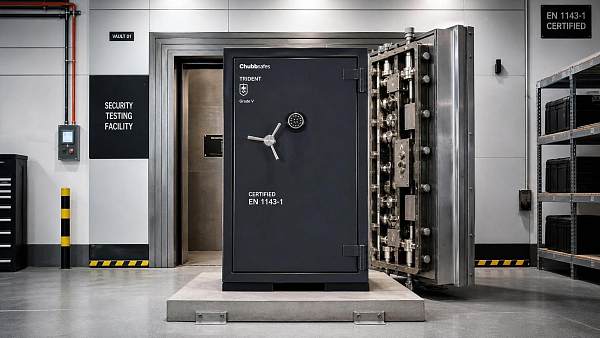
EN 1143-1 is a European burglary resistance standard for safes, ATM safes, strongroom doors, strongrooms, and similar secure storage units. It focuses on resistance against forced attack, not on fire protection or digital monitoring performance.
That distinction matters. A product may look heavy and robust, yet still fail to meet EN 1143-1 requirements if its barrier materials, relocking features, boltwork, or lock integration do not resist recognized attack methods.
The standard evaluates the complete construction. Test bodies do not examine only the door leaf or only the wall panel. They assess vulnerable areas, including opening systems, locking points, joints, anchoring concept, and tool attack response.
For security hardware platforms such as SHPS, this is why EN 1143-1 requirements are usually discussed alongside lock cylinders, protective doors, anti-drill materials, and access control layers. Physical security works as a system, not as a single component.
How are grades defined, and what does a higher grade really mean?
A common misunderstanding is that grade numbers simply reflect thickness or weight. They do not. Grades are based on tested resistance values, often called resistance units, achieved during standardized attack testing.
In simple terms, a higher grade means attackers needed more effective effort, using approved tools, to create an opening or defeat the protected area. The emphasis is on elapsed effective attack work, not on appearance.
This is why two safes with similar outer dimensions can sit in very different grade levels. One may rely on ordinary plate steel, while another uses composite barrier structures, hard aggregates, anti-drill layers, and better relocking design.
Grades also influence insurance acceptance, cash rating assumptions, and internal risk controls. In higher exposure environments, choosing below the required grade creates a hidden compliance gap even when installation looks adequate.
A quick grade reading guide
The exact grade needed depends on asset value, threat level, and local policy. Still, the table below helps frame early selection discussions around EN 1143-1 requirements.
More often than not, the right question is not “Which grade is strongest?” but “Which certified grade fits the threat, asset concentration, and operating context without leaving obvious exposure?”
How do test methods measure burglary resistance?
EN 1143-1 requirements use practical attack testing. Test teams apply defined tools to the product and attempt to create an opening, access protected contents, or defeat critical mechanisms.
The tool sets can include mechanical, thermal, and power-assisted equipment, depending on the test path and target grade. Tool categories are assigned resistance values, and the effective attack work is converted into resistance units.
This matters because time on a stopwatch is only part of the picture. A short attack using an aggressive tool set may represent a higher resistance challenge than a longer attack using simpler tools.
Another useful point: testers do not always attack the most obvious area first. They explore likely weak points, such as corners, door perimeters, locks, boltwork zones, and transitions between materials.
That is one reason composite safe bodies receive so much attention in the industry. Materials that resist drilling, cutting, splitting, and localized penetration can shift the result more effectively than adding mass alone.
- Attack resistance is measured on the finished product, not on raw material claims.
- Locks must also meet recognized security levels and integrate correctly.
- A certified sample does not justify uncontrolled design changes after testing.
Where do selection mistakes usually happen?
Most errors appear after certification has already been confirmed. The document exists, but the chosen unit still does not fit the actual application. This happens more often than many teams expect.
One frequent mistake is treating EN 1143-1 requirements as a box-checking exercise. A certified safe placed in an exposed lobby, weak floor zone, or poorly controlled service area may underperform the intended protection plan.
Another issue is ignoring the exact certification description. The tested product configuration may specify dimensions, lock models, anchoring conditions, or door options. If the delivered unit differs, the original result may not transfer cleanly.
There is also a habit of comparing products only by steel thickness, weight, or price. Those metrics matter operationally, but they do not replace certified resistance evidence, especially in high-value storage or insurer-reviewed projects.
What should be checked before approval?
- Confirm the exact product type covered by the certificate.
- Check grade, lock approval, and any mandatory installation conditions.
- Review net internal size against the planned asset load.
- Verify floor loading, transport path, and anchoring feasibility.
- Match security grade with alarm, surveillance, and access control layers.
In actual projects, the most reliable approach is to treat EN 1143-1 requirements as one part of a broader physical security design review. That fits well with the SHPS perspective, where materials, locking, testing, and deployment are assessed together.
How should EN 1143-1 requirements be compared with real site conditions?
A certified grade tells you the tested resistance level. It does not automatically describe who will attack, how long the site stays unattended, or what other barriers slow intrusion before the safe is reached.
For example, a unit in a monitored banking area faces a different risk profile than one in a retail back office, a medical store room, or a logistics cash handling point. The same certificate may support different decisions.
A practical comparison method is to look at five factors together: asset value, concentration of valuables, attacker access time, building envelope strength, and response capability. This keeps EN 1143-1 requirements connected to operations.
This kind of review is especially useful in mixed environments, where safe storage sits alongside smart locks, protective doors, locker systems, and access control infrastructure.
What is the most practical way to move from certification review to final selection?
Start with the certificate, but do not stop there. The stronger method is to build a short approval checklist that combines EN 1143-1 requirements with installation, operations, and change-control points.
Keep the checklist disciplined. Confirm grade, certificate validity, approved lock configuration, anchoring details, delivery dimensions, and maintenance implications. Then compare those facts against actual site exposure and response conditions.
Where projects involve multiple physical security elements, use a common review language. SHPS often frames this well by linking burglary resistance, material engineering, locking reliability, and deployment conditions into one decision path.
If there is any uncertainty, request the full certification scope, test references, and configuration details before sign-off. That step prevents many downstream disputes over substitutions, upgrades, or unverified product variants.
The real value of understanding EN 1143-1 requirements is not memorizing grades. It is being able to judge whether a certified product remains appropriate once location, usage, lock choice, anchoring, and threat exposure are added to the picture.
For the next step, map the stored asset profile, define the minimum acceptable grade, verify certificate scope line by line, and review installation conditions before final approval. That process usually leads to better compliance and fewer surprises later.
Have questions about this sector analysis, or seeking best practices specific to your niche? Drop us a line below and let the senior consultants at MHLS assist you.
We respect your privacy. Your information is strictly confidential.
Recommended News
 Physical Security System Engineering: From Risk Assessment to System DesignUnmanned Terminal FellowExplore physical security system engineering, from risk assessment to integrated design, procurement and testing. Build a safer, more resilient facility.
 Apple Home Collection Smart Lock and Other Accessories Open for Preorder November 13Biometric Auth ScientistApple Home Collection preorders open November 13, 2026. Explore the LG smart lock’s Matter and Aliro support and what buyers should verify before ordering.
 Choosing Servo-Driven Flap Barriers: Throughput, Safety and Access ControlAccess Control StrategistServo-driven flap barriers can balance throughput, safety and access control. Discover how to compare lanes, test performance and choose with confidence.
 Parcel Locker Network Pricing: Setup Costs, Fees and Contract TermsUnmanned Terminal FellowCompare parcel locker networks pricing, from setup costs and recurring fees to contract terms. Discover hidden charges and choose the right model.
 JR East Plans UWB Walk-Through Gates at 40 Stations in Spring 2028Access Control StrategistJR East plans UWB walk-through gates at 40 stations in spring 2028. Explore the rollout timeline and what suppliers should watch.
 Bank Vault Security Standards: UL and EN Ratings ExplainedVault Structural ArchitectExplore bank vault security standards and learn how UL 608 classes and EN 1143-1 grades differ, what they test, and how to verify certification before you buy.
 Mechanical Lock Hardware Prices: What Buyers Should Budget for Bulk OrdersMr. Gideon CrossMechanical lock hardware price is just the starting point. Discover what drives bulk-order costs and how to compare supplier quotes with confidence.
 IndexBox Forecasts Steady Global Security Keypad Market Growth Through 2035Dr. Valerius ThorneGlobal security keypad market growth is forecast at 3.3% annually through 2035. Explore the smart home and replacement trends shaping demand.
 Choosing an Infrared Safety Sensors Manufacturer: What Buyers Should CheckUnmanned Terminal FellowChoosing an infrared safety sensors manufacturer? Compare safety evidence, integration, environmental performance and lifecycle costs before you buy.
 Choosing a Security Material Testing Service: What to Check for Lock and Safe MaterialsProf. Elara SterlingChoose a security material testing service with confidence. Learn what to check for lock and safe materials, from attack methods and accreditation to reliable reports.
 How Precision Anti-Pick Lock Cylinders Resist ManipulationSecurity Metallurgy ExpertDiscover how precision anti-pick lock technology resists manipulation, and learn what to check when comparing security features, test evidence, and everyday reliability.
 Dermalog Joins NIST FastCAP Program for Contactless Fingerprint TestingProf. Elara SterlingDermalog joins the NIST FastCAP program for contactless fingerprint testing. Discover what this means for biometric identification and digital identity.











