
Financial Facility Security Compliance: Key Standards, Risk Areas, and Audit Checklist
Why is financial facility security compliance getting more demanding?
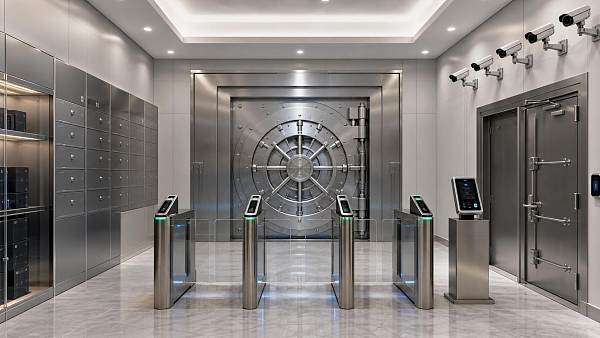
Financial facility security compliance now covers much more than doors, alarms, and vault rooms.
The real challenge is alignment between physical protection, daily procedures, event records, and proof that controls actually work.
In banks, cash centers, payment facilities, and secure back offices, a weak point is rarely isolated.
A strong vault means less if the interlock logic fails, visitor access is loosely managed, or maintenance logs are incomplete.
That is why financial facility security compliance increasingly connects equipment standards, site design, operating discipline, and audit traceability.
In practice, the review often spans burglary resistance, access control, identity verification, emergency egress, surveillance coverage, and incident response readiness.
This broader view also matches how SHPS tracks the market.
Physical security performance is no longer judged by one device alone, but by how safes, vault systems, biometric locks, turnstiles, protective doors, and monitoring platforms work together.
Which standards usually matter most in a financial facility?
A common question is whether there is one universal rulebook.
Usually, there is not.
Financial facility security compliance is normally built from several layers of standards and local requirements.
The exact mix depends on jurisdiction, facility type, insurer expectations, and threat profile.
Still, a few categories appear again and again:
- Burglary-resistant storage standards, such as EN 1143-1, for vaults, strongrooms, and high-security safes.
- Testing frameworks for safes and secure containers, including UL-related benchmarks in some markets.
- Access control and egress requirements for protected areas, mantraps, and emergency escape paths.
- Video surveillance retention, coverage, and evidentiary handling rules.
- Identity verification controls for staff, contractors, cash handling teams, and remote monitoring personnel.
The more useful approach is to ask what each standard proves.
Does it verify resistance time, attack method coverage, lock integrity, life safety, or system reliability under repeated use?
That question helps separate meaningful compliance from paperwork-only compliance.
A quick standards reference
The table below helps frame what auditors often look for during a financial facility security compliance review.
Where do audits usually find the highest-risk gaps?
Most failures in financial facility security compliance are not dramatic equipment breakdowns.
They are small control gaps that accumulate.
A typical example is certified hardware installed without matching commissioning records.
Another is a biometric lock with good specifications, but weak enrollment discipline and poor exception handling.
The highest-risk areas usually include the following:
- Mismatches between approved drawings and the final installed layout.
- Vault or safe upgrades that affect certification assumptions.
- Mechanical lock cylinders or electronic locks without controlled key or credential governance.
- Turnstiles that manage traffic well, but leave side bypass opportunities.
- Infrared anti-tailgating systems that were calibrated once, then ignored.
- Service contractors entering secure zones with incomplete escort records.
- CCTV footage stored, but not indexed in a way investigators can actually use.
Needless to say, auditors pay attention to maintenance evidence.
If a protective door, speed gate, or emergency release device lacks documented inspection intervals, the control looks unreliable even when it appears operational.
This is why SHPS often frames security hardware in system terms.
Composite anti-drill materials, relockers, 3D facial recognition, and mechanical anti-picking designs matter, but evidence management matters too.
How should you judge whether hardware really supports compliance?
The practical question is not whether a product looks advanced.
It is whether the hardware can support financial facility security compliance across installation, operation, and audit review.
For vault systems and safes, look beyond headline resistance claims.
Check test basis, lock class, relocker design, wall composition, anchoring method, and serviceability.
For smart locks, the stronger question is whether anti-spoofing and credential lifecycle controls are documented.
Near-infrared vein recognition or structured-light face recognition may improve assurance, but only when enrollment and exception paths are controlled.
For turnstiles and protected entrances, throughput should never be judged alone.
A high-speed lane without effective tailgating detection can weaken financial facility security compliance during busy periods.
A good review method is to ask three short questions:
- What threat is this device expected to resist or detect?
- What certification, test result, or field evidence supports that claim?
- What operating procedure is required to keep that protection valid?
If one answer is missing, compliance support is usually weaker than it first appears.
What does a usable audit checklist actually look like?
Many checklists fail because they are too generic.
A useful financial facility security compliance checklist should connect each control to evidence, review frequency, and owner responsibility.
The items below are a practical starting point.
- Confirm all vaults, safes, and secure cabinets match approved models and certified configurations.
- Check protective doors, frames, hinges, and locking points for wear, drift, and closing integrity.
- Review access rights by role, not by individual convenience or historical exceptions.
- Verify biometric systems for liveness settings, failed attempt handling, and revoked identity removal.
- Test tailgating detection, emergency unlocking, and power-loss behavior at secure entry lanes.
- Inspect key control, cylinder replacement logs, and seal management for mechanical overrides.
- Match CCTV retention settings with policy, legal requirements, and retrieval testing.
- Review maintenance work orders, faults, temporary bypasses, and closure evidence.
- Check visitor, vendor, and after-hours entry records against escort and approval rules.
- Validate that drills, incidents, and corrective actions were documented and closed.
In actual audits, this checklist works best when paired with sampling.
Pick a secure door, a vault lock, a biometric reader, and a turnstile lane.
Then trace each one from specification to live record.
That reveals whether financial facility security compliance exists in operations, not just in policy binders.
What usually gets missed before inspection, and how can it be corrected?
The overlooked issues are often procedural.
For example, temporary overrides may remain active after maintenance.
Or a replacement lock cylinder may be technically sound, but installed without updating asset records.
Another common gap is fragmented ownership.
Facilities teams manage doors, IT manages identities, and security teams manage monitoring, yet no one owns the full compliance chain.
A simple pre-inspection review helps reduce surprises:
That is usually the turning point.
Financial facility security compliance improves when the review shifts from device ownership to control ownership.
So what is the best next step?
Start by mapping your highest-risk zones and the controls that protect them.
Then compare each control against three things: standard basis, operational evidence, and failure response.
That method keeps financial facility security compliance grounded in reality.
It also makes technology decisions more defensible.
When reviewing hardware, focus on certified resistance, anti-spoofing reliability, anti-tailgating performance, and maintenance traceability.
When reviewing procedures, focus on access rights, exceptions, overrides, and incident closure.
SHPS is useful in this stage because it connects test standards, secure hardware technologies, and deployment realities in one knowledge framework.
That makes it easier to compare options, spot hidden compliance gaps, and build a stronger audit trail before the next inspection arrives.
Have questions about this sector analysis, or seeking best practices specific to your niche? Drop us a line below and let the senior consultants at MHLS assist you.
We respect your privacy. Your information is strictly confidential.
Recommended News
 Physical Security System Engineering: From Risk Assessment to System DesignUnmanned Terminal FellowExplore physical security system engineering, from risk assessment to integrated design, procurement and testing. Build a safer, more resilient facility.
 Apple Home Collection Smart Lock and Other Accessories Open for Preorder November 13Biometric Auth ScientistApple Home Collection preorders open November 13, 2026. Explore the LG smart lock’s Matter and Aliro support and what buyers should verify before ordering.
 Choosing Servo-Driven Flap Barriers: Throughput, Safety and Access ControlAccess Control StrategistServo-driven flap barriers can balance throughput, safety and access control. Discover how to compare lanes, test performance and choose with confidence.
 Parcel Locker Network Pricing: Setup Costs, Fees and Contract TermsUnmanned Terminal FellowCompare parcel locker networks pricing, from setup costs and recurring fees to contract terms. Discover hidden charges and choose the right model.
 JR East Plans UWB Walk-Through Gates at 40 Stations in Spring 2028Access Control StrategistJR East plans UWB walk-through gates at 40 stations in spring 2028. Explore the rollout timeline and what suppliers should watch.
 Bank Vault Security Standards: UL and EN Ratings ExplainedVault Structural ArchitectExplore bank vault security standards and learn how UL 608 classes and EN 1143-1 grades differ, what they test, and how to verify certification before you buy.
 Mechanical Lock Hardware Prices: What Buyers Should Budget for Bulk OrdersMr. Gideon CrossMechanical lock hardware price is just the starting point. Discover what drives bulk-order costs and how to compare supplier quotes with confidence.
 IndexBox Forecasts Steady Global Security Keypad Market Growth Through 2035Dr. Valerius ThorneGlobal security keypad market growth is forecast at 3.3% annually through 2035. Explore the smart home and replacement trends shaping demand.
 Choosing an Infrared Safety Sensors Manufacturer: What Buyers Should CheckUnmanned Terminal FellowChoosing an infrared safety sensors manufacturer? Compare safety evidence, integration, environmental performance and lifecycle costs before you buy.
 Choosing a Security Material Testing Service: What to Check for Lock and Safe MaterialsProf. Elara SterlingChoose a security material testing service with confidence. Learn what to check for lock and safe materials, from attack methods and accreditation to reliable reports.
 How Precision Anti-Pick Lock Cylinders Resist ManipulationSecurity Metallurgy ExpertDiscover how precision anti-pick lock technology resists manipulation, and learn what to check when comparing security features, test evidence, and everyday reliability.
 Dermalog Joins NIST FastCAP Program for Contactless Fingerprint TestingProf. Elara SterlingDermalog joins the NIST FastCAP program for contactless fingerprint testing. Discover what this means for biometric identification and digital identity.











