
How to Choose Residential Security Door Hardware for Better Break-In Resistance
How to Choose Residential Security Door Hardware for Better Break-In Resistance
Choosing the right residential security door hardware can make a major difference in preventing forced entry and improving everyday peace of mind. From lock cylinders and reinforced strike plates to hinges, smart locks, and door viewers, every component affects break-in resistance. This guide explains what homeowners should look for when comparing options, so you can make safer, smarter decisions for your front door.
The mistake most people make is shopping by the lock alone. They compare finishes, keypad styles, or app features, then bolt expensive hardware onto a weak door frame. If you are evaluating residential security door hardware, think in layers: the door leaf, the frame, the lock body, the cylinder, the strike area, the hinges, and the small accessories that slow someone down or expose tampering. Break-in resistance usually fails at the weakest point, not the most visible one.
Start with the door and frame, not the lock packaging
Before comparing hardware models, check what the hardware will actually be mounted on. A solid-core wood door, steel door, or certified security door gives hardware something worth defending. A hollow, poorly fitted, or warped door does not. The same goes for the frame. In forced entry attempts, the frame and strike area often split before the lock itself fails.
A quick homeowner checklist:
- Is the door solid-core, metal-clad, or specifically sold as a security door?
- Does the frame feel rigid, or does it flex around the latch side?
- Are there long screws anchoring hardware into framing members rather than just trim?
- Does the door close cleanly without rubbing, sagging, or leaving uneven gaps?
If any of those answers are bad, upgrade the opening assembly before chasing premium hardware. It is rarely money well spent to install a high-end cylinder on a weak frame.
Treat the strike plate as a priority item
This is the part homeowners underestimate most. The strike plate and the wood or metal behind it take the force when someone kicks or pries near the latch. A decorative plate with short screws is a common failure point.
What you want is a reinforced strike plate installed with long screws that bite into the wall stud or structural framing. Exact screw length depends on door and frame construction, so follow the hardware maker’s installation instructions and confirm compatibility. Do not assume the screws in the retail blister pack are the best option for every frame.
If you are comparing two door hardware sets and one includes a serious reinforced strike box while the other mostly sells aesthetics, the first one usually deserves more attention.
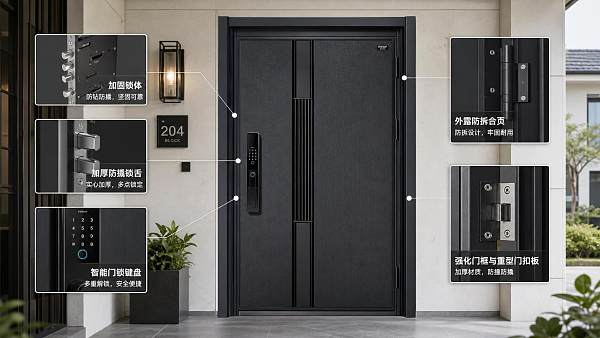
Look closely at the lock type and the cylinder, because they solve different problems
People often use “lock” as one thing, but the hardware decision is really split into at least two parts: the locking mechanism and the cylinder. The lock body determines how the bolt engages. The cylinder affects resistance to picking, bumping, drilling, and key control, depending on design.
For better break-in resistance, a deadbolt is usually the baseline for exterior residential doors. Spring-latch locks alone are easier to defeat with force or latch-slipping if the door details allow it. If a product is marketed for front-door security but relies mainly on a latchset without a proper deadbolt function, treat that as a warning sign.
On the cylinder side, ask more specific questions than “Is it secure?” Ask whether it includes anti-drill pins or inserts, anti-pick features, anti-bump design, and key duplication control. Some higher-security cylinders are built around more advanced pin structures or restricted key systems, but the exact performance level depends on the manufacturer and test evidence. If those claims matter, ask for product documentation rather than relying on sales wording.
Do not ignore door handing, hinge exposure, and pry points
Outward-opening doors can be secure, but exposed hinges need attention. If the hinge pins can be removed from the outside, look for hinges with non-removable pins or security studs that keep the door engaged when closed. Otherwise, your lock may hold while the hinge side becomes the attack point.
Also check the gap between door and frame. Large or uneven gaps invite prying tools. Good residential security door hardware cannot compensate for sloppy tolerances around the perimeter. When homeowners say a door “looks strong” but still feels vulnerable, this is often why.
Smart lock convenience is real, but compare failure modes, not just features
A smart lock can improve day-to-day control, especially for families, short-term access, or people who routinely forget keys. But for break-in resistance, the right question is not “Does it have an app?” It is “What happens when power, connectivity, or the motor system fails?”
When comparing smart hardware, check these points:
- Does it still use a real deadbolt or robust multi-point locking structure?
- Is there a mechanical override key, and what kind of cylinder protects it?
- How does low-battery access work?
- Can temporary codes be deleted cleanly?
- Does the brand publish clear security update and support policies? 【待核实】 for many low-cost imports unless documented.
For some homes, a mechanical high-security cylinder paired with good physical reinforcement is still the cleaner answer. For others, especially where access sharing is common, a well-supported smart lock on a reinforced door is the better fit. The right choice depends on how the door is actually used, not which category sounds more advanced.
Check whether claims are tied to recognized standards
Security hardware marketing can get vague fast. Words like “heavy-duty,” “anti-theft,” or “premium security” are not test results. If you want a stronger basis for comparison, look for products that reference recognized standards and verify what part of the assembly was actually tested.
In the US market, homeowners often encounter ANSI/BHMA grading for locks and deadbolts. In European and export markets, you may see standards such as EN 12209 for mechanically operated locks, EN 1303 for cylinders, or security door-related classifications depending on the complete product set. Those standards are technical and product-specific, so do not assume one certification covers the full door system unless the documentation says so.
A practical rule: if a seller cannot tell you what standard applies to the lock, cylinder, or door set, compare cautiously.
Small hardware can fix very real weaknesses
Not every improvement needs a full lock replacement. Some of the best-value upgrades are modest components that close obvious gaps:
- Door viewers let occupants verify visitors without opening the door.
- Latch guards or security plates can reduce tampering around vulnerable gaps.
- Hinge bolts or security studs help on exposed-hinge doors.
- Door chains are not a substitute for proper locking, but secondary restrictors may help with controlled opening depending on design and installation quality.
These are not glamorous purchases. They are often the difference between “looks secure” and “actually harder to force.”
Use this comparison table when shortlisting hardware
Common buying mistakes that cost people twice
One is buying hardware that does not match the door thickness, backset, handing, or existing prep. That leads to adapter plates, poor fit, or compromised installation. Another is mixing premium hardware with bargain installation. A well-designed lock can still underperform when it is misaligned, loosely mounted, or paired with the wrong strike geometry.
There is also the “all smart, no structure” mistake. People spend on app control, then leave sidelights, rear doors, or garage-to-house entries underprotected. If your budget is limited, put money where forced entry is most likely and where the opening is most vulnerable.
What to ask before you buy
You do not need to sound technical. You just need clear answers. Ask the seller or installer:
- What part of this system resists kicking or prying at the frame?
- What cylinder protection is included?
- Which standard or grade applies to this model?
- What door types and thicknesses is it made for?
- What happens if the batteries die or the electronics fail?
- Who installs it, and how is the strike area reinforced?
If the answers stay fuzzy, keep shopping.
The best residential security door hardware choice is usually not the fanciest one. It is the one that matches the door, reinforces the frame, uses a credible locking system, and is installed correctly. If you are deciding between appearance and resistance, choose resistance first. You will notice the finish for a week. You will rely on the hardware for years.
Have questions about this sector analysis, or seeking best practices specific to your niche? Drop us a line below and let the senior consultants at MHLS assist you.
We respect your privacy. Your information is strictly confidential.
Recommended News
 Physical Security Infrastructure Cost: Budgeting for Installation and MaintenanceUnmanned Terminal FellowUnderstand physical security infrastructure cost and build a smarter budget for installation, maintenance, and long-term ownership.
 Financial Facility Security: Choosing Vault Doors for Bank BranchesVault Structural ArchitectStrengthen financial facility security with the right bank vault door. Explore certification, installation, locking controls and maintenance before you buy.
 MACO Acquires Majority Stake in Fingerprint Access Provider ekeyProf. Elara SterlingMACO acquires a majority stake in ekey, bringing fingerprint access and door hardware closer together. Discover what the deal could mean for smart buildings.
 Physical Security System Engineering: From Risk Assessment to System DesignUnmanned Terminal FellowExplore physical security system engineering, from risk assessment to integrated design, procurement and testing. Build a safer, more resilient facility.
 Apple Home Collection Smart Lock and Other Accessories Open for Preorder November 13Biometric Auth ScientistApple Home Collection preorders open November 13, 2026. Explore the LG smart lock’s Matter and Aliro support and what buyers should verify before ordering.
 Choosing Servo-Driven Flap Barriers: Throughput, Safety and Access ControlAccess Control StrategistServo-driven flap barriers can balance throughput, safety and access control. Discover how to compare lanes, test performance and choose with confidence.
 Parcel Locker Network Pricing: Setup Costs, Fees and Contract TermsUnmanned Terminal FellowCompare parcel locker networks pricing, from setup costs and recurring fees to contract terms. Discover hidden charges and choose the right model.
 JR East Plans UWB Walk-Through Gates at 40 Stations in Spring 2028Access Control StrategistJR East plans UWB walk-through gates at 40 stations in spring 2028. Explore the rollout timeline and what suppliers should watch.
 Bank Vault Security Standards: UL and EN Ratings ExplainedVault Structural ArchitectExplore bank vault security standards and learn how UL 608 classes and EN 1143-1 grades differ, what they test, and how to verify certification before you buy.
 Mechanical Lock Hardware Prices: What Buyers Should Budget for Bulk OrdersMr. Gideon CrossMechanical lock hardware price is just the starting point. Discover what drives bulk-order costs and how to compare supplier quotes with confidence.
 IndexBox Forecasts Steady Global Security Keypad Market Growth Through 2035Dr. Valerius ThorneGlobal security keypad market growth is forecast at 3.3% annually through 2035. Explore the smart home and replacement trends shaping demand.
 Choosing an Infrared Safety Sensors Manufacturer: What Buyers Should CheckUnmanned Terminal FellowChoosing an infrared safety sensors manufacturer? Compare safety evidence, integration, environmental performance and lifecycle costs before you buy.











