How to Evaluate an Anti-Burglary Materials Manufacturer for Safes and Vault Doors
Why the Right Anti-Burglary Materials Manufacturer Matters

Choosing an anti-burglary materials manufacturer is not a routine sourcing step. It directly shapes safe body strength, vault door performance, and certification potential.
In real procurement work, low material quality usually shows up later. Drilling resistance drops, cutting time shortens, and consistency between batches becomes unstable.
That also means the cheapest quote can become the most expensive option. Rework, failed testing, delayed exports, and warranty risk add hidden cost fast.
A strong anti-burglary materials manufacturer supports more than supply. It supports product engineering, compliance readiness, production stability, and long-term commercial reliability.
For safes and vault doors, the evaluation should go beyond brochures. Buyers need evidence on composition, test performance, manufacturability, and delivery capability.
Start With Material Performance, Not Price
Price matters, but performance should come first. If the core material fails, no outer finish or lock upgrade can compensate for structural weakness.
Ask the anti-burglary materials manufacturer what the material is designed to resist. Drilling, cutting, grinding, torch attack, or combined attack require different formulations.
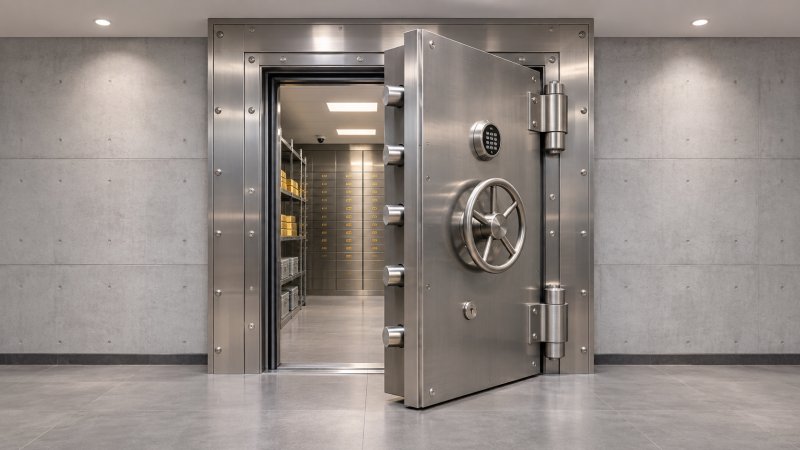
Many safe and vault door applications use composite structures. These may include hardened steel, anti-drill aggregates, corundum fillers, ceramic layers, or special bonding systems.
A qualified anti-burglary materials manufacturer should explain why each layer exists. Vague claims like “high security material” are not enough for procurement decisions.
Useful questions include:
- What is the exact application in safes or vault doors?
- How does the material behave under drill-bit attack?
- How does it respond to edge cutting or localized impact?
- Does the design protect locks, relockers, and boltwork zones?
- Can the structure maintain performance after repeated tool exposure?
From a cost perspective, this step prevents a common mistake. Buyers compare price per ton, while the real benchmark should be resistance per finished unit.
Check Test Evidence and Certification Alignment
The next filter is proof. A reliable anti-burglary materials manufacturer should provide test records that connect directly to safe and vault door requirements.
For global projects, buyers often look at standards such as EN 1143-1, UL-related testing expectations, or local security certification frameworks.
What matters is not only whether testing exists. What matters is whether the tested structure reflects your actual design, thickness, assembly method, and target grade.
Ask for technical evidence in a practical way:
- Request formal test reports, not just summary slides.
- Check the attack tools, exposure duration, and failure criteria.
- Confirm sample thickness and layer sequence.
- Review whether tests were internal, third-party, or certification-based.
- Match the data to your target safe or vault door specification.
A strong anti-burglary materials manufacturer will also discuss test limits honestly. That is often a better signal than exaggerated marketing language.
More importantly, certification alignment reduces downstream risk. If material behavior is unstable, final product testing becomes slower, costlier, and less predictable.
Review Manufacturing Consistency and Process Control
Even a strong formula can fail in production. This is where evaluating the anti-burglary materials manufacturer becomes more operational and less theoretical.
For safes and vault doors, consistency matters as much as peak performance. One good sample does not guarantee stable factory output.
Look at the manufacturer’s control points across raw material intake, mixing ratios, curing conditions, density control, hardness verification, and finished inspection.
In recent market shifts, a clearer signal is raw material substitution. Cost pressure sometimes pushes suppliers to change fillers or binders without enough validation.
That is why buyers should ask these points directly:
- Are critical raw materials traceable by batch?
- What tolerances are controlled during mixing and forming?
- How often are density and hardness checked?
- What triggers non-conformance isolation?
- How are production changes approved and documented?
An experienced anti-burglary materials manufacturer should also support plant audits. If access is limited, video walkthroughs and live process reviews are still useful.
Process discipline affects more than quality. It also affects scrap rate, lead time accuracy, and the repeatability needed for large procurement programs.
Assess Engineering Support and Application Fit
Not every anti-burglary materials manufacturer is equally strong in application engineering. Some can supply material, but cannot help optimize safe or vault door structures.
This gap becomes expensive when new projects move into prototyping. Material may be too brittle, too heavy, difficult to machine, or unsuitable for your assembly method.
A capable supplier should discuss practical factors early:
- Compatibility with steel structures and door frames
- Weight impact on hinges, transport, and installation
- Machining limits near lock cases and bolt channels
- Curing time and its effect on production speed
- Repair or rework options after fabrication defects
In practical business terms, engineering support shortens development cycles. It also lowers the risk of building a certified design that is hard to manufacture at scale.
If possible, request reference cases. A proven anti-burglary materials manufacturer should have experience with commercial safes, banking vault doors, gun safes, or high-risk storage units.
Compare Total Cost, Supply Risk, and Commercial Reliability
Procurement decisions are rarely about technical performance alone. The stronger question is whether the anti-burglary materials manufacturer is commercially dependable over time.
This is where total cost matters more than initial price. Buyers should evaluate logistics, packaging, lead times, minimum order quantity, and export readiness.
A low-cost source can create major friction if shipments are inconsistent or documentation is weak. For international programs, that risk is very real.
Review the commercial side with the same rigor as the technical side:
A dependable anti-burglary materials manufacturer should also show financial and operational stability. Long-term supply matters, especially for repeat product lines.
Build a Practical Supplier Evaluation Checklist
To make decisions easier, turn all findings into a weighted checklist. This keeps sourcing aligned with security goals and avoids overreacting to one attractive quote.
A useful shortlist for any anti-burglary materials manufacturer should include five scoring areas:
- Material resistance performance and application fit
- Test evidence and certification alignment
- Production consistency and quality control
- Engineering support and problem-solving ability
- Total cost, delivery reliability, and supply risk
In actual buying work, this method improves internal discussion too. Engineering, quality, and sourcing teams can compare suppliers using the same decision framework.
The best anti-burglary materials manufacturer is not simply the one with the strongest sales pitch. It is the one that proves performance, controls risk, and supports repeatable results.
Before placing volume orders, request samples, validate documents, review process controls, and test communication speed. Those small checks often reveal the real supplier quality.
When safes and vault doors are expected to protect serious value, careful supplier evaluation is not extra work. It is a core part of buying well.
Have questions about this sector analysis, or seeking best practices specific to your niche? Drop us a line below and let the senior consultants at MHLS assist you.
We respect your privacy. Your information is strictly confidential.
Recommended News
 Physical Security Infrastructure Cost: Budgeting for Installation and MaintenanceUnmanned Terminal FellowUnderstand physical security infrastructure cost and build a smarter budget for installation, maintenance, and long-term ownership.
 Financial Facility Security: Choosing Vault Doors for Bank BranchesVault Structural ArchitectStrengthen financial facility security with the right bank vault door. Explore certification, installation, locking controls and maintenance before you buy.
 MACO Acquires Majority Stake in Fingerprint Access Provider ekeyProf. Elara SterlingMACO acquires a majority stake in ekey, bringing fingerprint access and door hardware closer together. Discover what the deal could mean for smart buildings.
 Physical Security System Engineering: From Risk Assessment to System DesignUnmanned Terminal FellowExplore physical security system engineering, from risk assessment to integrated design, procurement and testing. Build a safer, more resilient facility.
 Apple Home Collection Smart Lock and Other Accessories Open for Preorder November 13Biometric Auth ScientistApple Home Collection preorders open November 13, 2026. Explore the LG smart lock’s Matter and Aliro support and what buyers should verify before ordering.
 Choosing Servo-Driven Flap Barriers: Throughput, Safety and Access ControlAccess Control StrategistServo-driven flap barriers can balance throughput, safety and access control. Discover how to compare lanes, test performance and choose with confidence.
 Parcel Locker Network Pricing: Setup Costs, Fees and Contract TermsUnmanned Terminal FellowCompare parcel locker networks pricing, from setup costs and recurring fees to contract terms. Discover hidden charges and choose the right model.
 JR East Plans UWB Walk-Through Gates at 40 Stations in Spring 2028Access Control StrategistJR East plans UWB walk-through gates at 40 stations in spring 2028. Explore the rollout timeline and what suppliers should watch.
 Bank Vault Security Standards: UL and EN Ratings ExplainedVault Structural ArchitectExplore bank vault security standards and learn how UL 608 classes and EN 1143-1 grades differ, what they test, and how to verify certification before you buy.
 Mechanical Lock Hardware Prices: What Buyers Should Budget for Bulk OrdersMr. Gideon CrossMechanical lock hardware price is just the starting point. Discover what drives bulk-order costs and how to compare supplier quotes with confidence.
 IndexBox Forecasts Steady Global Security Keypad Market Growth Through 2035Dr. Valerius ThorneGlobal security keypad market growth is forecast at 3.3% annually through 2035. Explore the smart home and replacement trends shaping demand.
 Choosing an Infrared Safety Sensors Manufacturer: What Buyers Should CheckUnmanned Terminal FellowChoosing an infrared safety sensors manufacturer? Compare safety evidence, integration, environmental performance and lifecycle costs before you buy.