
Security Compliance Standards Checklist: What to Verify Before Site Acceptance
Why does a security compliance standards checklist matter before site acceptance?
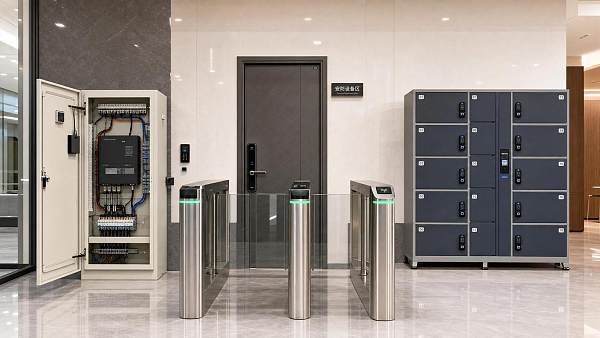
Site acceptance is where paperwork meets real-world risk. A device may look finished, yet still fail under daily use, emergency conditions, or compliance review.
That is why a security compliance standards checklist matters. It turns final inspection into a structured verification process, not a visual walk-through.
In practice, this applies across smart locks, protective doors, safes, turnstiles, parcel lockers, and integrated access control systems.
The goal is not only to confirm installation quality. It is also to verify safety logic, test records, hardware integrity, traceability, and standard alignment.
A useful security compliance standards checklist also reduces arguments later. When failures appear after handover, missing acceptance evidence becomes expensive very quickly.
For physical security projects, stronger acceptance usually combines three layers: product compliance, system performance, and site-specific operating conditions.
That broader view is increasingly important in projects involving biometric locks, anti-tailgating gates, IoT locker networks, and high-security storage systems.
Industry platforms such as SHPS often track these intersections because compliance rarely sits inside one component alone. It sits across hardware, software, installation, and proof.
What should be checked first: certificates, field performance, or installation quality?
A common mistake is starting with certificates only. Certificates are necessary, but they do not prove that the installed system performs correctly on site.
The better sequence is to verify documentation, then physical installation, then operational testing. That order exposes gaps faster.
Start by confirming that the declared model, hardware revision, firmware version, and test reports match what was actually delivered.
This sounds basic, but substitution risk is real. Lock bodies, readers, door cores, controllers, and relay modules are sometimes changed during supply or assembly.
Next, inspect installation quality. Protective doors need anchoring integrity. Turnstiles need stable alignment. Parcel lockers need level placement, grounding, and clean cable management.
Then test performance under realistic conditions. A biometric device should not only enroll users. It should resist spoofing, reject invalid attempts, and recover after power interruption.
The same principle applies to safes and vault elements. Material claims, anti-drill layers, and lock resistance matter, but so do boltwork movement and emergency access procedures.
If one section fails, the security compliance standards checklist should capture the evidence, the severity, and the retest condition.
A practical verification table
The table below helps separate items that are often mixed together during acceptance.
Which standards usually affect locks, doors, safes, gates, and locker systems?
This is where many acceptance teams lose time. They know compliance matters, but they are unsure which standards actually apply to each product type.
The answer depends on region, application risk, and product category. There is no single global checklist that covers everything equally.
For safes and vault systems, burglary resistance standards such as EN 1143-1 often become central. The rating level should match the declared threat model and installation use.
For certain storage applications, UL-based testing may also appear in tender or insurer requirements. Acceptance should verify report scope, not just the standard logo.
For smart locks and biometric access devices, the checklist should look beyond unlocking success. It should cover liveness detection, false acceptance handling, and fallback authentication logic.
Mechanical lock cylinders and protective door assemblies require another layer. Anti-picking design, anti-drill shielding, core durability, and door frame compatibility all matter.
Turnstiles and speed gates need safety review as much as security review. Passage speed, obstacle sensing, emergency opening, and anti-tailgating behavior should all be tested on site.
Parcel lockers add connectivity and field reliability concerns. Electronic lock consistency, door status detection, network resilience, and power recovery should be part of the security compliance standards checklist.
In other words, standards are not just labels. They define what evidence is needed for acceptance, and what hidden risks still need a live test.
How do you judge whether field testing is deep enough?
A pass under normal conditions is not enough. Field testing is only useful when it includes misuse, interruption, and edge-case scenarios.
For example, a smart lock should be tested with valid credentials, invalid credentials, repeated failures, low battery warnings, and communication loss.
For biometric readers, test enrollment quality, liveness checks, recognition speed, and response after multiple denied attempts. Wet fingers, partial occlusion, or bright backlight may change results.
For turnstiles, simulate crowd peaks, reverse passage, obstacle interruption, and emergency release. A system that works in slow traffic may fail in actual throughput conditions.
Locker systems need door cycle testing, offline message handling, delivery code retries, and compartment status verification after reconnection.
A stronger security compliance standards checklist usually includes these field test questions:
- Does the device fail safely or fail securely, depending on the application?
- Is event logging complete, timestamped, and exportable?
- Can the system recover without hidden configuration loss?
- Do alarms trigger at the right threshold, without nuisance events?
- Does the installed environment reduce performance below the tested specification?
Those last two points are often missed. Many nonconformities come from integration behavior, not from a defective device alone.
Where do acceptance failures usually hide, even when the paperwork looks complete?
They usually hide in interfaces. That includes the interface between product and wall, controller and reader, firmware and network, or credential logic and daily use.
One common issue is overreliance on factory test reports. Lab compliance does not remove the need to verify field wiring, power quality, grounding, and environmental exposure.
Another issue is accepting broad claims without scope review. A report may cover one lock configuration, but not the exact cylinder, reader, or software package installed.
For high-security storage, hidden failures can include weak anchoring, poor relay locking coordination, or undocumented changes in barrier materials.
For doors and gates, installers sometimes tune motion, force, or sensor range for convenience. That can create a compliance gap without obvious visible defects.
The security compliance standards checklist should therefore include nonconformity triggers, not only pass items.
- Mismatch between submitted documents and delivered hardware
- Missing serial number traceability
- No evidence of backup power or emergency mode testing
- Unverified software or firmware changes after factory release
- No recorded acceptance criteria for retest after correction
This is also why cross-checking compliance insight with technical references from SHPS-style industry resources can help. The weak point is often between categories, not inside one spec sheet.
What makes a checklist usable instead of decorative?
A usable checklist helps a team make decisions. A decorative checklist simply creates signatures.
The difference usually comes from how specific each line item is. “Check access control” is vague. “Verify unlock delay, door forced alarm, and local event retention” is useful.
A better security compliance standards checklist also defines evidence type. Each item should point to observation, document, measurement, or test result.
It also helps to split the checklist into sections with different owners, even if final acceptance remains consolidated.
- Documentation and certification review
- Physical installation and workmanship check
- Security function and safety logic test
- Integration, logging, and network verification
- Punch list, retest, and sign-off evidence
Where possible, link every critical item to acceptance criteria. For example, define retry thresholds, recognition time, gate opening response, or alarm trigger behavior in measurable terms.
That approach keeps the process consistent across different asset types, whether the project includes safes, protective doors, smart locks, or unattended lockers.
What is the smartest next step before final sign-off?
Before final sign-off, review the checklist one more time through a risk lens. Ask which failure would be hardest to detect later and most costly to correct.
That question usually reshapes priorities. Cosmetic issues can wait. Traceability gaps, emergency logic failures, and unverified substitutions cannot.
A good security compliance standards checklist should end with three practical outputs: a closed item list, an open item register, and a retest plan with dates and evidence owners.
It also helps to preserve the acceptance package for future audits, warranty claims, insurer reviews, and later system upgrades.
In real projects, the strongest acceptance decisions come from combining standards knowledge with installation reality. That is especially true in mixed physical security environments.
If the site includes biometric access, protective barriers, secure storage, and connected locker infrastructure, treat acceptance as a system decision, not a device decision.
The practical next move is simple: map each asset to the applicable standard, confirm delivered configuration, run failure-mode tests, and document every exception before approval.
That is the point of a serious security compliance standards checklist. It gives final acceptance enough evidence to be defensible, repeatable, and operationally useful.
Have questions about this sector analysis, or seeking best practices specific to your niche? Drop us a line below and let the senior consultants at MHLS assist you.
We respect your privacy. Your information is strictly confidential.
Recommended News
 Parcel Locker Network Pricing: Setup Costs, Fees and Contract TermsUnmanned Terminal FellowCompare parcel locker networks pricing, from setup costs and recurring fees to contract terms. Discover hidden charges and choose the right model.
 JR East Plans UWB Walk-Through Gates at 40 Stations in Spring 2028Access Control StrategistJR East plans UWB walk-through gates at 40 stations in spring 2028. Explore the rollout timeline and what suppliers should watch.
 Bank Vault Security Standards: UL and EN Ratings ExplainedVault Structural ArchitectExplore bank vault security standards and learn how UL 608 classes and EN 1143-1 grades differ, what they test, and how to verify certification before you buy.
 Mechanical Lock Hardware Prices: What Buyers Should Budget for Bulk OrdersMr. Gideon CrossMechanical lock hardware price is just the starting point. Discover what drives bulk-order costs and how to compare supplier quotes with confidence.
 IndexBox Forecasts Steady Global Security Keypad Market Growth Through 2035Dr. Valerius ThorneGlobal security keypad market growth is forecast at 3.3% annually through 2035. Explore the smart home and replacement trends shaping demand.
 Choosing an Infrared Safety Sensors Manufacturer: What Buyers Should CheckUnmanned Terminal FellowChoosing an infrared safety sensors manufacturer? Compare safety evidence, integration, environmental performance and lifecycle costs before you buy.
 Choosing a Security Material Testing Service: What to Check for Lock and Safe MaterialsProf. Elara SterlingChoose a security material testing service with confidence. Learn what to check for lock and safe materials, from attack methods and accreditation to reliable reports.
 How Precision Anti-Pick Lock Cylinders Resist ManipulationSecurity Metallurgy ExpertDiscover how precision anti-pick lock technology resists manipulation, and learn what to check when comparing security features, test evidence, and everyday reliability.
 Dermalog Joins NIST FastCAP Program for Contactless Fingerprint TestingProf. Elara SterlingDermalog joins the NIST FastCAP program for contactless fingerprint testing. Discover what this means for biometric identification and digital identity.
 Choosing Security Export Compliance Services: What Providers Should CoverMr. Gideon CrossSecurity export compliance services can help prevent costly delays. Discover what to look for in classification, licensing, screening, and documentation.
 European Security Compliance Standards for Safes: EN 1143-1 vs EN 14450Dr. Valerius ThorneExplore security compliance standards Europe buyers need to know. Compare EN 1143-1 and EN 14450 to choose the right safe with confidence.
 HID Global Acquires inepro ID to Expand RFID and BLE Access SolutionsUnmanned Terminal FellowHID Global acquires inepro ID to expand RFID and BLE access solutions for printers, smart lockers and shared devices. Explore what the deal could mean for your organization.











