
Security Hardware Standards Explained: How to Compare ANSI, BHMA, CE, and FCC Requirements
Why do security hardware standards matter before any product comparison?
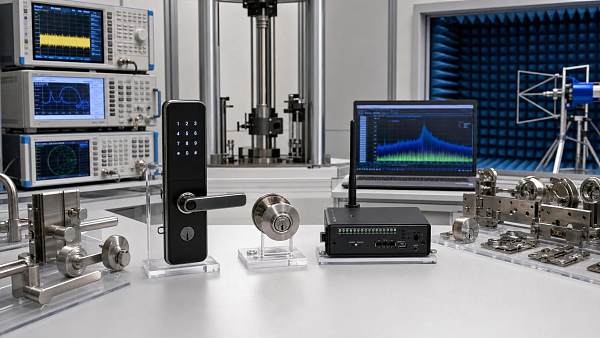
Security hardware standards are not just labels on a datasheet. They define how performance, safety, and legal access are measured.
That matters when comparing smart locks, lock cylinders, safes, speed gates, parcel lockers, or connected access devices across regions.
In practice, many comparison mistakes start with one false assumption. People treat ANSI, BHMA, CE, and FCC as if they certify the same thing.
They do not.
Some security hardware standards focus on durability and mechanical performance. Others focus on legal conformity, electrical safety, or electromagnetic emissions.
A biometric lock can meet radio rules and still have weak anti-spoofing design. A door closer can meet performance grades but still be unsuitable for one site condition.
This is why security hardware standards should be read as a framework, not as a single pass or fail badge.
For platforms that track physical security technologies, the real value comes from connecting standards with engineering details, deployment conditions, and certification scope.
That is especially relevant in sectors covering safes, protective doors, access control lanes, smart parcel lockers, and connected locking systems.
ANSI and BHMA: are they the same, or only closely related?
This question appears often because ANSI and BHMA are frequently mentioned together in security hardware standards discussions.
The short answer is that they are related, but they are not interchangeable terms.
ANSI is the American National Standards Institute. It coordinates standards recognition in the United States.
BHMA is the Builders Hardware Manufacturers Association. It develops many hardware performance standards used for doors, locks, closers, exit devices, and trim.
When a product is described as ANSI/BHMA compliant, that usually means the test criteria were developed by BHMA and recognized within the ANSI framework.
For technical comparison, the grade matters more than the logo wording.
A higher BHMA grade can indicate stronger cycle testing, better endurance, or tighter operational requirements, depending on the product category.
This becomes useful when evaluating commercial levers, mortise locks, exit devices, or heavy-use access hardware in schools, offices, logistics facilities, or apartment entries.
Still, ANSI/BHMA ratings do not automatically prove resistance against drilling, advanced picking, spoofing, or cyber intrusion.
Those risks often require separate tests, separate standards, or deeper product evidence.
What should be checked behind an ANSI/BHMA claim?
- Exact standard number, not just a marketing statement
- Product category covered by the grade
- Cycle count, load, abuse, and finish tests
- Whether the certified configuration matches the offered model
- Any separate claims for attack resistance or electronic security
Where do CE and FCC fit when comparing security hardware standards?
CE and FCC often appear on smart security products, but they answer different questions from ANSI/BHMA.
CE marking is mainly about conformity for the European market. It signals that the product meets applicable EU directives or regulations.
Depending on the product, this may involve electrical safety, electromagnetic compatibility, radio equipment, or restricted substances.
FCC is centered on electromagnetic emissions and radio frequency compliance in the United States.
For connected locks, wireless access readers, IoT parcel lockers, and networked control panels, FCC compliance can be essential for market entry.
However, neither CE nor FCC should be mistaken for proof of burglary resistance, anti-tailgating effectiveness, or biometric accuracy.
A 4G locker controller may be FCC compliant while still lacking strong enclosure design or electronic lock reliability.
A facial recognition terminal may carry CE marking while requiring separate evidence for liveness detection performance.
That distinction is easy to miss, especially when product pages compress several compliance claims into one line.
This table helps separate compliance scope from security value. That is a basic step in any serious review of security hardware standards.
How do these standards apply across locks, safes, turnstiles, and parcel lockers?
Security hardware standards should always be tied to product function. One standard family rarely covers the whole risk picture.
Take a biometric smart lock. It may involve BHMA-style hardware performance, CE radio conformity, FCC wireless compliance, and separate app or firmware security review.
Now compare that with a burglary-resistant safe. Mechanical and material resistance may matter more than RF rules.
For safes and vault structures, teams often need other reference points such as UL or EN burglary standards, not only general security hardware standards.
Turnstiles and speed gates create another layer. Passage safety, sensor logic, anti-tailgating behavior, motor endurance, and emergency egress all affect suitability.
A parcel locker system adds outdoor durability, electronic lock reliability, network stability, and compliance for wireless modules.
In other words, security hardware standards must be matched to threat type, installation environment, and system architecture.
A broad intelligence approach is useful here because physical security products combine mechanics, electronics, materials, and software behavior.
That is why cross-category analysis matters in sectors covered by SHPS, where a lock body, a sensor array, and a cloud gateway may all affect final risk.
What are the most common mistakes when reading security hardware standards?
The first mistake is treating market access marks as proof of high security performance.
CE and FCC can be mandatory and still say little about forced-entry resistance.
The second mistake is comparing grades across unrelated standards.
A BHMA grade for a lockset does not translate directly into safe body resistance, turnstile throughput control, or parcel locker field durability.
Another frequent issue is ignoring the tested configuration.
Sometimes the certified sample includes options, power modules, enclosures, or firmware versions that are not part of the quoted model.
Documentation gaps also create false confidence. A certificate title alone is rarely enough for technical comparison.
More reliable evaluation usually checks the report scope, revision date, issuing body, exclusions, and installation assumptions.
Where connected products are involved, it is also wise to separate hardware compliance from software maintenance reality.
A compliant device with weak update control can become a long-term operational problem.
A quick review checklist
- Confirm which standards are mandatory in the destination market
- Separate security performance from electrical and RF compliance
- Check whether certifications match the exact model and accessories
- Review test reports for limits, exclusions, and grade definitions
- Map each claim to the actual site risk, not only to catalog language
When comparing options, what is the most practical evaluation method?
A practical method starts by narrowing the product role. Ask what the hardware must resist, control, or communicate.
Then group the required security hardware standards into three layers.
One layer is market compliance. That includes CE or FCC where applicable.
The second layer is product performance. That may include ANSI/BHMA grades, endurance testing, or electrical reliability criteria.
The third layer is threat-specific evidence. This can include burglary resistance, anti-drill structure, anti-spoofing behavior, or anti-tailgating logic.
A comparison becomes much clearer once these layers are separated.
For example, two smart locks may both satisfy CE and FCC requirements. Only one may offer stronger cylinder protection, better liveness detection, and longer cycle life.
Similarly, two parcel locker systems may look equivalent on paper. The difference may appear in lock durability, field connectivity, thermal design, or service access.
Good comparison is less about collecting logos and more about matching verified evidence to operating risk.
That is also the most reliable way to use security hardware standards without overvaluing or undervaluing them.
So what should be done next after reading the standards?
Start by listing the product category, target market, and exposure level. A residential smart lock, a bank safe component, and an airport speed gate should not be reviewed the same way.
Next, build a comparison sheet that separates compliance marks, performance grades, and threat-resistance claims.
Then verify whether each claim is backed by a current report, a recognized standard, and the exact configuration being considered.
If multiple technologies interact, such as biometrics, lock mechanics, and IoT communications, review them as one deployment system rather than isolated parts.
That approach reduces confusion and helps turn security hardware standards into a practical decision tool.
For ongoing analysis, it also helps to follow sources that connect certification language with physical security engineering, field applications, and cross-border compliance trends.
The strongest decisions usually come from that wider view, especially when products combine mechanical security, electronics, software, and regulatory obligations.
Have questions about this sector analysis, or seeking best practices specific to your niche? Drop us a line below and let the senior consultants at MHLS assist you.
We respect your privacy. Your information is strictly confidential.
Recommended News
 Physical Security Infrastructure Cost: Budgeting for Installation and MaintenanceUnmanned Terminal FellowUnderstand physical security infrastructure cost and build a smarter budget for installation, maintenance, and long-term ownership.
 Financial Facility Security: Choosing Vault Doors for Bank BranchesVault Structural ArchitectStrengthen financial facility security with the right bank vault door. Explore certification, installation, locking controls and maintenance before you buy.
 MACO Acquires Majority Stake in Fingerprint Access Provider ekeyProf. Elara SterlingMACO acquires a majority stake in ekey, bringing fingerprint access and door hardware closer together. Discover what the deal could mean for smart buildings.
 Physical Security System Engineering: From Risk Assessment to System DesignUnmanned Terminal FellowExplore physical security system engineering, from risk assessment to integrated design, procurement and testing. Build a safer, more resilient facility.
 Apple Home Collection Smart Lock and Other Accessories Open for Preorder November 13Biometric Auth ScientistApple Home Collection preorders open November 13, 2026. Explore the LG smart lock’s Matter and Aliro support and what buyers should verify before ordering.
 Choosing Servo-Driven Flap Barriers: Throughput, Safety and Access ControlAccess Control StrategistServo-driven flap barriers can balance throughput, safety and access control. Discover how to compare lanes, test performance and choose with confidence.
 Parcel Locker Network Pricing: Setup Costs, Fees and Contract TermsUnmanned Terminal FellowCompare parcel locker networks pricing, from setup costs and recurring fees to contract terms. Discover hidden charges and choose the right model.
 JR East Plans UWB Walk-Through Gates at 40 Stations in Spring 2028Access Control StrategistJR East plans UWB walk-through gates at 40 stations in spring 2028. Explore the rollout timeline and what suppliers should watch.
 Bank Vault Security Standards: UL and EN Ratings ExplainedVault Structural ArchitectExplore bank vault security standards and learn how UL 608 classes and EN 1143-1 grades differ, what they test, and how to verify certification before you buy.
 Mechanical Lock Hardware Prices: What Buyers Should Budget for Bulk OrdersMr. Gideon CrossMechanical lock hardware price is just the starting point. Discover what drives bulk-order costs and how to compare supplier quotes with confidence.
 IndexBox Forecasts Steady Global Security Keypad Market Growth Through 2035Dr. Valerius ThorneGlobal security keypad market growth is forecast at 3.3% annually through 2035. Explore the smart home and replacement trends shaping demand.
 Choosing an Infrared Safety Sensors Manufacturer: What Buyers Should CheckUnmanned Terminal FellowChoosing an infrared safety sensors manufacturer? Compare safety evidence, integration, environmental performance and lifecycle costs before you buy.











