
For procurement teams sourcing safes, smart locks, access control hardware, or parcel lockers, security product certification is more than a compliance checkbox—it is a risk filter, a market-entry passport, and a signal of real-world reliability.
CE, FCC, UL, and EN ratings each verify different aspects of safety, electromagnetic performance, burglary resistance, or regional legality. Understanding what these marks truly mean helps buyers compare suppliers, avoid costly import delays, and select products that can withstand both regulatory scrutiny and demanding physical security environments.
What Buyers Really Need to Know Before Comparing Certifications
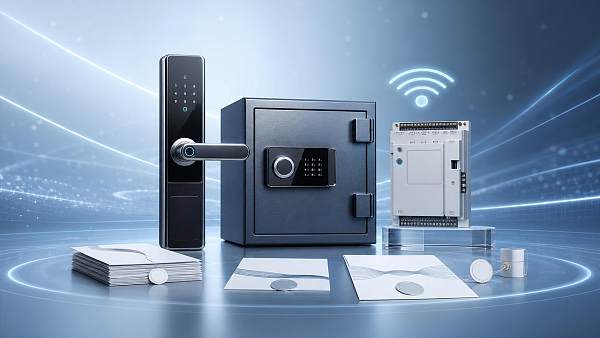
Most procurement searches for security product certification are not academic. Buyers want to know which marks are mandatory, which are valuable, and which claims are weak.
The practical answer is simple: certifications must be evaluated by product type, destination market, risk exposure, and the buyer’s insurance or tender requirements.
A smart lock with wireless modules may need CE and FCC compliance, while a burglary-resistant safe may depend heavily on UL or EN resistance ratings.
A parcel locker may require electrical safety, radio compliance, environmental durability, and sometimes accessibility or fire-related documentation, depending on installation location.
Procurement teams should avoid treating certification logos as equal. A mark can indicate legal conformity, independent testing, product safety, or specific attack resistance.
The strongest buying decisions come from matching certification evidence to the real risk: electric shock, wireless interference, forced entry, fire, tampering, or import non-compliance.
CE Marking: Market Access for the European Economic Area
CE marking is often misunderstood as a quality award. In reality, it indicates that a product meets applicable European Union safety and regulatory requirements.
For security hardware, CE may relate to low-voltage electrical safety, electromagnetic compatibility, radio equipment, machinery safety, or construction product rules.
Smart locks, electronic safes, access control terminals, and connected parcel lockers commonly fall under several EU directives or regulations simultaneously.
For buyers, CE matters because customs authorities, distributors, and commercial clients often require it before products can be legally placed on the EU market.
However, CE marking is not always based on third-party laboratory testing. In many cases, manufacturers can self-declare conformity using technical documentation.
This means procurement teams must request more than a CE logo. They should ask for the Declaration of Conformity, test reports, and applicable standards list.
For radio-enabled products, the Radio Equipment Directive is especially important. It covers spectrum use, electromagnetic performance, safety, and efficient radio communication.
A biometric smart lock with Wi-Fi, Bluetooth, Zigbee, or cellular connectivity should have documentation showing compliance with relevant radio and EMC standards.
CE is therefore essential for European entry, but it does not prove high burglary resistance. That judgment usually requires EN security standards.
FCC Certification: Critical for Wireless Security Products in the United States
FCC compliance focuses on electromagnetic emissions and radio frequency behavior in the United States. It is especially important for connected security products.
Smart locks, facial recognition terminals, smart parcel lockers, alarm controllers, and IoT access devices may all contain intentional or unintentional radiators.
If a product transmits signals through Bluetooth, Wi-Fi, LTE, NFC, or proprietary wireless protocols, FCC authorization is usually required before US sale.
Procurement teams should understand that FCC certification does not measure physical strength, lock-picking resistance, biometric accuracy, or long-term mechanical durability.
Its main function is to ensure the device does not create harmful interference and operates within approved radio frequency limits.
For importers, FCC problems can become expensive quickly. Non-compliant products may be detained, delisted from platforms, or rejected by major retail channels.
Buyers should request the FCC ID, grant details, test reports, and confirmation that the certified module matches the production configuration.
A common risk appears when suppliers change wireless modules after testing. The product may look identical, but the certification basis may no longer apply.
For security procurement, FCC compliance is a gateway requirement for connected products, not a substitute for safety, cybersecurity, or physical resistance evaluation.
UL Certification: Independent Testing That Buyers and Insurers Recognize
UL certification is widely recognized in North America and often carries strong influence with insurers, facility owners, retailers, and institutional buyers.
Unlike CE self-declaration in many cases, UL certification generally involves independent product testing, factory surveillance, and use of controlled certification marks.
For electrical security products, UL may evaluate fire risk, electric shock protection, component reliability, wiring design, and abnormal operating conditions.
For safes and vaults, UL ratings can address burglary resistance, fire resistance, relocking performance, tool attacks, or high-security container performance.
This distinction is important. A UL-listed electronic component is not the same as a UL-rated safe or a UL-certified complete lock system.
Procurement teams should check the exact UL category, standard number, file number, and whether the certification covers the finished product.
For high-security safes, UL ratings may indicate resistance against specific attack tools and time periods under controlled test conditions.
Such ratings are valuable when products are used in banking, jewelry, pharmaceuticals, cash handling, or facilities requiring insurance acceptance.
UL also matters for electronic access control equipment installed in commercial buildings, where inspectors and electrical authorities may demand recognized certification.
Because UL marks are frequently misused, buyers should verify listings directly through UL’s database rather than relying only on brochures or labels.
EN Ratings: The European Language of Security Performance
EN standards are particularly important for evaluating physical security performance in Europe and many export markets influenced by European insurance practice.
Unlike broad legal marks, EN ratings often define measurable resistance, classification levels, test methods, and performance expectations for specific security products.
For safes and vaults, EN 1143-1 is one of the most important standards for burglary resistance and insurance classification.
It evaluates resistance units based on attack tools, time, access difficulty, and construction design, helping buyers compare products beyond marketing language.
For deposit systems, secure storage units, locks, cylinders, doors, and panic hardware, different EN standards may apply depending on function.
Mechanical lock cylinders may be assessed under standards addressing durability, key security, attack resistance, corrosion resistance, and fire door compatibility.
Protective doors, turnstiles, and access barriers may involve EN standards covering mechanical safety, impact behavior, emergency egress, or automated movement.
For procurement teams, EN ratings are useful because they translate security claims into comparable grades, classes, and documented test results.
However, buyers must identify the exact standard and level. Saying “EN certified” is too vague to support serious purchasing decisions.
A safe rated under EN 1143-1 and a lock cylinder tested under another EN standard answer very different security questions.
CE, FCC, UL, and EN: How to Compare Their Real Procurement Value
The fastest way to compare certifications is to separate market legality, electrical safety, wireless compliance, and physical resistance into different decision columns.
CE mainly supports European market access. FCC mainly supports US radio compliance. UL often supports safety, insurance confidence, and independent product validation.
EN ratings often provide structured European performance grading, especially for safes, vaults, doors, cylinders, and other physical security products.
For example, a connected safe sold in Europe may need CE compliance for electronics and EN ratings for burglary or fire performance.
The same product entering the United States may require FCC authorization for wireless modules and UL recognition for safety or safe performance.
A smart parcel locker with cellular connectivity may require radio certification, electrical safety documentation, weather resistance testing, and locking mechanism validation.
Procurement teams should therefore avoid asking, “Which certification is best?” The better question is, “Which risk must this certificate reduce?”
For low-risk residential products, legal conformity and basic safety may be enough. For commercial assets, insurance-linked performance ratings become more important.
For banks, logistics hubs, luxury retail, and critical infrastructure, certification depth should be treated as part of total risk management.
Documents Procurement Teams Should Request From Suppliers
A reliable supplier should provide complete certification evidence without hesitation. Missing documents are often a stronger warning sign than imperfect test results.
For CE-marked products, request the EU Declaration of Conformity, technical file summary, applied standards, laboratory reports, and responsible economic operator details.
For FCC products, request the FCC ID, authorization grant, test report, user manual compliance statements, and confirmation of production module consistency.
For UL-certified products, request the UL file number, category control number, listing scope, product model coverage, and verification database link.
For EN-rated security products, request the full test certificate, standard number, grade or class, test laboratory name, and model-specific coverage.
Buyers should also request installation manuals, maintenance requirements, warranty conditions, labeling photos, and change-control procedures for certified components.
The model number on the certificate must match the quotation, packaging, label, and final purchase order. Similar names are not enough.
If a supplier claims a product is “certified according to” a standard, clarify whether that means actual certification or only internal design reference.
For high-value procurement, involve compliance teams early. Certification gaps discovered after shipment can cause delays, rework, penalties, and damaged client trust.
Common Certification Red Flags in Security Hardware Procurement
One major red flag is a certificate that belongs to another company, another model, or only a component inside the product.
Another warning sign is an expired, altered, low-resolution, or unverifiable certificate supplied as a screenshot without laboratory or database traceability.
Buyers should also be cautious when suppliers use broad phrases such as “CE approved,” “UL quality,” or “FCC ready.”
These expressions may hide the absence of formal certification, especially when products are rushed for marketplace listings or tender deadlines.
For smart locks, watch for undocumented wireless module substitutions, battery design changes, or firmware modifications that may affect certified performance.
For safes, confirm that the rated construction matches the supplied unit, including door thickness, relocking devices, boltwork, and barrier material.
For parcel lockers, check whether certification covers the full locker system, not only the power adapter, display, or communication module.
Procurement teams should also verify factory surveillance requirements. Some marks remain valid only if production continues under controlled audit conditions.
A trustworthy manufacturer will explain certification scope clearly. An unreliable one will rely on logos, vague wording, or pressure to close quickly.
How Certifications Influence Total Cost and Supplier Selection
Certified products may cost more upfront, but they often reduce downstream risk in import clearance, insurance approval, installation, and after-sales liability.
For procurement managers, the cheapest uncertified product can become expensive when shipments are detained, projects delayed, or clients reject documentation.
Certification also affects channel access. Retailers, platform operators, distributors, and commercial contractors may require recognized marks before onboarding suppliers.
In competitive tenders, strong certification packages can separate serious manufacturers from price-only vendors and reduce technical clarification cycles.
For long-term sourcing, certification maturity indicates supplier discipline. It suggests better documentation, engineering control, and awareness of international market expectations.
This does not mean buyers should over-specify every order. Excessive certification requirements can increase cost without improving practical security.
The right strategy is risk-based sourcing: match certification level to asset value, installation environment, legal market, and end-user expectation.
For residential smart locks, wireless compliance and electrical safety may dominate. For cash storage, burglary and fire ratings may dominate.
For commercial access control, procurement teams should balance safety compliance, cybersecurity readiness, integration reliability, and mechanical emergency operation.
A Practical Certification Checklist for Security Product Buyers
Start by defining the target market. Europe, the United States, the United Kingdom, Australia, and the Middle East may require different documentation.
Next, classify the product. Determine whether it is mechanical, electrical, wireless, biometric, structural, fire-resistant, burglary-resistant, or part of a building system.
Then map the risks. Ask whether the product could fail through electric shock, radio interference, forced entry, fire exposure, software failure, or misuse.
After that, identify mandatory marks and optional performance ratings. Mandatory compliance enables sale; performance ratings support trust, insurance, and differentiation.
Request original certification files before placing large orders. Review model numbers, test standards, issue dates, issuing bodies, and certificate scope.
Verify certificates through official databases when available. For high-risk categories, consider independent pre-shipment inspection or third-party documentation review.
Include certification obligations in the purchase agreement. Require notification before component changes, firmware changes, factory relocation, or label modifications.
Finally, keep a compliance archive. Store certificates, test reports, supplier declarations, manuals, labels, and correspondence for customs or customer audits.
Conclusion: Certification Is a Buying Tool, Not Just a Label
Security product certification helps procurement teams turn supplier claims into verifiable evidence. It reduces uncertainty before products reach customs, sites, or customers.
CE, FCC, UL, and EN ratings do not mean the same thing. Each answers a different question about legality, safety, radio behavior, or resistance.
The best buyers do not chase logos. They connect each certification to a market requirement, product risk, insurance need, or operational environment.
For safes, smart locks, access hardware, and parcel lockers, the winning procurement approach is disciplined, document-driven, and risk-based.
When certification evidence is complete, model-specific, and independently verifiable, buyers gain stronger negotiating power and lower the chance of costly surprises.
In physical security, trust should never depend on marketing language alone. The right certification package proves whether a product is ready for real deployment.











