
Security Product Certification Requirements: A Practical Checklist for Manufacturers
Security Product Certification Requirements: A Practical Checklist for Manufacturers
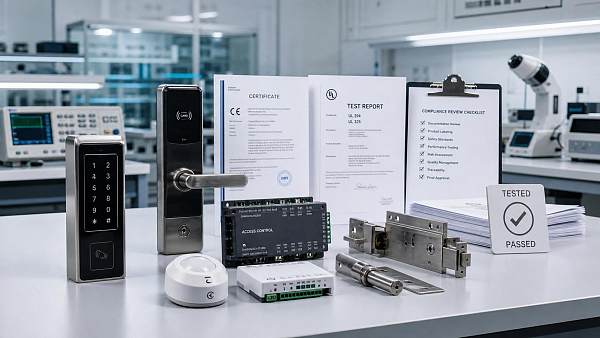
Security product certification requirements are often the first filter used to judge product safety, reliability, and market readiness.
For manufacturers, they shape sales credibility, export access, and buyer confidence.
For sourcing decisions, they reduce uncertainty before technical reviews even begin.
That is why a practical view matters more than a long list of logos.
In real projects, the right certification path depends on product type, target market, installation environment, and liability exposure.
A smart lock for apartments faces different checks than a burglary-resistant safe or a speed gate in a transit hub.
This checklist focuses on the security product certification requirements that most often influence qualification, pricing, and approval speed.
It also helps manufacturers present evidence in a way that supports faster and more confident purchasing decisions.
Why Certification Matters Before Price Comparison
Price is important, but certification often decides whether a product can even enter the shortlist.
Without clear evidence, low unit cost can quickly become high project risk.
Security product certification requirements usually affect four procurement concerns.
- Regulatory access, especially for exports or public tenders.
- Performance trust, including anti-burglary, fire, durability, and reliability claims.
- Insurance acceptance, where tested products reduce underwriting friction.
- Lifecycle cost, because failures after installation are far more expensive than testing upfront.
From a cost perspective, missing certification can trigger redesign, re-testing, shipment delays, or rejected bids.
That is why security product certification requirements should be checked before negotiating volume discounts.
The Core Checklist for Security Product Certification Requirements
A useful checklist starts with simple questions.
What exactly is certified, who tested it, and does the scope match the delivered configuration?
- Confirm the applicable standard by product category.
- Verify the issuing lab or certification body.
- Check whether the certificate covers the full product, not just a component.
- Review validity dates, renewal terms, and revision history.
- Match test conditions to the actual use scenario.
- Ask for reports, not only certificate summaries.
- Confirm factory consistency between tested samples and mass production.
- Check market-specific marks such as CE, UL, or local approvals.
This sounds basic, but many sourcing delays begin with certificates that are outdated, incomplete, or irrelevant to the target market.
In practice, strong suppliers make security product certification requirements easy to review, not hard to decode.
Category-Specific Requirements to Check First
Different products carry different compliance logic, so the checklist should stay product-specific.
Smart Locks and Electronic Locking Devices
For smart locks, security product certification requirements often combine mechanical, electronic, and cybersecurity concerns.
- Mechanical durability and lock body endurance.
- Attack resistance against picking, drilling, and forced entry.
- Electrical safety and battery reliability.
- EMC performance for connected models.
- Biometric accuracy, spoof resistance, and liveness detection evidence.
If the lock includes app control or cloud connectivity, data handling and firmware update controls also matter.
Safes, Vaults, and Secure Storage
For safes and vault systems, resistance ratings are usually the center of the conversation.
Standards such as EN 1143-1 or UL-related testing carry weight because they link performance claims to attack methods.
- Burglary resistance grade and tested attack tools.
- Lock certification used on the safe itself.
- Optional fire resistance ratings, if required by use case.
- Anchoring instructions and installation limitations.
A common mistake is treating cabinet thickness as proof of resistance.
Tested composite materials, anti-drill layers, and structure design matter more than appearance alone.
Access Control, Turnstiles, and Speed Gates
For entrance systems, certification is not only about unauthorized access.
It also covers user safety, electrical stability, throughput reliability, and emergency behavior.
- Electrical and EMC compliance.
- Emergency opening or fail-safe behavior.
- Infrared protection and anti-pinch validation.
- Durability under repeated cycles and high traffic loads.
When people flow is fast, incomplete testing can become a safety issue, not just a maintenance problem.
How to Verify Certification Claims Without Slowing Procurement
The best approach is structured verification.
You do not need to review every page first.
You need a sequence that filters risk quickly.
- Request a certification matrix with product model, standard, certificate number, and expiry date.
- Ask whether the certified model exactly matches the quoted model.
- Check the certification body website where possible.
- Review key report pages covering scope, result, and sample description.
- Confirm ongoing production controls and quality audits.
This method keeps security product certification requirements tied to the purchasing workflow.
It also helps compare suppliers on evidence quality, not just sales confidence.
Common Red Flags That Increase Cost Later
From recent market changes, one clear signal stands out.
Buyers are paying closer attention to hidden compliance gaps.
- Certificates issued for similar models, but not the quoted version.
- Reports that cover components only, while marketing implies whole-product approval.
- Expired documents presented as still valid.
- No explanation of design changes after testing.
- Inconsistent factory names across reports, labels, and shipping documents.
- Vague answers about cybersecurity, firmware, or biometric spoof resistance.
Each red flag adds downstream cost through delays, extra inspection, or field failure exposure.
That is why security product certification requirements should be reviewed alongside quality assurance and after-sales capability.
What Strong Manufacturers Should Prepare in Advance
Manufacturers can make sourcing easier by packaging compliance information clearly.
This is not just administrative work.
It directly supports trust, speed, and project conversion.
- A product-by-product certification summary.
- Updated test reports and certificates in shareable format.
- A declaration explaining any model variation from tested samples.
- Quality control records tied to certified production lines.
- Installation, maintenance, and use limitations linked to compliance scope.
In actual business, better documentation often shortens the sales cycle more effectively than another round of discounting.
That is especially true when security product certification requirements are part of formal tender review.
A Simple Decision Framework for Faster Shortlisting
If two products look similar, certification readiness often separates the stronger option.
This framework keeps security product certification requirements connected to risk, cost, and execution speed.
That makes the shortlist more defensible internally.
For manufacturers, the message is simple: present certification evidence clearly, align it with the exact product, and make compliance easy to verify. That approach builds trust faster, reduces sourcing friction, and turns security product certification requirements into a commercial advantage rather than a last-minute obstacle.
Have questions about this sector analysis, or seeking best practices specific to your niche? Drop us a line below and let the senior consultants at MHLS assist you.
We respect your privacy. Your information is strictly confidential.
Recommended News
 Parcel Locker Network Pricing: Setup Costs, Fees and Contract TermsUnmanned Terminal FellowCompare parcel locker networks pricing, from setup costs and recurring fees to contract terms. Discover hidden charges and choose the right model.
 JR East Plans UWB Walk-Through Gates at 40 Stations in Spring 2028Access Control StrategistJR East plans UWB walk-through gates at 40 stations in spring 2028. Explore the rollout timeline and what suppliers should watch.
 Bank Vault Security Standards: UL and EN Ratings ExplainedVault Structural ArchitectExplore bank vault security standards and learn how UL 608 classes and EN 1143-1 grades differ, what they test, and how to verify certification before you buy.
 Mechanical Lock Hardware Prices: What Buyers Should Budget for Bulk OrdersMr. Gideon CrossMechanical lock hardware price is just the starting point. Discover what drives bulk-order costs and how to compare supplier quotes with confidence.
 IndexBox Forecasts Steady Global Security Keypad Market Growth Through 2035Dr. Valerius ThorneGlobal security keypad market growth is forecast at 3.3% annually through 2035. Explore the smart home and replacement trends shaping demand.
 Choosing an Infrared Safety Sensors Manufacturer: What Buyers Should CheckUnmanned Terminal FellowChoosing an infrared safety sensors manufacturer? Compare safety evidence, integration, environmental performance and lifecycle costs before you buy.
 Choosing a Security Material Testing Service: What to Check for Lock and Safe MaterialsProf. Elara SterlingChoose a security material testing service with confidence. Learn what to check for lock and safe materials, from attack methods and accreditation to reliable reports.
 How Precision Anti-Pick Lock Cylinders Resist ManipulationSecurity Metallurgy ExpertDiscover how precision anti-pick lock technology resists manipulation, and learn what to check when comparing security features, test evidence, and everyday reliability.
 Dermalog Joins NIST FastCAP Program for Contactless Fingerprint TestingProf. Elara SterlingDermalog joins the NIST FastCAP program for contactless fingerprint testing. Discover what this means for biometric identification and digital identity.
 Choosing Security Export Compliance Services: What Providers Should CoverMr. Gideon CrossSecurity export compliance services can help prevent costly delays. Discover what to look for in classification, licensing, screening, and documentation.
 European Security Compliance Standards for Safes: EN 1143-1 vs EN 14450Dr. Valerius ThorneExplore security compliance standards Europe buyers need to know. Compare EN 1143-1 and EN 14450 to choose the right safe with confidence.
 HID Global Acquires inepro ID to Expand RFID and BLE Access SolutionsUnmanned Terminal FellowHID Global acquires inepro ID to expand RFID and BLE access solutions for printers, smart lockers and shared devices. Explore what the deal could mean for your organization.











