
Security Product Testing Laboratory: Key Tests, Standards, and Certification Readiness
What does a security product testing laboratory actually prove?
A security product testing laboratory does more than confirm whether a product “works.” It shows whether a safe, smart lock, access control device, or protective door can keep performing under stress, tampering, and long-term use.
In practice, this matters because physical security failures are rarely simple. A lock may pass opening tests but fail after vibration, dust, or repeated cycles. A safe may look robust but underperform when drilling, cutting, or prying begins.
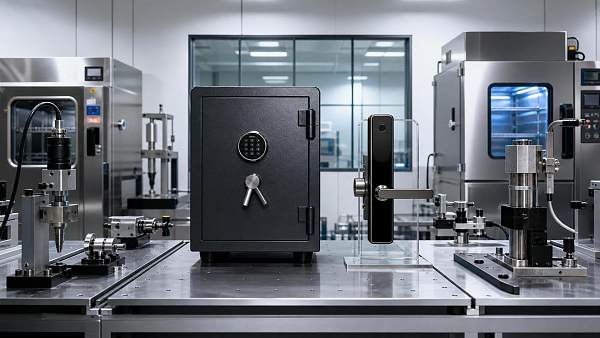
For companies working with SHPS-related products such as safes, biometric smart locks, turnstiles, and smart parcel lockers, lab evidence supports both compliance and commercial trust. It also helps separate design claims from verified performance.
Which tests matter most for physical security products?
The answer depends on the product category, but the core test families are similar. Burglary resistance, mechanical durability, environmental stability, electronic reliability, and functional safety usually sit at the center of a test program.
- Burglary and attack tests: drilling, cutting, prying, impact
- Endurance tests: cycle life, latch wear, hinge fatigue, actuator stability
- Environmental tests: heat, cold, humidity, salt spray, dust
- Electrical tests: power fluctuation, EMC, battery behavior, fail-safe logic
- System tests: alarms, access logs, anti-tailgating, connectivity recovery
A smart lock may need spoofing resistance and battery endurance, while a high-security safe may need resistance tests aligned with EN 1143-1 or UL methods. A turnstile or speed gate adds safety and flow-control checks, because user safety is part of security performance.
A quick comparison table for common lab checks
This table is useful when building a test matrix or reviewing supplier reports. It shows how different products are usually assessed in a security product testing laboratory.
How do standards guide certification readiness?
Standards turn product claims into measurable requirements. That is why certification readiness starts with knowing which standard applies before design freeze, not after samples are built.
For burglary-resistant safes, standards such as EN 1143-1 or UL-based test schemes define attack methods, tooling, and grading logic. For electronic security devices, relevant standards may cover EMC, electrical safety, ingress protection, or reliability under repeated use.
The most common mistake is treating one test report as proof for every market. In reality, certification readiness is market-specific. A product designed for one region may still need redesign, retesting, or documentation updates elsewhere.
That is where a security product testing laboratory helps early. It can flag gaps in material selection, locking structure, firmware logic, or traceability before certification cost starts to rise.
What usually causes test failure?
Failures are often not dramatic. They come from small weaknesses that compound under pressure. A lock cylinder may pass initial function checks but loosen after cycle testing. A safe door may resist one attack angle but expose a weak seam at another point.
Electronic products fail for equally practical reasons. Poor battery management, unstable firmware, weak seals, or inconsistent sensor calibration can lead to rejection even when the core concept is sound.
- Incomplete pre-test inspection and unclear sample selection
- Material mismatch between prototype and production units
- Weak documentation for traceability and configuration control
- Design choices that ignore real attack paths or field conditions
A good lab report is useful, but it is even better when it is backed by stable production control. Otherwise, the certification result may not hold when full-scale manufacturing begins.
How should a team prepare before sending samples to the lab?
Preparation is often the difference between a smooth certification path and repeated retesting. The most efficient approach is to treat the lab as a verification partner, not a place to discover basic product issues.
A practical pre-test checklist usually includes version control, drawings, bill of materials, target standard, intended market, and expected use conditions. For connected security devices, firmware version and app logic should be frozen too.
It also helps to review installation assumptions. Some failures come from the product itself, while others come from the mounting structure, power supply, or operating environment. If those are not defined clearly, the test result may be hard to interpret.
A short internal pilot test before formal lab submission often saves time. It can expose basic issues in door alignment, unlock timing, sensor sensitivity, or sample consistency.
Useful questions to ask before certification
These questions help narrow the scope and reduce wasted cycles in the security product testing laboratory.
- Which standard and grade are we targeting?
- Is the sample identical to production intent?
- Which failure modes matter most in the field?
- Do we need regional or multi-market certification?
- Are software, hardware, and mechanical revisions locked?
Which lab output is most useful for decision-making?
The best lab output is not just a pass/fail line. It should show how the product behaved, where it failed, what changed after each condition, and whether the result maps clearly to a standard.
For security hardware, that detail supports redesign, supplier comparison, and certification planning. It also helps operators and facility teams understand how a product will age under real use, not only during launch.
If the report includes test conditions, sample photos, deviation notes, and traceable configuration data, it becomes much easier to use in procurement review or audit preparation. That is especially important when products combine mechanical structure, electronics, and networked control.
A practical takeaway for certification readiness
A security product testing laboratory helps turn uncertain product claims into evidence that can be reviewed, compared, and certified. The value is highest when testing starts early, standards are chosen carefully, and design decisions are aligned with real attack and usage conditions.
If the goal is safer market entry, the next step is simple: define the product category, identify the applicable standard, confirm sample consistency, and compare lab findings against the intended deployment environment. That sequence keeps certification work focused and reduces avoidable retesting.
Have questions about this sector analysis, or seeking best practices specific to your niche? Drop us a line below and let the senior consultants at MHLS assist you.
We respect your privacy. Your information is strictly confidential.
Recommended News
 Parcel Locker Network Pricing: Setup Costs, Fees and Contract TermsUnmanned Terminal FellowCompare parcel locker networks pricing, from setup costs and recurring fees to contract terms. Discover hidden charges and choose the right model.
 JR East Plans UWB Walk-Through Gates at 40 Stations in Spring 2028Access Control StrategistJR East plans UWB walk-through gates at 40 stations in spring 2028. Explore the rollout timeline and what suppliers should watch.
 Bank Vault Security Standards: UL and EN Ratings ExplainedVault Structural ArchitectExplore bank vault security standards and learn how UL 608 classes and EN 1143-1 grades differ, what they test, and how to verify certification before you buy.
 Mechanical Lock Hardware Prices: What Buyers Should Budget for Bulk OrdersMr. Gideon CrossMechanical lock hardware price is just the starting point. Discover what drives bulk-order costs and how to compare supplier quotes with confidence.
 IndexBox Forecasts Steady Global Security Keypad Market Growth Through 2035Dr. Valerius ThorneGlobal security keypad market growth is forecast at 3.3% annually through 2035. Explore the smart home and replacement trends shaping demand.
 Choosing an Infrared Safety Sensors Manufacturer: What Buyers Should CheckUnmanned Terminal FellowChoosing an infrared safety sensors manufacturer? Compare safety evidence, integration, environmental performance and lifecycle costs before you buy.
 Choosing a Security Material Testing Service: What to Check for Lock and Safe MaterialsProf. Elara SterlingChoose a security material testing service with confidence. Learn what to check for lock and safe materials, from attack methods and accreditation to reliable reports.
 How Precision Anti-Pick Lock Cylinders Resist ManipulationSecurity Metallurgy ExpertDiscover how precision anti-pick lock technology resists manipulation, and learn what to check when comparing security features, test evidence, and everyday reliability.
 Dermalog Joins NIST FastCAP Program for Contactless Fingerprint TestingProf. Elara SterlingDermalog joins the NIST FastCAP program for contactless fingerprint testing. Discover what this means for biometric identification and digital identity.
 Choosing Security Export Compliance Services: What Providers Should CoverMr. Gideon CrossSecurity export compliance services can help prevent costly delays. Discover what to look for in classification, licensing, screening, and documentation.
 European Security Compliance Standards for Safes: EN 1143-1 vs EN 14450Dr. Valerius ThorneExplore security compliance standards Europe buyers need to know. Compare EN 1143-1 and EN 14450 to choose the right safe with confidence.
 HID Global Acquires inepro ID to Expand RFID and BLE Access SolutionsUnmanned Terminal FellowHID Global acquires inepro ID to expand RFID and BLE access solutions for printers, smart lockers and shared devices. Explore what the deal could mean for your organization.











