Security Product Testing Services: What to Verify Before Certification and Launch
Security products rarely fail because of one obvious defect. More often, launch risk comes from small weaknesses that testing did not expose early enough.
That is why security product testing services matter long before certification paperwork begins. They help verify resistance, reliability, electronic stability, and real installation performance.
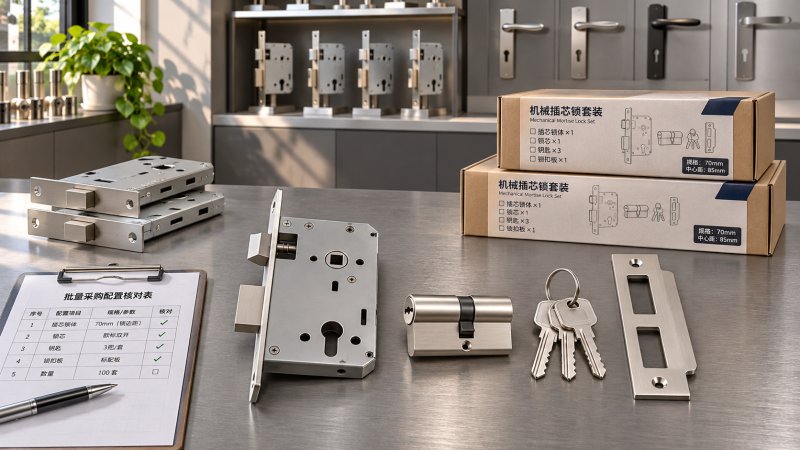
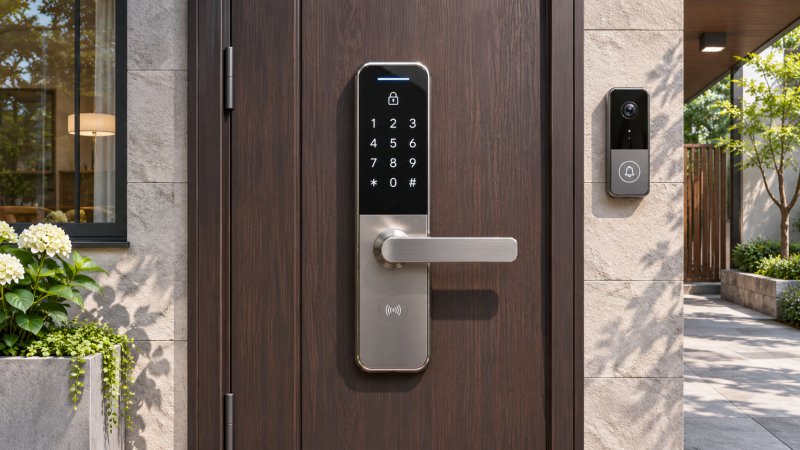
In practical terms, the same discipline applies across biometric smart locks, safes, vault components, lock cylinders, turnstiles, and parcel locker systems.
A test report should not just say a product passed. It should explain where failure is likely, what conditions trigger it, and whether certification readiness is real.
What do security product testing services really verify before certification?

At the basic level, security product testing services check whether a device performs as claimed under controlled and repeatable conditions.
For security hardware, that usually means more than functional testing. Mechanical resistance, tamper behavior, electronic endurance, and environmental reliability all matter.
A biometric lock may unlock correctly in the lab, yet fail after moisture exposure, voltage fluctuation, or repeated spoof attempts.
A safe body may appear robust, yet reveal weak seams during drill, pry, or cutting evaluation.
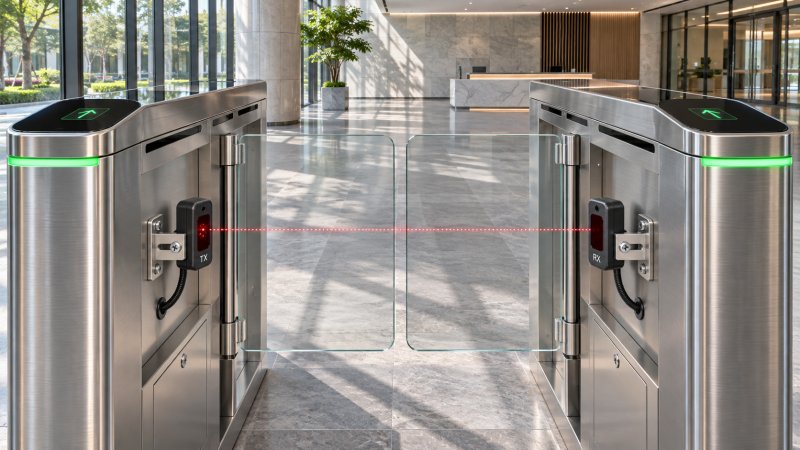
A speed gate may pass normal cycling tests, but still create safety issues during peak pedestrian flow or sensor interruption.
The useful question is not simply, “Does it work?” It is, “Does it still work when stressed, attacked, installed, connected, and maintained in real conditions?”
This is also where standards planning starts. Different products may need burglary resistance, electrical safety, EMC, ingress, fire, or endurance verification.
Platforms such as SHPS often frame these checks in a broader context, linking test evidence with materials, locking structure, biometrics, and deployment risk.
Which checks usually decide whether launch risk is low or still hidden?
Not every test has equal decision value. Some checks reveal whether the design is mature, while others mainly support documentation.
Before certification and launch, the most important checks usually sit in five areas:
- Mechanical durability: cycle life, wear, hinge fatigue, latch deformation, cylinder performance, and structural looseness.
- Attack resistance: drilling, cutting, prying, torque abuse, anti-picking performance, forced entry points, and tamper response.
- Environmental reliability: temperature extremes, humidity, corrosion, dust, water ingress, UV exposure, and condensation behavior.
- Electronic stability: power loss, battery depletion, surge, EMC, sensor drift, communication interruption, and firmware recovery.
- Operational safety: anti-tailgating logic, obstruction sensing, emergency release, fail-safe or fail-secure behavior, and user error tolerance.
In real projects, hidden risk often appears at the intersection of these areas. A lock body may survive endurance testing but fail after dust exposure.
A parcel locker network may function locally but show unstable door release when connectivity drops across a wider IoT environment.
That is why strong security product testing services combine lab discipline with scenario-based verification instead of isolated pass marks.
How do you judge whether the testing scope matches the product and the intended market?
A common mistake is testing the product in general, rather than testing it for the exact risk profile and destination market.
A residential smart lock, a cash-rated safe, and an industrial access turnstile do not need the same testing depth.
The better approach is to map three things early: threat level, usage frequency, and compliance destination.
This kind of matrix keeps security product testing services tied to commercial reality. It also helps prevent expensive retesting late in the approval cycle.
Why do some products pass internal checks but still struggle in formal certification?
Internal verification is useful, but it often misses the structure and rigor expected in accredited certification testing.
One issue is sample quality. Engineering samples may be hand-tuned, while production samples carry tolerance variation, assembly drift, or supplier substitutions.
Another issue is test sequence. In certification, products may face combined stress, not isolated checks. Heat, vibration, and electrical disturbance can expose delayed failures.
Documentation also matters more than many teams expect. Missing traceability, incomplete bill of materials control, or vague firmware records can slow approval.
For physical security products, certification trouble often comes from edge conditions: relock delay, sensor blind spots, latch rebound, software timeout, or enclosure weakness.
More careful security product testing services use pre-compliance reviews to catch these gaps before the formal test window begins.
That approach is especially useful when dealing with EN, UL, EMC, ingress, or regional market requirements that affect both hardware and supporting documents.
What mistakes most often weaken test value, even when the budget is not small?
Budget alone does not create trustworthy verification. The bigger risk is spending on the wrong sequence or the wrong assumptions.
Several patterns appear again and again:
- Testing too late, when design changes trigger schedule loss and repeated tooling work.
- Separating mechanical, electronic, and software review, even though failures often cross those boundaries.
- Using only nominal conditions, with little attention to abuse, contamination, misalignment, or interrupted power.
- Treating certification as a document exercise instead of a product maturity checkpoint.
- Ignoring installation variables such as door thickness, mounting surface rigidity, cable routing, or field calibration.
In practice, the strongest programs test around the real failure path. That means asking how the product will actually be attacked, misused, weathered, and serviced.
For sectors covered by SHPS, this wider view matters because physical security performance is rarely just a materials question or just a software question.
It is usually the interaction between hardware design, locking structure, sensor logic, and operational environment that decides field reliability.
How should the final pre-launch review be structured?
A useful final review is short, evidence-based, and unforgiving about open risk. It should confirm readiness, not create a false sense of completion.
Before release, security product testing services should help verify four closing questions.
Is the tested sample truly representative?
The tested configuration must match production intent, including materials, firmware version, electronics, fasteners, and supplier sources.
Have critical failures been retested after correction?
A corrected issue is not closed until the change is verified under the same or harsher conditions than the original failure.
Do test results align with the target standard and market claim?
Marketing language, technical files, and certification scope must say the same thing. Any gap creates exposure after launch.
Can field teams support the product without creating new risk?
Installation guides, maintenance limits, battery rules, network recovery steps, and tamper response procedures should already be validated.
When these points are clear, testing becomes a decision tool rather than a late-stage hurdle. That is the real value of security product testing services.
The next step is straightforward: define the threat model, map the applicable standards, review weak interfaces, and confirm that pre-compliance evidence matches the launch claim.
For complex security hardware, a disciplined review now usually costs less than a certification delay, a field recall, or damaged trust later.
Have questions about this sector analysis, or seeking best practices specific to your niche? Drop us a line below and let the senior consultants at MHLS assist you.
We respect your privacy. Your information is strictly confidential.
Recommended News
 Physical Security Infrastructure Cost: Budgeting for Installation and MaintenanceUnmanned Terminal FellowUnderstand physical security infrastructure cost and build a smarter budget for installation, maintenance, and long-term ownership.
 Financial Facility Security: Choosing Vault Doors for Bank BranchesVault Structural ArchitectStrengthen financial facility security with the right bank vault door. Explore certification, installation, locking controls and maintenance before you buy.
 MACO Acquires Majority Stake in Fingerprint Access Provider ekeyProf. Elara SterlingMACO acquires a majority stake in ekey, bringing fingerprint access and door hardware closer together. Discover what the deal could mean for smart buildings.
 Physical Security System Engineering: From Risk Assessment to System DesignUnmanned Terminal FellowExplore physical security system engineering, from risk assessment to integrated design, procurement and testing. Build a safer, more resilient facility.
 Apple Home Collection Smart Lock and Other Accessories Open for Preorder November 13Biometric Auth ScientistApple Home Collection preorders open November 13, 2026. Explore the LG smart lock’s Matter and Aliro support and what buyers should verify before ordering.
 Choosing Servo-Driven Flap Barriers: Throughput, Safety and Access ControlAccess Control StrategistServo-driven flap barriers can balance throughput, safety and access control. Discover how to compare lanes, test performance and choose with confidence.
 Parcel Locker Network Pricing: Setup Costs, Fees and Contract TermsUnmanned Terminal FellowCompare parcel locker networks pricing, from setup costs and recurring fees to contract terms. Discover hidden charges and choose the right model.
 JR East Plans UWB Walk-Through Gates at 40 Stations in Spring 2028Access Control StrategistJR East plans UWB walk-through gates at 40 stations in spring 2028. Explore the rollout timeline and what suppliers should watch.
 Bank Vault Security Standards: UL and EN Ratings ExplainedVault Structural ArchitectExplore bank vault security standards and learn how UL 608 classes and EN 1143-1 grades differ, what they test, and how to verify certification before you buy.
 Mechanical Lock Hardware Prices: What Buyers Should Budget for Bulk OrdersMr. Gideon CrossMechanical lock hardware price is just the starting point. Discover what drives bulk-order costs and how to compare supplier quotes with confidence.
 IndexBox Forecasts Steady Global Security Keypad Market Growth Through 2035Dr. Valerius ThorneGlobal security keypad market growth is forecast at 3.3% annually through 2035. Explore the smart home and replacement trends shaping demand.
 Choosing an Infrared Safety Sensors Manufacturer: What Buyers Should CheckUnmanned Terminal FellowChoosing an infrared safety sensors manufacturer? Compare safety evidence, integration, environmental performance and lifecycle costs before you buy.