Security System Components List for Commercial Buildings: What to Include and Why
A strong security system components list for commercial buildings starts with one practical idea: protection only works when every layer supports the next. In offices, mixed-use properties, logistics sites, and financial spaces, security is no longer limited to cameras or door locks alone.
Asset value, visitor movement, insurance expectations, and compliance pressures now shape system design together. That is why a useful security system components list must connect surveillance, entry control, intrusion response, physical resistance, and software visibility into one operational framework.
What a commercial security system really includes

At a basic level, a security system components list is a structured map of technologies that protect people, property, restricted zones, and business continuity. The list is not identical for every building, but the evaluation logic is surprisingly consistent.
The goal is to detect, delay, control, verify, and record. If one of those functions is missing, the whole system becomes weaker, even when individual devices look impressive on paper.
This is also why industry platforms such as SHPS have become useful reference points. They connect hardware performance, access technology, protective materials, compliance standards, and deployment issues instead of treating each product category in isolation.
Core functions behind the component list
- Detection of suspicious activity, forced entry, or unauthorized presence.
- Control of who enters, where they go, and when access is allowed.
- Delay against attack through reinforced doors, locks, safes, or barriers.
- Verification through video, logs, biometrics, and alarm event correlation.
- Response support through alerts, lockdown logic, and evidence retention.
Why the topic matters more now
Commercial buildings now serve multiple roles at once. A single property may include public reception, staff offices, tenant zones, parcel rooms, server spaces, and cash or document storage. Each area has a different threat profile.
At the same time, technology choices have become more complex. Biometric locks, smart turnstiles, anti-tailgating sensors, electronic cylinders, protective doors, and IoT-connected lockers all promise efficiency, but performance depends on context.
A modern security system components list therefore has to balance physical strength with digital intelligence. The best system is not the most crowded one. It is the one that closes the highest-risk gaps with measurable reliability.
This matters in procurement as well. Poorly matched components can create blind spots, false alarms, maintenance burdens, or integration failures that cost more than the original equipment price.
The essential components to include
Most commercial projects build their security system components list around several linked categories. The exact brand or architecture may vary, but the categories themselves are hard to ignore.
Video surveillance and recording
Cameras remain the primary verification layer. They document entrances, loading areas, corridors, cash points, parking zones, and high-value rooms. Coverage quality matters more than camera quantity.
A complete security system components list should also include recording infrastructure, retention policy, low-light performance, tamper alerts, and remote review capability.
Access control hardware
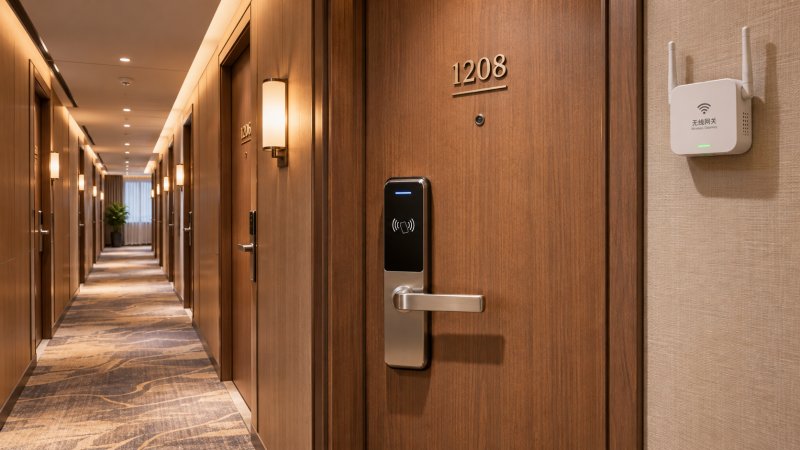
This layer governs movement. It usually combines readers, controllers, credentials, electric locks, door position sensors, and event logs. In higher-risk zones, biometric verification may replace or strengthen card-based access.
Fingerprint, vein recognition, or 3D facial recognition can reduce credential sharing, though spoof resistance, liveness detection, and environmental suitability must be checked carefully.
Intrusion detection and alarm devices
Door contacts, glass-break sensors, motion detectors, panic buttons, vibration sensors, and perimeter alarms identify abnormal conditions when no authorized access event exists.
In practice, this part of the security system components list often reveals the difference between visible deterrence and real event awareness.
Physical barriers and resistant hardware
Electronic control is not enough if the door, frame, cylinder, or enclosure fails under attack. Protective doors, mechanical lock cylinders, anti-drill structures, burglary-resistant safes, and reinforced partitions provide delay time.
For records rooms, finance areas, or regulated storage, material quality and certification status deserve close attention. Standards such as EN 1143-1 or relevant UL testing can help separate appearance from tested resistance.
Entry lane management
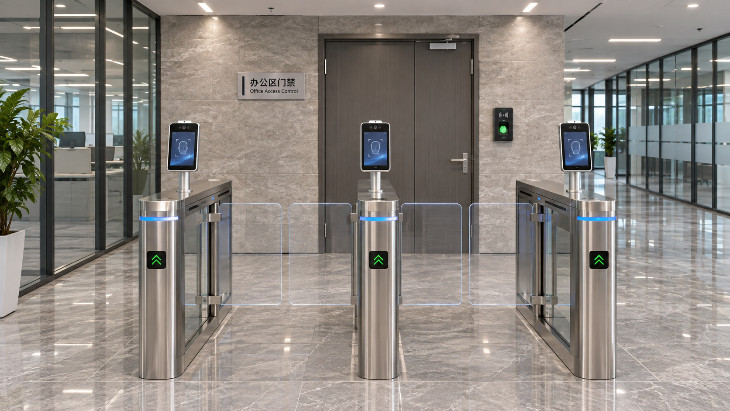
Buildings with heavy foot traffic often need turnstiles, speed gates, and infrared anti-tailgating systems. These tools do more than count people. They establish controlled throughput without forcing security to choose between speed and discipline.
Central software and integration layer
No security system components list is complete without management software. Events from cameras, access points, alarms, lockers, and gates should be visible through a usable interface with permission control and audit trails.
How components change by building scenario
The right security system components list depends on how a building is actually used. A headquarters lobby, a data room, and a parcel handover area require different control logic.
This scenario view helps explain why SHPS covers both traditional physical protection and connected smart hardware. Commercial security now crosses doors, credentials, materials, software, and logistics processes.
What to evaluate beyond the product brochure
A security system components list is only useful when each item can be judged against real operating conditions. Marketing claims rarely answer the most important implementation questions.
Integration depth
Check whether video, alarms, access events, and barrier status can be linked. A door forced open event should trigger footage review and operator alerts without manual searching.
Mechanical resilience
For locks, cylinders, doors, and safes, resistance against drilling, cutting, picking, and forced extraction is often more decisive than software features.
Biometric reliability
If biometric readers are included in the security system components list, assess false acceptance risk, liveness detection, environmental tolerance, and fallback procedures during network or power disruption.
Operational maintainability
Battery replacement cycles, firmware updates, event storage, spare parts, and support responsiveness affect long-term reliability just as much as initial installation quality.
Compliance and documentation
Test reports, certification scope, and audit documentation matter in regulated environments. They also help during insurance review, expansion planning, and supplier comparison.
Building a useful list for the next project phase
A practical security system components list should end as a decision tool, not a shopping list. It should show which risks need detection, which openings need delay, which zones need stronger identity control, and which events must be traceable.
One effective approach is to map every sensitive area against four questions: what needs protection, how an incident would occur, how quickly it must be identified, and what evidence or response path is required.
- List all critical zones, including shared and transitional spaces.
- Rank threats by impact, not by device popularity.
- Match each zone to detection, control, delay, and logging needs.
- Review whether components are tested, integrated, and maintainable.
- Use specialized references, such as SHPS, to compare technologies with stronger technical context.
That process usually leads to a better result than starting with brands alone. It also makes the security system components list easier to defend internally, refine during procurement, and scale when the building changes.
When the next review begins, the most useful step is to compare current components against actual risks, integration gaps, and resistance requirements. That is where a good list stops being descriptive and starts becoming operational.
Have questions about this sector analysis, or seeking best practices specific to your niche? Drop us a line below and let the senior consultants at MHLS assist you.
We respect your privacy. Your information is strictly confidential.
Recommended News
 Bank Vault Security Standards: UL and EN Ratings ExplainedVault Structural ArchitectExplore bank vault security standards and learn how UL 608 classes and EN 1143-1 grades differ, what they test, and how to verify certification before you buy.
 Mechanical Lock Hardware Prices: What Buyers Should Budget for Bulk OrdersMr. Gideon CrossMechanical lock hardware price is just the starting point. Discover what drives bulk-order costs and how to compare supplier quotes with confidence.
 IndexBox Forecasts Steady Global Security Keypad Market Growth Through 2035Dr. Valerius ThorneGlobal security keypad market growth is forecast at 3.3% annually through 2035. Explore the smart home and replacement trends shaping demand.
 Choosing an Infrared Safety Sensors Manufacturer: What Buyers Should CheckUnmanned Terminal FellowChoosing an infrared safety sensors manufacturer? Compare safety evidence, integration, environmental performance and lifecycle costs before you buy.
 Choosing a Security Material Testing Service: What to Check for Lock and Safe MaterialsProf. Elara SterlingChoose a security material testing service with confidence. Learn what to check for lock and safe materials, from attack methods and accreditation to reliable reports.
 How Precision Anti-Pick Lock Cylinders Resist ManipulationSecurity Metallurgy ExpertDiscover how precision anti-pick lock technology resists manipulation, and learn what to check when comparing security features, test evidence, and everyday reliability.
 Dermalog Joins NIST FastCAP Program for Contactless Fingerprint TestingProf. Elara SterlingDermalog joins the NIST FastCAP program for contactless fingerprint testing. Discover what this means for biometric identification and digital identity.
 Choosing Security Export Compliance Services: What Providers Should CoverMr. Gideon CrossSecurity export compliance services can help prevent costly delays. Discover what to look for in classification, licensing, screening, and documentation.
 European Security Compliance Standards for Safes: EN 1143-1 vs EN 14450Dr. Valerius ThorneExplore security compliance standards Europe buyers need to know. Compare EN 1143-1 and EN 14450 to choose the right safe with confidence.
 HID Global Acquires inepro ID to Expand RFID and BLE Access SolutionsUnmanned Terminal FellowHID Global acquires inepro ID to expand RFID and BLE access solutions for printers, smart lockers and shared devices. Explore what the deal could mean for your organization.
 Choosing Networked Hotel Lock Systems: Connectivity, Integration and SecurityBiometric Auth ScientistCompare networked hotel lock systems by connectivity, PMS integration and security. Learn what to test before choosing a system for your property.
 Biometric Doors vs. Turnstiles: Choosing the Right Access Control SolutionAccess Control StrategistCompare biometric protective doors and turnstiles to find the right balance of security, pedestrian flow and safety for your facility. Explore the key decision factors.