
Smart Security Technology Market: Key Growth Drivers, Buyer Segments, and Adoption Barriers
The smart security technology market is moving from a niche upgrade cycle to a core infrastructure decision. Organizations now expect stronger protection for assets, entrances, parcels, and restricted zones, but they also expect systems to improve traffic flow, audit visibility, and maintenance efficiency.
That shift matters because physical security is no longer judged only by hardware strength. It is increasingly evaluated through integration, biometric reliability, compliance readiness, and lifecycle risk, especially across commercial buildings, logistics networks, financial sites, and multi-tenant properties.
In this environment, the smart security technology market covers more than cameras and alarms. It includes safes, vault systems, biometric locks, mechanical cylinders, protective doors, turnstiles, parcel lockers, and the digital control layers that connect them.
What the market now includes
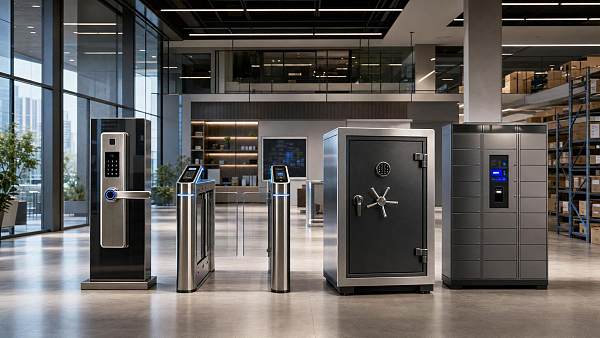
At a practical level, the smart security technology market combines physical resistance with connected intelligence. Buyers increasingly compare not just product categories, but how materials, electronics, software, and access logic work together under real operating conditions.
A biometric smart lock, for example, is not evaluated only by design or opening speed. It is judged by spoof resistance, liveness detection, credential management, failure recovery, and how it fits broader building access policies.
The same applies to safes and vault systems. Burglary resistance, anti-drill construction, lock architecture, certification evidence, and insurance acceptance all shape procurement value more than surface features alone.
This is why specialized intelligence platforms such as SHPS have become relevant. They help connect technical subjects that are often assessed separately, including metallurgical materials, mechanical locking structures, biometric algorithms, compliance testing, and deployment realities.
Why growth is accelerating
Several forces are pushing the smart security technology market forward. Some are operational, some regulatory, and some are tied to changing user expectations around access, traceability, and unattended asset protection.
Physical risk is more varied
Security planning now covers burglary, internal misuse, credential sharing, tailgating, parcel theft, and access abuse across distributed sites. Traditional standalone hardware often lacks the visibility needed to manage these layered risks.
Buildings are becoming connected systems
Smart buildings need door hardware, turnstiles, lockers, and access platforms to exchange data. This makes connected physical security more valuable, especially where events, permissions, and maintenance need centralized control.
Compliance is shaping specifications earlier
Standards such as EN 1143-1 and relevant UL testing frameworks influence shortlisting before purchase. Buyers increasingly want evidence of burglary resistance, electronic lock reliability, and system safety before site rollout.
Labor efficiency matters
Remote credential management, event logs, automated parcel handling, and lower rekeying frequency can reduce administrative burden. In the smart security technology market, operational savings often justify investment as much as risk reduction does.
Buyer segments are widening
The market is no longer defined by one dominant purchasing pattern. Demand comes from asset protection, controlled access, logistics efficiency, and insurance-sensitive environments, each with different evaluation criteria.
This diversity explains why the smart security technology market cannot be assessed with a single checklist. The value of a smart lock in residential access is different from the value of a lock in a data room or cash-handling environment.
Where technology is creating real differentiation
Not every digital feature improves security. The strongest products in the smart security technology market usually combine meaningful innovation with proven mechanical and structural performance.
Biometric verification is maturing
Fingerprint, near-infrared vein recognition, and 3D facial recognition are improving usability without ignoring fraud risk. What matters is whether liveness detection and error handling are robust enough for the intended threat level.
Mechanical engineering still matters
Anti-picking cylinders, pin-in-pin structures, blade displacement designs, and reinforced lock bodies remain critical. In many deployments, smart credentials are only as trustworthy as the physical barrier behind them.
Material science is becoming a buying factor
Composite safe bodies, corundum anti-drill materials, and anti-cut structural layers are no longer specialist details. They increasingly affect product positioning, insurance discussions, and expected service life.
Connected hardware is broadening service models
4G and 5G parcel locker connectivity, remote monitoring, and software-linked access control allow distributed operations to scale. This is especially important where field maintenance and uptime directly affect customer experience.
The barriers that still slow adoption
Despite growth, the smart security technology market is not frictionless. Adoption often slows because decision-makers must reconcile security performance, capital cost, user acceptance, integration limits, and legal obligations.
- System complexity can exceed internal maintenance capability.
- Biometric privacy rules vary across regions and use cases.
- Interoperability is inconsistent across locks, controllers, and software.
- Certification claims are sometimes hard to compare across markets.
- Lower-priced products may hide reliability or service risks.
In actual evaluation work, the biggest mistake is treating connected security hardware like ordinary electronics. A failure in a turnstile, locker, or access door has operational and liability consequences that go well beyond device replacement cost.
Another barrier is false equivalence between features. Two biometric locks may offer similar user interfaces, yet differ sharply in spoof resistance, offline behavior, emergency override logic, and audit trace quality.
How to assess the market more effectively
A better approach is to evaluate the smart security technology market through scenario fit rather than headline innovation. The most useful questions are practical and evidence-based.
Start with threat and traffic conditions
A restricted research site, an apartment entrance, and a parcel pickup wall need very different performance profiles. Required throughput, attack methods, user turnover, and downtime tolerance should frame every shortlist.
Check proof, not just claims
Look for certification documents, test scope, material descriptions, reliability data, and installed references. In the smart security technology market, unsupported claims around anti-drill strength or biometric accuracy create avoidable risk.
Review lifecycle economics
Purchase price is only one layer. Service response, software updates, parts availability, battery management, training needs, and recertification requirements can materially change long-term value.
Map integration consequences early
Physical security hardware increasingly sits inside broader building and operations systems. Compatibility with access control platforms, audit workflows, and network policies should be tested before contract commitment.
Why market intelligence now matters more
As categories converge, reliable comparison becomes harder. The smart security technology market now spans traditional hardware makers, smart device brands, software-driven access firms, and cross-border suppliers with uneven documentation quality.
That is where focused market intelligence becomes useful. Platforms such as SHPS help organize technical topics that often sit in separate silos, from burglary-resistant vault construction to electronic lock reliability and infrared anti-tailgating systems.
This kind of visibility supports better sourcing, compliance review, product comparison, and deployment planning. It also helps distinguish between products that are digitally attractive and products that are operationally dependable.
A practical next step
The smart security technology market deserves attention because it sits at the intersection of physical protection, digital control, and measurable business risk. Growth is real, but so is the gap between impressive specifications and field-ready performance.
A useful next step is to build a comparison framework around threat model, certification, integration fit, service support, and lifecycle cost. From there, it becomes much easier to judge which technologies are strategic upgrades and which are simply feature-heavy alternatives.
For teams tracking suppliers or expansion opportunities, continued review of standards, application cases, and hardware performance data will provide a clearer view of where the smart security technology market is actually delivering durable value.
- smart parcel lockers
- high-security locks
- smart security technology
- speed gates
- anti-tailgating systems
- electronic lock reliability
- access control platforms
- near-infrared vein recognition
- infrared anti-tailgating systems
- biometric algorithms
- physical security
- vault systems
- protective doors
- liveness detection
- EN 1143-1
- security hardware
- parcel locker connectivity
- smart security technology market
Have questions about this sector analysis, or seeking best practices specific to your niche? Drop us a line below and let the senior consultants at MHLS assist you.
We respect your privacy. Your information is strictly confidential.
Recommended News
 Physical Security System Engineering: From Risk Assessment to System DesignUnmanned Terminal FellowExplore physical security system engineering, from risk assessment to integrated design, procurement and testing. Build a safer, more resilient facility.
 Apple Home Collection Smart Lock and Other Accessories Open for Preorder November 13Biometric Auth ScientistApple Home Collection preorders open November 13, 2026. Explore the LG smart lock’s Matter and Aliro support and what buyers should verify before ordering.
 Choosing Servo-Driven Flap Barriers: Throughput, Safety and Access ControlAccess Control StrategistServo-driven flap barriers can balance throughput, safety and access control. Discover how to compare lanes, test performance and choose with confidence.
 Parcel Locker Network Pricing: Setup Costs, Fees and Contract TermsUnmanned Terminal FellowCompare parcel locker networks pricing, from setup costs and recurring fees to contract terms. Discover hidden charges and choose the right model.
 JR East Plans UWB Walk-Through Gates at 40 Stations in Spring 2028Access Control StrategistJR East plans UWB walk-through gates at 40 stations in spring 2028. Explore the rollout timeline and what suppliers should watch.
 Bank Vault Security Standards: UL and EN Ratings ExplainedVault Structural ArchitectExplore bank vault security standards and learn how UL 608 classes and EN 1143-1 grades differ, what they test, and how to verify certification before you buy.
 Mechanical Lock Hardware Prices: What Buyers Should Budget for Bulk OrdersMr. Gideon CrossMechanical lock hardware price is just the starting point. Discover what drives bulk-order costs and how to compare supplier quotes with confidence.
 IndexBox Forecasts Steady Global Security Keypad Market Growth Through 2035Dr. Valerius ThorneGlobal security keypad market growth is forecast at 3.3% annually through 2035. Explore the smart home and replacement trends shaping demand.
 Choosing an Infrared Safety Sensors Manufacturer: What Buyers Should CheckUnmanned Terminal FellowChoosing an infrared safety sensors manufacturer? Compare safety evidence, integration, environmental performance and lifecycle costs before you buy.
 Choosing a Security Material Testing Service: What to Check for Lock and Safe MaterialsProf. Elara SterlingChoose a security material testing service with confidence. Learn what to check for lock and safe materials, from attack methods and accreditation to reliable reports.
 How Precision Anti-Pick Lock Cylinders Resist ManipulationSecurity Metallurgy ExpertDiscover how precision anti-pick lock technology resists manipulation, and learn what to check when comparing security features, test evidence, and everyday reliability.
 Dermalog Joins NIST FastCAP Program for Contactless Fingerprint TestingProf. Elara SterlingDermalog joins the NIST FastCAP program for contactless fingerprint testing. Discover what this means for biometric identification and digital identity.











