
What Affects Anti-Burglary Materials Price in Certified Security Door Projects?
Why does anti-burglary materials price vary so much in certified security door projects?
At first glance, many quotes seem to rise and fall with steel prices. In practice, anti-burglary materials price is influenced by a much wider cost structure.
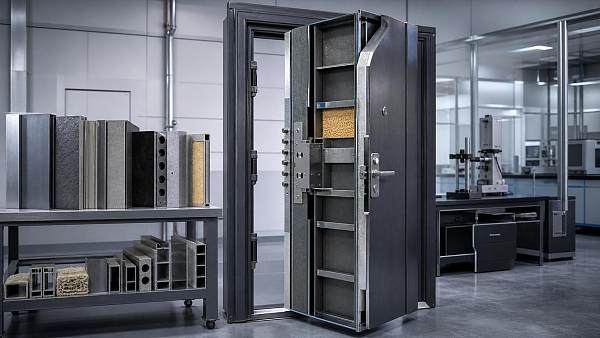
Certified security doors are not simple metal assemblies. They combine steel, anti-drill layers, reinforcement zones, lock protection, hinges, seals, and tested structural details.
Once certification enters the project, material selection becomes tied to burglary resistance classes, test evidence, and repeatable manufacturing quality. That changes pricing logic immediately.
A door designed for residential entrances may use a different bill of materials than a door protecting cash rooms, archives, restricted facilities, or high-risk commercial spaces.
This is why anti-burglary materials price should be judged as part of total protective value, not as an isolated metal cost. The cheapest panel often becomes the most expensive mistake.
Across physical security markets, the same pattern appears in safes, vaults, lock cylinders, parcel lockers, and access control hardware. Performance claims only matter when structure and consistency support them.
For that reason, many project teams use industry intelligence sources such as SHPS to compare certification context, structural design logic, and supplier readiness before narrowing price discussions.
Which material factors usually push anti-burglary materials price higher?
The biggest driver is rarely one material alone. Price usually rises when several protective layers must work together under certified test conditions.
A basic steel sheet is only the starting point. Higher anti-burglary materials price often reflects upgraded internal structures and harder-to-process components.
- Thicker steel skins or reinforced frames that improve resistance to levering and deformation.
- Composite cores with mineral fillers, ceramics, or anti-drill aggregates that slow down cutting and drilling tools.
- Localized hard plates around lock cases, cylinders, relockers, and boltwork channels.
- Welding precision and internal rib structures that prevent weak points around corners and hinge zones.
- Fire-resistant layers added alongside burglary-resistant construction, increasing both complexity and weight.
Anti-drill materials deserve special attention. Corundum-based fillers, hardened plates, and multi-layer composites can sharply improve resistance, but they also slow fabrication and tool wear rises.
More importantly, premium materials only justify higher anti-burglary materials price when they are placed in the right zones. Overbuilding low-risk areas may waste budget without improving certification outcomes.
Does certification level really change price, or is that mostly a sales argument?
It changes price in a very real way. Certification affects not only what materials are used, but how they are assembled, documented, tested, and reproduced at scale.
For example, a door aligned with higher burglary resistance classes may need more than thicker metal. It may require stronger frames, upgraded anchoring, protected lock areas, and tighter production tolerance.
Testing itself also shapes anti-burglary materials price. Failed tests lead to redesign, extra prototypes, repeated tooling, and delayed delivery. Those costs are often hidden inside supplier quotations.
The table below helps separate valid price drivers from claims that need closer checking.
A useful rule is simple. If certification evidence is vague, the quoted anti-burglary materials price may not reflect dependable project value.
How do volume, sourcing, and factory consistency affect the final number?
Even when drawings look identical, anti-burglary materials price can change significantly between pilot orders and rolling supply contracts.
Composite anti-burglary materials are often sensitive to sourcing stability. If a supplier changes filler grade, hard plate origin, or adhesive system, cost and tested behavior may both shift.
Production scale matters because some protective materials generate high cutting loss, longer curing time, or slower welding speed. Larger runs can absorb these inefficiencies better.
Factory discipline matters just as much. Inconsistent density, poor layer placement, or uneven reinforcement around lock zones may reduce real protection despite an attractive anti-burglary materials price.
In actual projects, cost gaps often come from process maturity rather than raw inputs. A stable factory may quote more, yet deliver fewer claims, less rework, and better installation fit.
This is where cross-category security knowledge becomes useful. The same consistency issue appears in safe bodies, vault panels, lock cylinders, and smart access hardware.
When is a lower anti-burglary materials price actually the riskier option?
Lower pricing becomes risky when the quote hides substitutions, omitted test details, or unrealistic assumptions about site conditions.
A common example is using a certified door concept, then reducing hard protection around the cylinder, lock case, or bolt receiving area to save cost.
Another issue appears in projects that need access control integration. Cable paths, electric locking, monitoring contacts, and frame modifications can weaken door structure if not engineered early.
The result is misleading. The anti-burglary materials price looks competitive, but the installed system may require redesign, recertification review, or extra reinforcement after delivery.
Watch for these warning signs:
- Certification references without matching drawings or tested configuration details.
- No explanation of anti-drill zones, lock shielding, or frame reinforcement.
- Large price gaps with no difference in class, weight, or structure.
- Fire claims and burglary claims combined in marketing, but not in formal evidence.
- Very short lead times for complex composite doors.
More often than not, the risk is not only security failure. It is schedule disruption, claim exposure, and lifecycle cost escalation.
What is the practical way to compare offers without overspending?
The most reliable comparison method is to normalize the technical baseline before discussing price. Otherwise, anti-burglary materials price becomes impossible to compare fairly.
Start with the intended threat level, required certification class, opening type, hardware layout, and any fire or smart locking integration.
Then compare offers against a short decision sheet:
- Material stack: steel thickness, filler type, anti-drill components, reinforcement zones.
- Compliance evidence: test reports, certification validity, scope limitations, hardware compatibility.
- Manufacturing repeatability: source control, quality checks, sample consistency, traceability.
- Project economics: unit price, freight weight, installation complexity, maintenance exposure.
- Delivery reliability: tooling readiness, lead time realism, spare parts support, engineering response.
This approach often reveals that a moderate anti-burglary materials price delivers better total value than the lowest initial quote.
Where the project touches other physical security systems, it also helps to review related insights from platforms that track protective doors, locking technology, compliance, and deployment patterns across markets.
So what should be confirmed before approving the next quote?
The key question is not whether anti-burglary materials price is high or low. The real question is whether the price matches tested protection, build consistency, and project conditions.
Before approval, confirm the certified configuration, anti-drill material logic, hardware integration details, and any fire-resistance overlap. Small specification gaps create major pricing misunderstandings.
It also helps to ask how the quoted design performs over repeated production, not just in a successful sample. That answer often separates dependable supply from cosmetic compliance.
A sound next step is to build a comparison sheet with structure, certification, process stability, and delivered cost on one page. That makes anti-burglary materials price easier to judge in context.
When quotes are reviewed through that lens, decisions become less reactive and more defensible, especially in projects where security doors are part of a broader physical protection strategy.
Have questions about this sector analysis, or seeking best practices specific to your niche? Drop us a line below and let the senior consultants at MHLS assist you.
We respect your privacy. Your information is strictly confidential.
Recommended News
 Financial Facility Security: Choosing Vault Doors for Bank BranchesVault Structural ArchitectStrengthen financial facility security with the right bank vault door. Explore certification, installation, locking controls and maintenance before you buy.
 MACO Acquires Majority Stake in Fingerprint Access Provider ekeyProf. Elara SterlingMACO acquires a majority stake in ekey, bringing fingerprint access and door hardware closer together. Discover what the deal could mean for smart buildings.
 Physical Security System Engineering: From Risk Assessment to System DesignUnmanned Terminal FellowExplore physical security system engineering, from risk assessment to integrated design, procurement and testing. Build a safer, more resilient facility.
 Apple Home Collection Smart Lock and Other Accessories Open for Preorder November 13Biometric Auth ScientistApple Home Collection preorders open November 13, 2026. Explore the LG smart lock’s Matter and Aliro support and what buyers should verify before ordering.
 Choosing Servo-Driven Flap Barriers: Throughput, Safety and Access ControlAccess Control StrategistServo-driven flap barriers can balance throughput, safety and access control. Discover how to compare lanes, test performance and choose with confidence.
 Parcel Locker Network Pricing: Setup Costs, Fees and Contract TermsUnmanned Terminal FellowCompare parcel locker networks pricing, from setup costs and recurring fees to contract terms. Discover hidden charges and choose the right model.
 JR East Plans UWB Walk-Through Gates at 40 Stations in Spring 2028Access Control StrategistJR East plans UWB walk-through gates at 40 stations in spring 2028. Explore the rollout timeline and what suppliers should watch.
 Bank Vault Security Standards: UL and EN Ratings ExplainedVault Structural ArchitectExplore bank vault security standards and learn how UL 608 classes and EN 1143-1 grades differ, what they test, and how to verify certification before you buy.
 Mechanical Lock Hardware Prices: What Buyers Should Budget for Bulk OrdersMr. Gideon CrossMechanical lock hardware price is just the starting point. Discover what drives bulk-order costs and how to compare supplier quotes with confidence.
 IndexBox Forecasts Steady Global Security Keypad Market Growth Through 2035Dr. Valerius ThorneGlobal security keypad market growth is forecast at 3.3% annually through 2035. Explore the smart home and replacement trends shaping demand.
 Choosing an Infrared Safety Sensors Manufacturer: What Buyers Should CheckUnmanned Terminal FellowChoosing an infrared safety sensors manufacturer? Compare safety evidence, integration, environmental performance and lifecycle costs before you buy.
 Choosing a Security Material Testing Service: What to Check for Lock and Safe MaterialsProf. Elara SterlingChoose a security material testing service with confidence. Learn what to check for lock and safe materials, from attack methods and accreditation to reliable reports.











