
What Drives Security Infrastructure Planning Cost in New Facility Builds?
What Drives Security Infrastructure Planning Cost in New Facility Builds?
For finance approvers, security infrastructure planning cost is never just a line item. It sets the baseline for operational resilience, insurance posture, compliance readiness, and future upgrade flexibility.
In new facility builds, early assumptions often shape total spend more than equipment price alone. That is why a clear cost framework matters before procurement begins.
The real drivers usually include risk level, building layout, system depth, certification targets, installation complexity, software integration, and long-term service obligations.
When these elements are reviewed together, security infrastructure planning cost becomes easier to forecast, defend internally, and control over the facility lifecycle.
Why Security Infrastructure Planning Cost Starts with Risk Definition
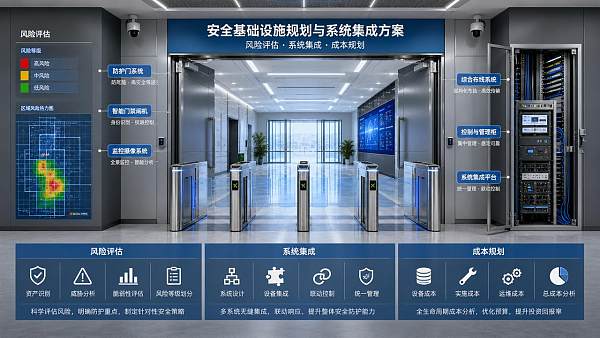
Every serious budgeting exercise starts with threat exposure. A warehouse, bank branch, data center, mixed-use tower, and pharma facility will not share the same protection profile.
This is where security infrastructure planning cost begins to diverge. Higher-value assets demand stronger delay resistance, better intrusion control, and more reliable event visibility.
A low-risk office may only need smart locks, basic access control, and standard visitor management. A high-risk facility may require protective doors, turnstiles, safes, vault elements, and layered authentication.
In practical terms, risk definition affects material grade, device count, redundancy level, audit requirements, and response design. All of these feed directly into cost.
- Asset value influences physical protection depth.
- Threat model shapes anti-tailgating, anti-drill, and anti-spoofing requirements.
- Occupancy type affects evacuation logic and traffic management design.
- Business continuity targets drive redundancy and backup power planning.
If risk is defined too loosely, the budget is usually too low. If risk is overstated, capital gets locked into controls the site may never use fully.
Core Cost Drivers in New Facility Security Planning
The biggest mistake in estimating security infrastructure planning cost is focusing only on purchase price. The more reliable view is to break cost into planning, build, integration, and lifecycle layers.
1. Building size and circulation design
More entrances, loading zones, restricted rooms, parking interfaces, and vertical access points mean more hardware, wiring, controllers, and testing time.
Open layouts may look simple, but they often need extra zoning to separate staff, visitors, contractors, and logistics flow safely.
2. Product category and performance level
A standard electronic lock and a certified biometric smart lock do not belong in the same cost bracket. The same applies to basic doors versus burglary-resistant protective doors.
Higher resistance ratings, stronger lock cylinders, reinforced frames, and proven liveness detection all push security infrastructure planning cost upward, but they also reduce failure exposure.
3. Integration with digital platforms
Standalone devices are cheaper at first. Integrated systems cost more because they require software licensing, interface design, commissioning, permissions architecture, and cybersecurity alignment.
Yet integrated systems often lower long-term labor cost. They improve audit reporting, reduce manual key control, and support centralized policy management.
4. Compliance and certification scope
Where standards such as EN 1143-1, UL testing, fire safety rules, or local access regulations apply, product selection becomes narrower and documentation workload rises.
That makes security infrastructure planning cost more predictable, but rarely cheaper. Certified solutions carry premiums because they transfer performance risk away from the buyer.
5. Installation conditions
Retrofit constraints are expensive, but new builds can still create surprises. Structural coordination, cable pathways, door reinforcement, and power allocation often change the final figure.
If security packages are designed late, rework becomes likely. That alone can distort security infrastructure planning cost more than many buyers expect.
How Specific Security Systems Change the Budget
Not all security categories affect cost in the same way. Some raise upfront capital sharply. Others increase software, servicing, or operator training cost over time.
Access control and smart locks
These usually scale with door count, credential type, and management depth. Fingerprint, vein recognition, or 3D facial systems cost more than card-only access.
However, they may reduce identity misuse, rekeying events, and compliance gaps. That can improve the business case behind security infrastructure planning cost.
Protective doors, lock bodies, and cylinders
These products influence both capex and construction coordination. Higher-grade mechanical structures often require heavier frames, stricter tolerances, and better installation teams.
Still, stronger mechanical layers remain essential because digital control alone does not stop forced entry.
Turnstiles and speed gates
These systems add cost through civil preparation, traffic logic, safety sensors, and access software integration. High-throughput sites also need better anti-tailgating performance.
Where visitor volume is heavy, these controls may cut labor dependence at reception and improve movement discipline.
Safes, vaults, and secure storage
For cash, records, pharmaceuticals, luxury inventory, or critical keys, secure storage can be one of the most sensitive cost modules.
Burglary resistance grade, composite body materials, anchoring conditions, and insurance expectations all shape security infrastructure planning cost here.
Hidden Costs That Often Escape Early Budgets
In many new builds, the visible hardware budget gets approved first. The hidden budget appears later through coordination gaps and operating realities.
- Design review cycles with architects, MEP teams, and fire consultants.
- Extra conduit, protected cabling, and backup power support.
- Software subscriptions, user licenses, and remote management fees.
- Credential issuance, staff onboarding, and administrator training.
- Inspection, acceptance testing, and compliance documentation.
- Maintenance contracts, spare parts, and emergency service response.
This is why security infrastructure planning cost should be reviewed as total cost of ownership, not only as procurement cost.
A cheaper package can become the expensive option when downtime, false alarms, hardware drift, or poor software compatibility start affecting operations.
A Practical Approval Framework for Cost Review
A better approval process connects spend to measurable protection outcomes. That keeps discussions grounded and reduces emotional debate around “premium” security features.
- Define critical assets and rank operational consequences of compromise.
- Map every protected zone to a security function and required performance level.
- Separate mandatory compliance items from optional risk-reduction upgrades.
- Compare standalone and integrated system paths over five to ten years.
- Request lifecycle cost visibility, not only equipment quotations.
- Test whether the design can scale with occupancy or process changes.
This framework makes security infrastructure planning cost easier to justify because it ties spending to resilience, insurance support, and operational continuity.
How to Reduce Security Infrastructure Planning Cost Without Weakening Protection
Cost control does not have to mean lower security quality. In many projects, the smarter move is better alignment between facility design and protection strategy.
- Standardize hardware families across doors, zones, and user groups.
- Use certified products only where the risk and compliance case requires them.
- Integrate early with architects and electrical planners to avoid rework.
- Bundle software, maintenance, and commissioning during negotiation.
- Prioritize modular systems that support later expansion.
- Review failure rates and service records, not only initial price.
From a procurement perspective, the goal is not the lowest quote. It is the most defensible security infrastructure planning cost for the site’s real exposure.
That usually means buying enough performance, enough integration, and enough durability to avoid repeated corrective spending later.
Final Takeaway
Security infrastructure planning cost in new facility builds is driven by more than hardware selection. It reflects risk posture, building complexity, compliance duties, integration depth, and maintenance reality.
When decision-makers evaluate cost through a lifecycle lens, budgets become more accurate and approval logic becomes much stronger.
The most effective next step is simple: define risk clearly, itemize every system dependency, and ask suppliers to show how their solution controls total cost over time.
That is how security infrastructure planning cost turns from a budgeting concern into a strategic investment decision.
Have questions about this sector analysis, or seeking best practices specific to your niche? Drop us a line below and let the senior consultants at MHLS assist you.
We respect your privacy. Your information is strictly confidential.
Recommended News
 Parcel Locker Network Pricing: Setup Costs, Fees and Contract TermsUnmanned Terminal FellowCompare parcel locker networks pricing, from setup costs and recurring fees to contract terms. Discover hidden charges and choose the right model.
 JR East Plans UWB Walk-Through Gates at 40 Stations in Spring 2028Access Control StrategistJR East plans UWB walk-through gates at 40 stations in spring 2028. Explore the rollout timeline and what suppliers should watch.
 Bank Vault Security Standards: UL and EN Ratings ExplainedVault Structural ArchitectExplore bank vault security standards and learn how UL 608 classes and EN 1143-1 grades differ, what they test, and how to verify certification before you buy.
 Mechanical Lock Hardware Prices: What Buyers Should Budget for Bulk OrdersMr. Gideon CrossMechanical lock hardware price is just the starting point. Discover what drives bulk-order costs and how to compare supplier quotes with confidence.
 IndexBox Forecasts Steady Global Security Keypad Market Growth Through 2035Dr. Valerius ThorneGlobal security keypad market growth is forecast at 3.3% annually through 2035. Explore the smart home and replacement trends shaping demand.
 Choosing an Infrared Safety Sensors Manufacturer: What Buyers Should CheckUnmanned Terminal FellowChoosing an infrared safety sensors manufacturer? Compare safety evidence, integration, environmental performance and lifecycle costs before you buy.
 Choosing a Security Material Testing Service: What to Check for Lock and Safe MaterialsProf. Elara SterlingChoose a security material testing service with confidence. Learn what to check for lock and safe materials, from attack methods and accreditation to reliable reports.
 How Precision Anti-Pick Lock Cylinders Resist ManipulationSecurity Metallurgy ExpertDiscover how precision anti-pick lock technology resists manipulation, and learn what to check when comparing security features, test evidence, and everyday reliability.
 Dermalog Joins NIST FastCAP Program for Contactless Fingerprint TestingProf. Elara SterlingDermalog joins the NIST FastCAP program for contactless fingerprint testing. Discover what this means for biometric identification and digital identity.
 Choosing Security Export Compliance Services: What Providers Should CoverMr. Gideon CrossSecurity export compliance services can help prevent costly delays. Discover what to look for in classification, licensing, screening, and documentation.
 European Security Compliance Standards for Safes: EN 1143-1 vs EN 14450Dr. Valerius ThorneExplore security compliance standards Europe buyers need to know. Compare EN 1143-1 and EN 14450 to choose the right safe with confidence.
 HID Global Acquires inepro ID to Expand RFID and BLE Access SolutionsUnmanned Terminal FellowHID Global acquires inepro ID to expand RFID and BLE access solutions for printers, smart lockers and shared devices. Explore what the deal could mean for your organization.











