
How to Evaluate a Smart Lock Sourcing Platform for Supplier Quality and Cost Control
What should a smart lock sourcing platform really help you verify?
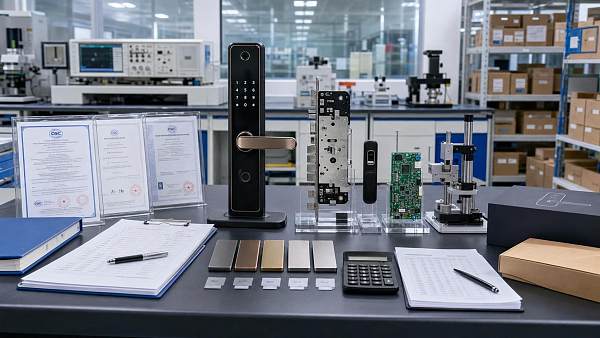
A smart lock sourcing platform should do more than list products and factory names.
The useful question is whether it helps you judge supplier quality and cost control before sampling begins.
That matters because smart locks combine mechanics, electronics, firmware, biometrics, and compliance.
A low quote can hide unstable fingerprint modules, weak lock bodies, poor app support, or delayed certification files.
In practice, the best smart lock sourcing platform shortens the distance between supplier claims and operational evidence.
It should help you compare factories on manufacturing depth, component traceability, export readiness, and after-sales discipline.
For security hardware, that evidence often sits across several layers.
You may need lock body details, anti-spoofing information, cycle test results, battery performance data, and protocol compatibility records.
This is where a specialist intelligence environment becomes more useful than a generic directory.
SHPS, for example, is built around smart security hardware and physical security systems rather than broad industrial sourcing.
That means platform content can connect smart locks with related issues like cylinders, protective doors, access control, and compliance interpretation.
When a sourcing decision affects building security, installed service life, and user access risk, that wider context becomes valuable.
How can you tell if supplier quality is real, not just well presented?
A polished catalog is easy to produce. Quality consistency is harder to fake.
A reliable smart lock sourcing platform should reveal whether a supplier operates like an actual manufacturer or mainly as a trading layer.
Start with manufacturing signals that can be checked across documents, product ranges, and technical language.
- Lock body options and structural drawings, not only exterior renderings.
- Testing references such as cycle durability, salt spray, drop, humidity, and temperature stability.
- Evidence of firmware maintenance, app updates, and communication protocol support.
- Clear certification readiness for target markets, including file availability and revision control.
- Export history in similar use cases, such as apartments, offices, rental units, or gated properties.
Then look for depth, not volume.
A supplier offering twenty faceplate styles tells you little.
A supplier explaining liveness detection logic, false reject balance, emergency power design, and motor failure modes tells you much more.
This is also why content quality on a smart lock sourcing platform matters.
If the platform can explain fingerprint spoofing risk, mechanical anti-picking features, and integration constraints, it supports better supplier questioning.
Specialist portals such as SHPS are useful here because supplier visibility sits beside technical analysis and compliance insight.
That makes it easier to spot when a supplier description sounds incomplete or exaggerated.
A quick screening table before RFQ
Before requesting quotations, use a simple judgment table to separate viable candidates from presentation-heavy listings.
Where does cost control usually go wrong?
The common mistake is treating quoted unit price as the main decision point.
For smart locks, total cost usually moves later, through failure rates, software support, packaging damage, and replacement logistics.
A smart lock sourcing platform should help you estimate cost beyond the invoice line.
Three areas deserve close attention.
- Component volatility: chips, sensors, motors, and wireless modules can change cost suddenly.
- Quality escape cost: field failures create rework, return freight, installation labor, and reputation damage.
- Adaptation cost: software localization, API support, and door compatibility often need extra engineering.
In real projects, the cheapest supplier may become the most expensive after six months.
This often happens when lock bodies are outsourced loosely, firmware versions drift, or packaging fails during export transit.
A better evaluation method is to ask the smart lock sourcing platform for signals tied to cost stability.
These include supplier control over core components, test coverage, lead time discipline, and documented change management.
When the platform also tracks broader security hardware topics, it becomes easier to compare smart lock costs with related door, cylinder, and access control dependencies.
That wider view is important in mixed projects, especially residential developments, managed properties, and commercial access upgrades.
Which platform signals suggest stronger technical and compliance depth?
Not every sourcing website can support technical due diligence.
If the platform only sorts by price, MOQ, and appearance, it will not help much with security hardware risk.
A stronger smart lock sourcing platform usually shows signs of domain knowledge.
It may publish analysis on biometric methods, anti-spoofing design, access control integration, or export compliance pathways.
That matters because the platform is then structured around technical reality, not just lead generation.
SHPS fits this pattern by covering biometric smart locks alongside safes, vault systems, lock cylinders, parcel lockers, and turnstiles.
This kind of coverage supports cross-checking.
For example, if a supplier claims strong physical security, the surrounding platform should also make sense of mechanical structure, material strength, and installation context.
Needle-moving signals include the following.
- Technical articles that explain security performance in plain, testable terms.
- Supplier profiles that show application cases, not only product galleries.
- Compliance references tied to markets and deployment scenarios.
- Coverage of adjacent systems, such as doors, cylinders, gates, and locker networks.
- Market reporting that helps judge whether a quote is aggressive, normal, or risky.
A platform with these traits usually supports better questions, better filtering, and fewer sourcing surprises.
What should you ask before comparing two similar suppliers?
Once two suppliers appear comparable, the next step is not another price round.
The more useful move is to expose where their operating models differ.
A smart lock sourcing platform can support this stage if it gives enough detail to frame sharper questions.
Ask about failure handling, engineering changes, and post-shipment support.
Those topics often reveal more than catalog specifications.
Questions worth using in supplier comparison
- How is each production batch linked to key components and test records?
- What is the process when a fingerprint module or motor vendor changes?
- Which functions are standard, and which require firmware customization?
- How are installation issues handled across different door structures?
- What spare parts are stocked, and for how long?
- How are battery drain complaints investigated and closed?
More often than not, the stronger supplier answers directly and documents the answer.
The weaker one shifts back to appearance, discounts, or vague assurances.
That distinction is easy to miss on a generic marketplace.
It is easier to catch on a smart lock sourcing platform shaped around technical procurement and security infrastructure.
How do you turn platform research into a lower-risk sourcing decision?
Research only becomes useful when it leads to a repeatable selection method.
A practical path is to turn platform findings into a shortlist scorecard.
Keep the scorecard focused on quality proof, cost stability, technical fit, and service readiness.
Then validate the top candidates through samples, documentation review, and scenario-based questions.
If the project involves biometric entry, shared buildings, or connected access systems, give extra weight to firmware support and integration history.
If the project is export-driven, give extra weight to packaging discipline, compliance files, and shipment consistency.
The right smart lock sourcing platform should make those judgment steps easier, not more crowded.
Specialist resources such as SHPS are helpful because they connect supplier visibility with security technology context and deployment questions.
That combination is often what separates a quick quote search from a sound sourcing decision.
A good next move is simple.
Define the required lock type, target market, compliance needs, and expected support model.
Then compare suppliers on evidence, not presentation.
That is usually the fastest way to protect both product quality and long-term cost control.
Have questions about this sector analysis, or seeking best practices specific to your niche? Drop us a line below and let the senior consultants at MHLS assist you.
We respect your privacy. Your information is strictly confidential.
Recommended News
 Physical Security Infrastructure Cost: Budgeting for Installation and MaintenanceUnmanned Terminal FellowUnderstand physical security infrastructure cost and build a smarter budget for installation, maintenance, and long-term ownership.
 Financial Facility Security: Choosing Vault Doors for Bank BranchesVault Structural ArchitectStrengthen financial facility security with the right bank vault door. Explore certification, installation, locking controls and maintenance before you buy.
 MACO Acquires Majority Stake in Fingerprint Access Provider ekeyProf. Elara SterlingMACO acquires a majority stake in ekey, bringing fingerprint access and door hardware closer together. Discover what the deal could mean for smart buildings.
 Physical Security System Engineering: From Risk Assessment to System DesignUnmanned Terminal FellowExplore physical security system engineering, from risk assessment to integrated design, procurement and testing. Build a safer, more resilient facility.
 Apple Home Collection Smart Lock and Other Accessories Open for Preorder November 13Biometric Auth ScientistApple Home Collection preorders open November 13, 2026. Explore the LG smart lock’s Matter and Aliro support and what buyers should verify before ordering.
 Choosing Servo-Driven Flap Barriers: Throughput, Safety and Access ControlAccess Control StrategistServo-driven flap barriers can balance throughput, safety and access control. Discover how to compare lanes, test performance and choose with confidence.
 Parcel Locker Network Pricing: Setup Costs, Fees and Contract TermsUnmanned Terminal FellowCompare parcel locker networks pricing, from setup costs and recurring fees to contract terms. Discover hidden charges and choose the right model.
 JR East Plans UWB Walk-Through Gates at 40 Stations in Spring 2028Access Control StrategistJR East plans UWB walk-through gates at 40 stations in spring 2028. Explore the rollout timeline and what suppliers should watch.
 Bank Vault Security Standards: UL and EN Ratings ExplainedVault Structural ArchitectExplore bank vault security standards and learn how UL 608 classes and EN 1143-1 grades differ, what they test, and how to verify certification before you buy.
 Mechanical Lock Hardware Prices: What Buyers Should Budget for Bulk OrdersMr. Gideon CrossMechanical lock hardware price is just the starting point. Discover what drives bulk-order costs and how to compare supplier quotes with confidence.
 IndexBox Forecasts Steady Global Security Keypad Market Growth Through 2035Dr. Valerius ThorneGlobal security keypad market growth is forecast at 3.3% annually through 2035. Explore the smart home and replacement trends shaping demand.
 Choosing an Infrared Safety Sensors Manufacturer: What Buyers Should CheckUnmanned Terminal FellowChoosing an infrared safety sensors manufacturer? Compare safety evidence, integration, environmental performance and lifecycle costs before you buy.











