
IoT Security Connectivity Platform: What It Is and How to Choose the Right Architecture
IoT Security Connectivity Platform: What It Is and How to Choose the Right Architecture
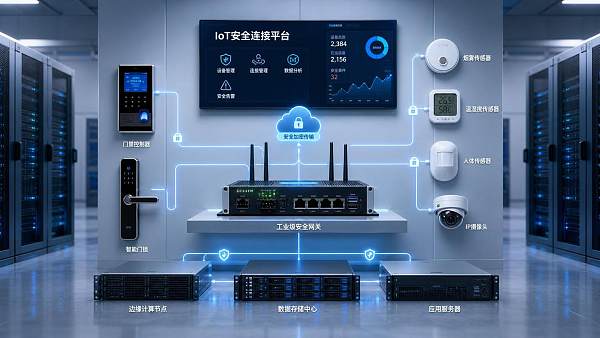
An IoT security connectivity platform is the backbone of modern connected protection, linking devices, sensors, access controls, and monitoring systems into one reliable architecture.
For technical evaluation, connectivity alone is never enough. System response, uptime, interoperability, and cyber resilience often decide long-term deployment success.
That is why architecture matters so much. A good platform supports secure device communication while keeping operations manageable across sites, vendors, and changing network conditions.
In physical security, the stakes are especially high. Smart locks, turnstiles, parcel lockers, safes, alarm sensors, and access controllers cannot afford unstable links or fragmented management.
This article explains what an IoT security connectivity platform does, which architectural models are common, and how to choose the right design for secure growth.
What an IoT Security Connectivity Platform Actually Does
At its core, an IoT security connectivity platform connects field devices with applications, users, and management logic. It turns isolated hardware into an orchestrated security system.
The platform usually handles device onboarding, identity management, data transmission, command delivery, status monitoring, and integration with cloud or on-premise software.
In practice, this can mean connecting biometric smart locks, smart parcel lockers, turnstiles, gateways, video intercoms, and environmental sensors under one operational layer.
A mature IoT security connectivity platform also supports firmware updates, event logs, alert routing, API access, and policy enforcement across distributed assets.
More importantly, it creates trust in the data path. Commands must reach the right device, telemetry must remain intact, and every connection must be authenticated.
Typical Functions in Physical Security
- Secure enrollment of locks, controllers, readers, lockers, and sensors
- Real-time event transport for alarms, access requests, door states, and tamper signals
- Remote control for opening, locking, disabling, resetting, or changing permissions
- Integration with access control, building management, identity, and audit systems
- Lifecycle management for updates, diagnostics, and decommissioning
Why Architecture Choice Matters More Than It First Appears
Many teams evaluate features first. That is understandable, but architecture often determines whether those features still work reliably after deployment expands.
A small pilot may perform well with simple cloud routing. A multi-site rollout with mixed hardware can expose latency, bandwidth, and compatibility problems very quickly.
This becomes even clearer in security environments. Physical access events are time-sensitive, and delayed authentication can disrupt traffic flow or weaken response accuracy.
An IoT security connectivity platform must also survive network instability. Some field devices operate in remote compounds, basements, gated communities, or logistics zones.
If architecture does not support buffering, failover, or local decision-making, a network outage can become a security incident instead of a temporary interruption.
Common Risks of Weak Architecture
- High latency during access approval or alarm forwarding
- Single points of failure in gateways or central servers
- Limited support for mixed protocols and older equipment
- Poor key management and inconsistent device identity controls
- Difficult scaling across sites, tenants, or international regions
Main Architecture Models for an IoT Security Connectivity Platform
Most deployments fall into three broad models. Each model can work well, but each fits different risk profiles and operational goals.
1. Cloud-Centric Architecture
In this model, devices send telemetry and receive commands through cloud services. Central visibility is strong, and software updates are usually easier to manage.
This design works well for geographically distributed locker networks, light commercial access control, and multi-tenant device fleets that need centralized oversight.
However, cloud dependence can create concerns around latency, compliance boundaries, and service continuity when connectivity is weak or regulated.
2. Edge-Gateway Architecture
Here, local gateways aggregate devices, preprocess events, and maintain limited autonomy. Cloud or central software still exists, but critical actions can remain local.
This is often a strong fit for industrial compounds, gated facilities, smart buildings, and high-throughput entry points using turnstiles or speed gates.
The tradeoff is added hardware and maintenance. Gateways themselves must be secured, monitored, and patched as part of the wider IoT security connectivity platform.
3. Hybrid Architecture
Hybrid models combine centralized management with local resilience. They are increasingly preferred because they balance responsiveness, visibility, and operational continuity.
For example, a biometric door lock may verify locally, log events at the edge, and sync audit data to cloud dashboards when links are stable.
For complex physical security applications, hybrid design is often the safest long-term path because it reduces dependence on any single connectivity layer.
Key Evaluation Criteria Before You Choose
A useful evaluation framework should go beyond feature checklists. The better question is how the IoT security connectivity platform behaves under real operating pressure.
Latency and Event Priority
Ask which events require sub-second response. Door release, anti-tailgating alerts, and emergency lockdown triggers should not compete with low-priority telemetry traffic.
Scalability by Device Type and Site Count
Some platforms scale well in device numbers but poorly in protocol diversity. Others manage many sites but struggle with heavy event bursts during peak access periods.
Protocol and Vendor Interoperability
A practical IoT security connectivity platform should support mixed environments. MQTT, HTTP, BLE, Zigbee, cellular, RS-485, and proprietary lock protocols may all appear.
Cybersecurity Controls
Review certificate handling, secure boot, encryption, hardware root of trust, role permissions, logging integrity, and remote revocation options.
Offline Tolerance and Recovery
Check what happens during packet loss, network blackout, or gateway restart. Security devices must degrade safely, not unpredictably.
Compliance and Auditability
For regulated deployments, event records, time synchronization, operator actions, and update histories must be traceable and easy to review.
How This Applies to Real Security Scenarios
Architecture choices look different depending on the protected asset. That is where many evaluations become more grounded and more accurate.
Smart Locks and Residential Access
These systems need reliable mobile connectivity, strong identity controls, and safe fallback when broadband or cellular service fails.
Turnstiles and High-Flow Entrances
Response time is critical here. An IoT security connectivity platform should prioritize local decision paths to avoid queues and unsafe crowd compression.
Smart Parcel Locker Networks
These deployments benefit from centralized fleet visibility, but each locker node still needs resilient local control for door logic, audit logs, and code validation.
Safes, Vault Rooms, and Restricted Areas
For high-security spaces, connectivity should enhance control without becoming the weakest link. Segmented networks and layered authorization are usually essential.
A Practical Selection Process
A structured selection process reduces surprises later. It also helps compare vendors on operational substance rather than presentation quality.
- Map critical assets, user flows, and failure consequences first.
- Define which functions must work locally during outages.
- List protocol, API, and legacy hardware requirements.
- Test the IoT security connectivity platform under packet loss and peak load.
- Review security operations, update mechanisms, and key rotation procedures.
- Validate reporting, audit trails, and compliance evidence outputs.
In real procurement cycles, proof-of-concept testing is often where weak assumptions appear. Short demos rarely reveal resilience gaps or integration friction.
Final Takeaway
An IoT security connectivity platform is not just a transport layer. It is the operational framework that shapes reliability, security posture, and future expansion.
The right architecture depends on event criticality, site conditions, compliance needs, and device diversity. In many cases, hybrid design offers the best balance.
When evaluating options, focus on how the platform behaves during stress, not only how it looks in normal conditions. That is usually where the real answer appears.
If the architecture can protect performance, trust, and continuity at the same time, the IoT security connectivity platform is far more likely to support secure long-term deployment.
Have questions about this sector analysis, or seeking best practices specific to your niche? Drop us a line below and let the senior consultants at MHLS assist you.
We respect your privacy. Your information is strictly confidential.
Recommended News
 Parcel Locker Network Pricing: Setup Costs, Fees and Contract TermsUnmanned Terminal FellowCompare parcel locker networks pricing, from setup costs and recurring fees to contract terms. Discover hidden charges and choose the right model.
 JR East Plans UWB Walk-Through Gates at 40 Stations in Spring 2028Access Control StrategistJR East plans UWB walk-through gates at 40 stations in spring 2028. Explore the rollout timeline and what suppliers should watch.
 Bank Vault Security Standards: UL and EN Ratings ExplainedVault Structural ArchitectExplore bank vault security standards and learn how UL 608 classes and EN 1143-1 grades differ, what they test, and how to verify certification before you buy.
 Mechanical Lock Hardware Prices: What Buyers Should Budget for Bulk OrdersMr. Gideon CrossMechanical lock hardware price is just the starting point. Discover what drives bulk-order costs and how to compare supplier quotes with confidence.
 IndexBox Forecasts Steady Global Security Keypad Market Growth Through 2035Dr. Valerius ThorneGlobal security keypad market growth is forecast at 3.3% annually through 2035. Explore the smart home and replacement trends shaping demand.
 Choosing an Infrared Safety Sensors Manufacturer: What Buyers Should CheckUnmanned Terminal FellowChoosing an infrared safety sensors manufacturer? Compare safety evidence, integration, environmental performance and lifecycle costs before you buy.
 Choosing a Security Material Testing Service: What to Check for Lock and Safe MaterialsProf. Elara SterlingChoose a security material testing service with confidence. Learn what to check for lock and safe materials, from attack methods and accreditation to reliable reports.
 How Precision Anti-Pick Lock Cylinders Resist ManipulationSecurity Metallurgy ExpertDiscover how precision anti-pick lock technology resists manipulation, and learn what to check when comparing security features, test evidence, and everyday reliability.
 Dermalog Joins NIST FastCAP Program for Contactless Fingerprint TestingProf. Elara SterlingDermalog joins the NIST FastCAP program for contactless fingerprint testing. Discover what this means for biometric identification and digital identity.
 Choosing Security Export Compliance Services: What Providers Should CoverMr. Gideon CrossSecurity export compliance services can help prevent costly delays. Discover what to look for in classification, licensing, screening, and documentation.
 European Security Compliance Standards for Safes: EN 1143-1 vs EN 14450Dr. Valerius ThorneExplore security compliance standards Europe buyers need to know. Compare EN 1143-1 and EN 14450 to choose the right safe with confidence.
 HID Global Acquires inepro ID to Expand RFID and BLE Access SolutionsUnmanned Terminal FellowHID Global acquires inepro ID to expand RFID and BLE access solutions for printers, smart lockers and shared devices. Explore what the deal could mean for your organization.











