
Physical Security Market Size in Europe: What Buyers and Investors Should Watch
The physical security market size Europe is no longer just a headline metric. It has become a practical reference point for judging where demand is durable, where technology is being upgraded, and where suppliers can defend margins over time.
That matters across smart locks, safes, vault systems, turnstiles, protective doors, and parcel locker networks. In Europe, replacement cycles, compliance pressure, and higher awareness of physical risk are moving purchasing decisions in measurable ways.
For market evaluation, the question is not only how large the market is. The better question is which product layers, deployment settings, and technical standards are shaping the next phase of value.
Why Europe’s physical security market deserves close attention
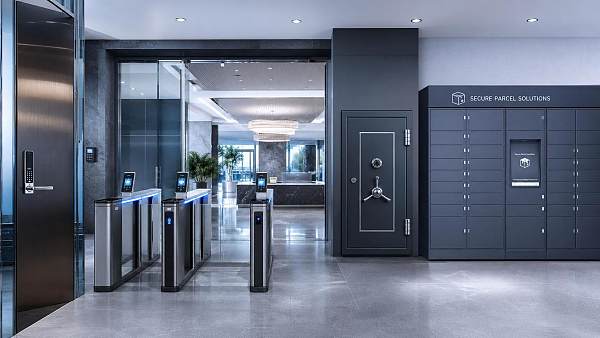
Europe combines mature infrastructure with ongoing modernization. That mix creates demand for both replacement hardware and higher-performance systems, especially where older mechanical protection is being linked with digital control.
The physical security market size Europe reflects several overlapping trends. Commercial buildings need stronger access control. Residential projects are adopting smarter entry systems. Logistics operators are expanding secure parcel delivery networks.
Banks, retail chains, data-sensitive facilities, and mixed-use developments are also reassessing risk. In many cases, the budget is not driven by fear alone. It is driven by insurance expectations, compliance checks, and operational resilience.
This is why Europe is different from a pure volume story. Market value often rises through better specifications, certified performance, integration readiness, and lower lifecycle failure rates rather than simple unit growth.
What the market size really includes
When discussing physical security market size Europe, it helps to avoid treating the market as one uniform block. It covers several product and infrastructure layers with different buying logic.
At the mechanical end, the market includes high-security safes, burglary-resistant vaults, lock cylinders, lock bodies, and protective doors. Performance here depends on resistance to drilling, cutting, picking, and forced entry.
At the intelligent hardware end, it includes biometric smart locks, electronic locking systems, smart parcel lockers, and connected access control points. Here, security is tied to sensing, authentication, firmware reliability, and network visibility.
There is also an infrastructure layer. Turnstiles, speed gates, anti-tailgating systems, and access control platforms support regulated movement in offices, transport hubs, campuses, and restricted industrial zones.
A platform such as SHPS is useful in this context because it tracks how engineering, compliance, materials, and deployment realities connect across these segments. That is often where the real market signal appears.
The strongest growth signals are not evenly distributed
Some segments in the physical security market size Europe story are clearly more attractive than others. The common feature is not novelty. It is the ability to solve a visible business problem better than legacy hardware.
Integrated entry security
Biometric locks, multi-factor access devices, and connected entrance systems are gaining attention where auditability and user convenience need to coexist. Liveness detection and anti-spoofing performance are no longer niche issues.
Certified asset protection
Safes and vault systems remain highly relevant, especially where cash, records, valuables, or sensitive media require burglary resistance. Standards such as EN 1143-1 often shape specification quality more than marketing claims do.
Secure people-flow control
Turnstiles, speed gates, and infrared anti-tailgating systems are expanding in projects that need fast throughput with controlled access. This includes corporate lobbies, transport nodes, and higher-security institutional spaces.
Last-mile delivery protection
Smart parcel lockers are one of the more practical growth areas. Their value comes from parcel traceability, electronic lock reliability, remote monitoring, and compatibility with 4G, 5G, or IoT network management.
What buyers and investors should look at beyond headline figures
A large market can still hide weak positioning. A smaller niche can outperform if certification barriers, engineering complexity, and integration depth protect the business model.
In practice, the physical security market size Europe should be read together with product quality signals. The table below highlights the most useful evaluation lenses.
This is where many evaluations become clearer. A supplier may benefit from the physical security market size Europe trend, but only those with credible technical proof usually hold value better.
Where demand is most practical and visible
Demand in Europe is often easiest to understand through deployment settings rather than product labels alone. The same lock or barrier can serve very different operational goals.
- Residential and mixed-use projects focus on secure entry, convenience, credential management, and lower unauthorized access risk.
- Commercial buildings prioritize people-flow control, audit trails, reception security, and compatibility with wider building systems.
- Financial and high-value storage settings emphasize certified safes, vault rooms, reinforced doors, and attack-resistant materials.
- Logistics and parcel delivery networks need secure compartment access, remote visibility, uptime stability, and networked locker control.
- Restricted industrial or institutional sites require layered protection, from perimeter control to internal compartment security.
Seen this way, physical security market size Europe is tied to how many physical touchpoints are being upgraded, not only how many products are sold.
How to interpret competitive strength in this market
Competitive strength in European physical security rarely comes from price alone. It usually comes from trust signals that are difficult to replicate quickly.
Those signals include test reports, anti-attack materials, stable biometric performance, integration compatibility, and a clear record in real deployments. Mechanical detail also matters more than many forecasts suggest.
For example, lock cylinder design, anti-picking architecture, corundum-based anti-drill protection, and servo-driven gate behavior can influence long-term value far more than surface design features.
This is why specialist intelligence sources are useful. SHPS, for example, helps connect market trend reporting with practical details such as testing standards, material strength, biometric reliability, and application fit.
That combination helps separate broad market excitement from commercially defensible capability.
A workable approach for the next evaluation step
The physical security market size Europe should be used as a directional tool, not as a standalone conclusion. It works best when market data is matched with product evidence and deployment context.
A practical next step is to map target segments by risk type, certification need, and replacement urgency. Then compare suppliers by engineering depth, compliance readiness, and service execution.
It is also useful to track where integration is becoming standard. Access control, biometrics, mechanical protection, and IoT-connected locker networks are increasingly evaluated as linked infrastructure rather than isolated hardware.
That shift changes how the physical security market size Europe should be interpreted. The strongest opportunities often sit where protection, usability, and data visibility improve together.
For any next review, focus on standards, field reliability, and scenario fit before chasing volume alone. That usually leads to better sourcing choices, clearer market judgment, and more resilient investment decisions.
- high-security safes
- biometric smart locks
- smart parcel lockers
- electronic locking systems
- speed gates
- anti-tailgating systems
- electronic lock reliability
- access control platforms
- infrared anti-tailgating systems
- parcel locker networks
- physical security market
- physical security
- vault systems
- protective doors
- liveness detection
- EN 1143-1
- physical security market size
- physical security market size Europe
Have questions about this sector analysis, or seeking best practices specific to your niche? Drop us a line below and let the senior consultants at MHLS assist you.
We respect your privacy. Your information is strictly confidential.
Recommended News
 Parcel Locker Network Pricing: Setup Costs, Fees and Contract TermsUnmanned Terminal FellowCompare parcel locker networks pricing, from setup costs and recurring fees to contract terms. Discover hidden charges and choose the right model.
 JR East Plans UWB Walk-Through Gates at 40 Stations in Spring 2028Access Control StrategistJR East plans UWB walk-through gates at 40 stations in spring 2028. Explore the rollout timeline and what suppliers should watch.
 Bank Vault Security Standards: UL and EN Ratings ExplainedVault Structural ArchitectExplore bank vault security standards and learn how UL 608 classes and EN 1143-1 grades differ, what they test, and how to verify certification before you buy.
 Mechanical Lock Hardware Prices: What Buyers Should Budget for Bulk OrdersMr. Gideon CrossMechanical lock hardware price is just the starting point. Discover what drives bulk-order costs and how to compare supplier quotes with confidence.
 IndexBox Forecasts Steady Global Security Keypad Market Growth Through 2035Dr. Valerius ThorneGlobal security keypad market growth is forecast at 3.3% annually through 2035. Explore the smart home and replacement trends shaping demand.
 Choosing an Infrared Safety Sensors Manufacturer: What Buyers Should CheckUnmanned Terminal FellowChoosing an infrared safety sensors manufacturer? Compare safety evidence, integration, environmental performance and lifecycle costs before you buy.
 Choosing a Security Material Testing Service: What to Check for Lock and Safe MaterialsProf. Elara SterlingChoose a security material testing service with confidence. Learn what to check for lock and safe materials, from attack methods and accreditation to reliable reports.
 How Precision Anti-Pick Lock Cylinders Resist ManipulationSecurity Metallurgy ExpertDiscover how precision anti-pick lock technology resists manipulation, and learn what to check when comparing security features, test evidence, and everyday reliability.
 Dermalog Joins NIST FastCAP Program for Contactless Fingerprint TestingProf. Elara SterlingDermalog joins the NIST FastCAP program for contactless fingerprint testing. Discover what this means for biometric identification and digital identity.
 Choosing Security Export Compliance Services: What Providers Should CoverMr. Gideon CrossSecurity export compliance services can help prevent costly delays. Discover what to look for in classification, licensing, screening, and documentation.
 European Security Compliance Standards for Safes: EN 1143-1 vs EN 14450Dr. Valerius ThorneExplore security compliance standards Europe buyers need to know. Compare EN 1143-1 and EN 14450 to choose the right safe with confidence.
 HID Global Acquires inepro ID to Expand RFID and BLE Access SolutionsUnmanned Terminal FellowHID Global acquires inepro ID to expand RFID and BLE access solutions for printers, smart lockers and shared devices. Explore what the deal could mean for your organization.











