
Security Hardware Industry Outlook: Demand Drivers in Smart Access and Safes
The security hardware industry is entering a decisive growth cycle as smart access, high-security safes, and connected storage systems converge with rising demands for asset protection, privacy, and operational efficiency.
For market evaluators, the question is no longer whether physical security will modernize.
The sharper question is which technologies create durable advantage through indestructible defense and frictionless secure access.
Security Hardware Industry Signals Point to a New Physical-Digital Baseline
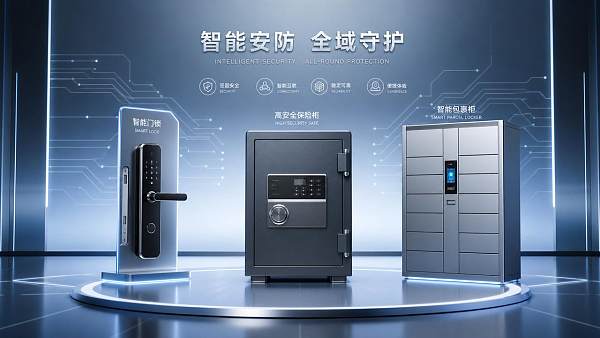
The security hardware industry is moving beyond locks, keys, hinges, and steel boxes.
It now sits between smart homes, commercial buildings, logistics networks, insurance rules, and data-sensitive personal spaces.
Smart locks scan veins, faces, fingerprints, and mobile credentials before a door opens.
Safes and vaults increasingly compete through certified resistance against drills, torches, explosives, and sophisticated forced-entry tools.
Parcel lockers are becoming unmanned access terminals for e-commerce, pharmacies, campuses, offices, and residential communities.
This shift changes how the security hardware industry measures value.
A product is no longer judged only by weight, thickness, or visible strength.
It is judged by attack resistance, authentication speed, system uptime, certification, privacy protection, and user acceptance.
Demand Drivers Are Expanding from Theft Prevention to Access Intelligence
The security hardware industry is benefiting from several overlapping demand drivers.
Rising urban density makes access control more complex across apartments, offices, warehouses, and public facilities.
Higher asset concentration increases demand for certified safes, vault doors, secure cabinets, and controlled storage.
Remote work has also changed domestic security expectations.
Homes now protect laptops, documents, medicines, jewelry, digital assets, and private family spaces.
Meanwhile, last-mile logistics is pushing parcel lockers into residential entrances, retail zones, and transportation nodes.
The security hardware industry is therefore becoming a backbone for everyday movement, storage, and identity verification.
Biometric Access Is Redefining Trust at the Door
Biometric smart locks are one of the strongest growth points in the security hardware industry.
Fingerprint access made keyless entry familiar, but the next stage demands stronger liveness detection.
Near-infrared vein recognition is gaining attention because it reads internal biological patterns.
3D structured light also improves resistance against photos, masks, molds, and spoofing attacks.
In premium access scenarios, authentication speed matters as much as accuracy.
A lock that opens securely in fractions of a second reduces friction and increases daily adoption.
For the security hardware industry, this creates a competitive divide.
Basic electronic locks compete on price, appearance, and app functions.
Advanced access systems compete on algorithms, sensor quality, motor reliability, privacy controls, and mechanical fallback design.
The strongest smart access systems combine intelligence with mechanical certainty
- Subcutaneous recognition that reduces spoofing exposure.
- Local encryption for sensitive biometric templates.
- Low-noise motors with stable torque delivery.
- Emergency cylinders that resist picking and drilling.
- Battery strategies that avoid lockout risk.
Safes and Vaults Are Shifting from Heavy Metal to Certified Material Science
The security hardware industry is also seeing renewed interest in high-security safes and vaults.
Inflation, geopolitical uncertainty, cyber risk, and private wealth mobility all support demand.
Yet the premium safe market is not driven only by thicker steel.
Composite concrete, corundum aggregates, anti-cutting alloys, relocking systems, and thermal barriers now shape product differentiation.
Professional attacks use cutting torches, heavy drills, wedges, explosives, and abrasive tools.
This makes independent testing central to trust.
Standards such as EN 1143-1 and UL test frameworks influence insurance acceptance, export readiness, and institutional purchasing confidence.
In this segment, the security hardware industry rewards evidence.
Claims must be supported by ratings, attack minutes, resistance classes, fire performance, and documented lock security.
Safe demand is becoming more segmented
- Homes need compact safes for documents, jewelry, and digital devices.
- Retail sites need deposit safes and cash-handling protection.
- Financial locations need tested vault systems and auditability.
- Healthcare spaces need secure medicine and controlled material storage.
- Data-sensitive offices need physical protection for drives and records.
Mechanical Lock Cylinders Remain the Hidden Core of Security
The security hardware industry cannot depend on electronics alone.
Every smart lock still needs a physical deadbolt, cylinder, latch, or mechanical blocking structure.
This is why high-security mechanical cylinders remain strategically important.
Pin-in-pin designs, sidebar systems, rotating discs, and blade displacement structures raise attack complexity.
They also reduce the success rate of bumping, impressioning, picking, and destructive manipulation.
For the security hardware industry, mechanical strength provides the baseline beneath software convenience.
A door can have facial recognition and remote control.
If the cylinder fails against basic attack, the entire system loses credibility.
Turnstiles and Smart Parcel Lockers Turn Security into Infrastructure
Commercial buildings are pushing the security hardware industry toward high-throughput access infrastructure.
Speed gates must identify approved users quickly while preventing tailgating and forced passage.
Brushless servo motors, infrared curtains, facial recognition, and access logs are becoming expected components.
This changes the buying logic for entrance control.
The focus expands from barrier hardware to user flow, safety, uptime, data integration, and maintenance cost.
Smart parcel lockers show a similar infrastructure pattern.
They are no longer simple storage cabinets with electronic locks.
They connect couriers, residents, retail pickups, return logistics, and unmanned service points.
For the security hardware industry, parcel lockers create recurring value through operations, software, and network reliability.
Business Impact Will Differ by Segment and Capability
The security hardware industry will not grow evenly across all categories.
Commodity hardware may face price pressure as more suppliers enter smart lock and locker markets.
Higher-margin segments will likely concentrate around certification, biometric reliability, export compliance, and integrated platforms.
Businesses with testing data, material know-how, and software competence will gain stronger positioning.
Those relying only on appearance, low cost, or generic app features may struggle to defend margins.
Key Priorities for the Next Security Hardware Industry Cycle
The next phase of the security hardware industry will reward disciplined technical choices.
Growth will come from solving specific risk problems, not from adding disconnected features.
- Prioritize certified resistance over vague durability claims.
- Use biometric methods that prove liveness and protect privacy.
- Design mechanical cores that remain secure during power loss.
- Treat software, firmware, and cloud access as security surfaces.
- Plan for export standards, insurance acceptance, and regional compliance.
- Measure total lifecycle cost, including service, batteries, parts, and updates.
The security hardware industry should also watch the relationship between convenience and liability.
Frictionless access is valuable only when the system resists fraud, misuse, outages, and poor maintenance.
How to Judge the Market Direction from 2025 Onward
Several indicators can help interpret where the security hardware industry is heading.
The first is certification intensity.
When buyers demand tested resistance classes, low-grade products lose room to hide.
The second is biometric maturity.
Systems that defeat spoofing while maintaining fast recognition will gain premium value.
The third is integration depth.
Locks, safes, gates, and lockers increasingly need to connect with identity systems and operational dashboards.
The fourth is service capability.
Connected hardware must be updated, diagnosed, repaired, and protected across long operating lives.
Practical response framework
- Map each product against real attack methods and user behaviors.
- Separate essential security functions from decorative smart features.
- Benchmark against EN, UL, fire, privacy, and access-control requirements.
- Track field failure causes before scaling connected deployments.
- Use micro-innovation to improve daily convenience without weakening protection.
A More Intelligent, Harder Physical Baseline Is Emerging
The security hardware industry is entering a period where steel and algorithms must reinforce each other.
Safes need material science, standards, and credible testing.
Smart locks need biometric precision, privacy protection, and resilient mechanical lock bodies.
Turnstiles need fast recognition without sacrificing safety and anti-tailgating control.
Parcel lockers need rugged construction, IoT visibility, and dependable unattended operation.
This convergence makes the security hardware industry more strategic across homes, businesses, logistics, finance, and public spaces.
The next winners will not simply sell stronger boxes or smarter locks.
They will prove secure access, certified resistance, lifecycle reliability, and measurable operational value.
A practical next step is to audit current product lines against attack resistance, authentication quality, compliance readiness, and serviceability.
That review will reveal where the security hardware industry is already moving, and where investment should follow.
Have questions about this sector analysis, or seeking best practices specific to your niche? Drop us a line below and let the senior consultants at MHLS assist you.
We respect your privacy. Your information is strictly confidential.
Recommended News
 Physical Security System Engineering: From Risk Assessment to System DesignUnmanned Terminal FellowExplore physical security system engineering, from risk assessment to integrated design, procurement and testing. Build a safer, more resilient facility.
 Apple Home Collection Smart Lock and Other Accessories Open for Preorder November 13Biometric Auth ScientistApple Home Collection preorders open November 13, 2026. Explore the LG smart lock’s Matter and Aliro support and what buyers should verify before ordering.
 Choosing Servo-Driven Flap Barriers: Throughput, Safety and Access ControlAccess Control StrategistServo-driven flap barriers can balance throughput, safety and access control. Discover how to compare lanes, test performance and choose with confidence.
 Parcel Locker Network Pricing: Setup Costs, Fees and Contract TermsUnmanned Terminal FellowCompare parcel locker networks pricing, from setup costs and recurring fees to contract terms. Discover hidden charges and choose the right model.
 JR East Plans UWB Walk-Through Gates at 40 Stations in Spring 2028Access Control StrategistJR East plans UWB walk-through gates at 40 stations in spring 2028. Explore the rollout timeline and what suppliers should watch.
 Bank Vault Security Standards: UL and EN Ratings ExplainedVault Structural ArchitectExplore bank vault security standards and learn how UL 608 classes and EN 1143-1 grades differ, what they test, and how to verify certification before you buy.
 Mechanical Lock Hardware Prices: What Buyers Should Budget for Bulk OrdersMr. Gideon CrossMechanical lock hardware price is just the starting point. Discover what drives bulk-order costs and how to compare supplier quotes with confidence.
 IndexBox Forecasts Steady Global Security Keypad Market Growth Through 2035Dr. Valerius ThorneGlobal security keypad market growth is forecast at 3.3% annually through 2035. Explore the smart home and replacement trends shaping demand.
 Choosing an Infrared Safety Sensors Manufacturer: What Buyers Should CheckUnmanned Terminal FellowChoosing an infrared safety sensors manufacturer? Compare safety evidence, integration, environmental performance and lifecycle costs before you buy.
 Choosing a Security Material Testing Service: What to Check for Lock and Safe MaterialsProf. Elara SterlingChoose a security material testing service with confidence. Learn what to check for lock and safe materials, from attack methods and accreditation to reliable reports.
 How Precision Anti-Pick Lock Cylinders Resist ManipulationSecurity Metallurgy ExpertDiscover how precision anti-pick lock technology resists manipulation, and learn what to check when comparing security features, test evidence, and everyday reliability.
 Dermalog Joins NIST FastCAP Program for Contactless Fingerprint TestingProf. Elara SterlingDermalog joins the NIST FastCAP program for contactless fingerprint testing. Discover what this means for biometric identification and digital identity.











