
Security Hardware Trends Shaping Export Demand, Compliance, and Channel Strategy
Security hardware trends are changing the way global channels assess product value, export readiness, and long-term market fit.
What used to be a simple price and feature comparison now involves certification scope, failure risk, deployment context, and supplier credibility.
This shift matters across smart locks, safes, vault systems, protective doors, turnstiles, and parcel locker networks.
In practical terms, demand is moving toward products that can prove performance, integrate cleanly, and support compliance in different regions.
That is why security hardware trends now influence not only product selection, but also channel strategy, after-sales planning, and export risk control.
Why the market is watching security hardware trends more closely
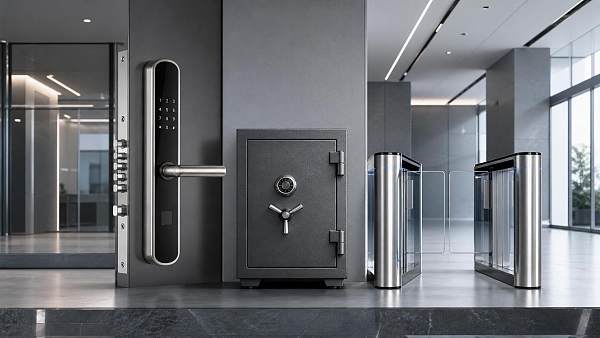
Security is no longer judged by appearance or headline specifications alone.
Buyers want evidence that a lock resists spoofing, a safe survives attack methods, or a turnstile handles throughput without compromising safety.
This has widened the role of technical content and compliance intelligence.
Platforms such as SHPS sit at that intersection.
They connect physical security engineering, access control logic, materials science, biometric reliability, and commercial deployment into one decision framework.
From an export perspective, that matters because demand often rises fastest where local expectations are becoming more technical.
A product may look competitive in one market, yet fall short when certification, anti-attack structure, or integration standards are reviewed closely.
What security hardware trends really include
The phrase covers more than smart features.
Current security hardware trends combine mechanical protection, digital intelligence, connectivity, testing discipline, and operational usability.
In safes and vault systems, the trend is stronger resistance against drilling, cutting, and structured attack tools.
That brings attention to composite anti-drill materials, corundum layers, body construction, boltwork design, and certified burglary resistance.
In smart locks, the focus is moving beyond app control.
More attention now goes to liveness detection, 3D facial recognition, near-infrared vein recognition, secure fingerprint matching, and electronic lock reliability.
Mechanical cylinders are also part of the picture.
Anti-picking structures, pin-in-pin architecture, blade displacement mechanisms, and tighter machining tolerances remain important in many export markets.
For access control equipment, security hardware trends include faster people flow, infrared anti-tailgating performance, safer gate movement, and cleaner building system integration.
Parcel locker systems add another dimension.
Here, connectivity stability, compartment security, electronic lock life, and remote management shape demand as much as cabinet design.
Compliance is becoming a demand driver, not a final checkpoint
One of the most important security hardware trends is the rising weight of compliance early in the sales cycle.
Certification is no longer treated as paperwork added after product development.
It increasingly shapes product design, pricing, channel confidence, and even which opportunities are realistic.
For safes and vaults, EN 1143-1 and UL-related testing can influence project qualification from the start.
For entrance security, safety sensors, emergency release logic, and local access control requirements may matter as much as speed or appearance.
Smart locks face a similar shift.
Claims about biometrics or remote access carry less weight unless supported by stable performance, clear testing logic, and credible cybersecurity handling.
This is where many channel decisions succeed or fail.
A product with broad market appeal may still create friction if documents are incomplete, test scope is unclear, or model variants differ from certified samples.
Common compliance signals worth checking early
- Whether the tested configuration matches the commercial model
- Whether market-specific standards are already mapped
- Whether technical files explain core protection mechanisms clearly
- Whether installation conditions affect certified performance
- Whether replacement parts and firmware control are traceable
Export demand is moving toward proof, fit, and lifecycle reliability
Not every market is buying the same type of security upgrade.
Still, the same pattern appears across categories.
Demand is stronger where products solve a real operational problem and can defend their value under scrutiny.
A residential smart lock may sell on convenience at first, but repeat demand depends on lower false acceptance risk, stable power management, and durable lock body performance.
A commercial turnstile may win attention through design, yet long-term acceptance depends on anti-tailgating control, safe passage logic, and serviceability.
A parcel locker project often starts with last-mile efficiency, but expansion depends on network uptime, lock consistency, and secure user access.
These security hardware trends push channels to sell a package of verified capability rather than isolated features.
Channel strategy is shifting from broad catalog coverage to sharper positioning
Another clear result of current security hardware trends is narrower but stronger portfolio planning.
A wide product list is less useful if technical claims overlap, certifications conflict, or application logic is unclear.
More competitive channels are building around use cases.
That may mean pairing biometric locks with compatible door hardware, or aligning turnstiles with access control platforms and building entry software.
It may also mean separating premium high-security products from volume-oriented models to avoid confusing end-market expectations.
In this environment, technical explanation becomes part of channel value.
SHPS reflects this change by covering not only products, but also testing standards, material logic, biometric methods, and deployment interpretation.
That kind of structured visibility helps reduce mismatch between product promise and market reality.
A practical way to review portfolio fit
- Map each product to a clear application environment
- Check whether certifications support target geographies
- Review service needs, spare parts, and software dependency
- Compare technical claims against actual test evidence
- Identify which products strengthen authority in the portfolio
How to read security hardware trends without getting lost in noise
Not every new feature signals durable market change.
Some features are useful mainly for marketing visibility.
Others solve problems that directly affect returns, compliance exposure, and customer retention.
A good reading of security hardware trends starts with three questions.
Does the trend improve measurable protection?
Does it support regional compliance or project qualification?
Can it be maintained reliably across the product lifecycle?
For example, 4G and 5G connectivity in locker networks matters when remote visibility and uptime drive business performance.
Servo-driven speed gates matter when throughput and controlled movement are both critical.
Composite safe bodies matter when attack resistance must be explained beyond steel thickness alone.
In other words, the best trends are the ones that stand up in specification reviews, installation reality, and post-sale use.
Where the next decisions should focus
Security hardware trends will keep evolving, but the direction is already clear.
Export demand is favoring products that combine credible protection, compliance readiness, and practical deployment value.
That makes technical understanding more commercially important than before.
A useful next step is to review current product lines against target applications, certification alignment, and service complexity.
It also helps to compare where demand is being created by regulation, building upgrades, logistics security, or higher expectations for trusted access.
When security hardware trends are evaluated through that lens, portfolio decisions become clearer and export opportunities become easier to rank.
The strongest position usually comes from combining product knowledge with evidence, scenario fit, and a disciplined view of compliance.
- biometric smart locks
- security hardware trends
- speed gates
- electronic lock reliability
- access control platforms
- physical security engineering
- near-infrared vein recognition
- parcel locker networks
- servo-driven speed gates
- physical security
- vault systems
- protective doors
- liveness detection
- EN 1143-1
- security hardware
Have questions about this sector analysis, or seeking best practices specific to your niche? Drop us a line below and let the senior consultants at MHLS assist you.
We respect your privacy. Your information is strictly confidential.
Recommended News
 Financial Facility Security: Choosing Vault Doors for Bank BranchesVault Structural ArchitectStrengthen financial facility security with the right bank vault door. Explore certification, installation, locking controls and maintenance before you buy.
 MACO Acquires Majority Stake in Fingerprint Access Provider ekeyProf. Elara SterlingMACO acquires a majority stake in ekey, bringing fingerprint access and door hardware closer together. Discover what the deal could mean for smart buildings.
 Physical Security System Engineering: From Risk Assessment to System DesignUnmanned Terminal FellowExplore physical security system engineering, from risk assessment to integrated design, procurement and testing. Build a safer, more resilient facility.
 Apple Home Collection Smart Lock and Other Accessories Open for Preorder November 13Biometric Auth ScientistApple Home Collection preorders open November 13, 2026. Explore the LG smart lock’s Matter and Aliro support and what buyers should verify before ordering.
 Choosing Servo-Driven Flap Barriers: Throughput, Safety and Access ControlAccess Control StrategistServo-driven flap barriers can balance throughput, safety and access control. Discover how to compare lanes, test performance and choose with confidence.
 Parcel Locker Network Pricing: Setup Costs, Fees and Contract TermsUnmanned Terminal FellowCompare parcel locker networks pricing, from setup costs and recurring fees to contract terms. Discover hidden charges and choose the right model.
 JR East Plans UWB Walk-Through Gates at 40 Stations in Spring 2028Access Control StrategistJR East plans UWB walk-through gates at 40 stations in spring 2028. Explore the rollout timeline and what suppliers should watch.
 Bank Vault Security Standards: UL and EN Ratings ExplainedVault Structural ArchitectExplore bank vault security standards and learn how UL 608 classes and EN 1143-1 grades differ, what they test, and how to verify certification before you buy.
 Mechanical Lock Hardware Prices: What Buyers Should Budget for Bulk OrdersMr. Gideon CrossMechanical lock hardware price is just the starting point. Discover what drives bulk-order costs and how to compare supplier quotes with confidence.
 IndexBox Forecasts Steady Global Security Keypad Market Growth Through 2035Dr. Valerius ThorneGlobal security keypad market growth is forecast at 3.3% annually through 2035. Explore the smart home and replacement trends shaping demand.
 Choosing an Infrared Safety Sensors Manufacturer: What Buyers Should CheckUnmanned Terminal FellowChoosing an infrared safety sensors manufacturer? Compare safety evidence, integration, environmental performance and lifecycle costs before you buy.
 Choosing a Security Material Testing Service: What to Check for Lock and Safe MaterialsProf. Elara SterlingChoose a security material testing service with confidence. Learn what to check for lock and safe materials, from attack methods and accreditation to reliable reports.











