
Security Hardware Trends: What Buyers Should Watch in Access Control
As access control evolves from simple locks to connected, biometric, and intelligence-driven defense systems, buyers face a crowded market where every feature claims to be “smart” and “secure.” Understanding security hardware trends is now essential for selecting solutions that balance burglary resistance, frictionless entry, compliance, durability, and long-term operating cost. From vein recognition and Class C cylinders to speed gates and IoT parcel lockers, this guide highlights what procurement teams should watch before investing in the next generation of physical security.
Why Security Hardware Trends Matter More to Procurement Teams
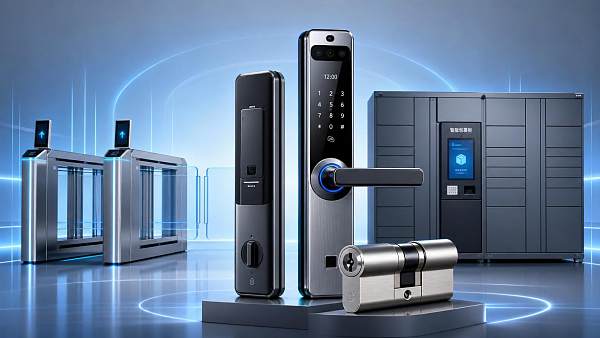
For buyers, access control is no longer a single product category. It now includes mechanical cylinders, smart locks, vault doors, biometric readers, speed gates, parcel lockers, and cloud-managed credentials.
The challenge is not finding suppliers. The challenge is separating useful innovation from marketing noise while keeping risk, compliance, serviceability, and total cost under control.
Modern security hardware trends are shaped by two opposite demands. Facilities want stronger physical isolation, but users expect faster, cleaner, and almost invisible access.
The buyer’s core question has changed
The old question was, “Can this lock stop forced entry?” The new question is, “Can this system resist attack, identify users accurately, integrate cleanly, and remain maintainable for years?”
- Residential buyers need reliable smart entry without creating easy digital or mechanical bypass points.
- Commercial facilities need throughput, audit trails, anti-tailgating, and fast service response during peak traffic.
- Logistics operators need parcel lockers that survive weather, repeated use, network interruptions, and vandalism attempts.
- Financial and high-value storage sites need safes and vaults aligned with burglary resistance and insurance expectations.
SHPS tracks security hardware trends through the practical intersection of metallurgy, mechanical locking, biometric sensing, IoT communication, and facility-level deployment.
Which Access Control Technologies Are Defining the Market?
Procurement teams should compare technologies by security layer, user experience, deployment complexity, and failure mode. A strong access system usually combines electronic intelligence with mechanical resistance.
The following table summarizes major categories behind current security hardware trends and the buying signals that matter before shortlisting suppliers.
This comparison shows why buyers should avoid choosing by one headline feature. The strongest security hardware trends combine attack resistance, identity assurance, service access, and operational continuity.
Biometrics are moving beyond surface fingerprints
Surface fingerprints remain convenient, but buyers increasingly ask about vein recognition, 3D structured light, and multi-factor authentication for higher-risk locations.
Near-infrared vein recognition can reduce risks linked to copied surface patterns, while 3D liveness detection helps defend against photo, mask, or model-based spoofing attempts.
Mechanical cores still decide the final defense line
A connected lock with a weak cylinder remains a weak door. Security hardware trends may emphasize apps and cloud dashboards, but deadbolts, strike plates, and cylinders still matter.
Class C cylinders with complex pin-in-pin or blade displacement structures can raise the difficulty of technical opening and protect the electronic system’s physical baseline.
How Should Buyers Evaluate Performance Parameters?
Procurement specifications should translate security hardware trends into measurable checkpoints. Without defined parameters, tender responses become difficult to compare and easy to misinterpret.
The table below provides practical evaluation points buyers can adapt for access control projects, smart building upgrades, or multi-site sourcing programs.
Good suppliers can explain these parameters in relation to real use conditions. Buyers should be cautious when answers remain vague or depend only on promotional terms.
A parameter is useful only when linked to a scenario
A 0.3-second recognition experience may matter for apartment entry, while anti-tailgating logic matters more for office turnstiles. Safe procurement may prioritize resistance grading over convenience.
This is why security hardware trends should be filtered by environment, asset value, user volume, exposure level, and available maintenance resources.
Where Do Different Access Control Solutions Fit Best?
Buyers often compare products across categories that should not be directly substituted. A parcel locker lock, an apartment smart lock, and a vault lock solve different risks.
Use application mapping to narrow the tender scope before discussing price. This helps procurement teams avoid both overspending and under-protection.
Scenario-based selection checklist
- For residential projects, prioritize anti-theft cylinders, reliable fingerprint or vein recognition, emergency mechanical override, and quiet motor operation.
- For commercial entrances, prioritize access speed, anti-tailgating sensors, fire alarm linkage, visitor credential handling, and service response time.
- For logistics lockers, prioritize galvanized steel housing, lock cycle durability, courier platform integration, waterproofing, and remote fault diagnosis.
- For high-value storage, prioritize safe body structure, certified resistance references, relocking mechanisms, anchoring, and insurance documentation needs.
Why mixed-system projects need extra attention
Many projects combine apartment locks, building turnstiles, parcel lockers, and management software. Integration risk becomes as important as hardware performance.
Procurement should confirm interface protocols, user database rules, emergency unlock authority, audit log retention, and whether firmware updates require on-site work.
What Standards and Compliance Signals Should Buyers Watch?
Security hardware trends are closely linked to compliance because buyers must satisfy insurers, facility owners, regulators, and internal risk teams. Documentation reduces sourcing uncertainty.
Not every product needs the same certification. However, buyers should understand common references and request evidence appropriate to the product category and destination market.
Compliance should be discussed early, not after supplier selection. Late discovery of certification gaps can delay delivery, increase testing cost, or force product redesign.
Documentation to request before final approval
- Product specification sheets with lock body, power, communication, environmental, and installation details clearly listed.
- Available test reports or conformity documents relevant to the destination market and product risk level.
- Installation manuals showing anchoring, wiring, emergency access, and maintenance procedures.
- Warranty terms, spare parts availability, firmware support policy, and service escalation process.
Common Procurement Mistakes in Security Hardware Trends
Many failed access control purchases do not fail because the product is useless. They fail because the buyer selected for the wrong environment or ignored lifecycle factors.
Mistake 1: Buying “smart” while ignoring forced-entry resistance
App control, face recognition, and remote unlock are valuable, but they cannot compensate for weak door hardware, poor cylinder protection, or thin cabinet structure.
Mistake 2: Comparing purchase price instead of lifecycle cost
A cheaper lock may require more battery replacements, more service visits, or earlier replacement. Buyers should include installation, integration, maintenance, and downtime cost.
Mistake 3: Treating all biometric systems as equal
Fingerprint, vein, facial, and multi-modal systems differ in spoofing resistance, user acceptance, lighting sensitivity, privacy burden, and cost structure.
Mistake 4: Forgetting emergency behavior
Every access system needs a defined response to power failure, network loss, fire alarm activation, lost credentials, and mechanical obstruction.
How to Build a Practical Shortlist and Tender Brief
A clear tender brief helps suppliers provide comparable proposals. It also prevents procurement teams from being distracted by isolated features within security hardware trends.
A five-step sourcing workflow
- Define protected assets, user groups, daily traffic, expected abuse level, and acceptable downtime for each access point.
- Separate mandatory requirements from preferred features, including certifications, integration interfaces, and emergency access rules.
- Request samples or pilot units for high-risk products such as smart locks, parcel lockers, and speed gates.
- Evaluate supplier answers against test evidence, installation practicality, spare parts, and long-term technical support.
- Finalize the procurement plan with delivery schedule, acceptance criteria, training needs, and post-installation service responsibilities.
This workflow is especially useful when buying across regions. Access control products may need different wireless approvals, power configurations, manuals, and service arrangements.
When should buyers ask for customization?
Customization is justified when standard products cannot meet installation dimensions, brand identity, platform integration, cabinet layout, or specific credential policies.
However, customized hardware should be controlled carefully. Buyers need drawings, prototype approval, revised lead time, compliance impact, and spare parts planning before commitment.
FAQ: Buyer Questions About Security Hardware Trends
The following questions reflect common concerns from procurement teams comparing smart locks, mechanical hardware, safes, turnstiles, and parcel locker systems.
How do I choose between a biometric smart lock and a mechanical high-security lock?
Choose based on access frequency and risk. Biometric smart locks suit high-frequency user access, while mechanical high-security locks are essential for forced-entry resistance and backup reliability.
In many projects, the best answer is not either-or. A smart lock should still include a robust lock body, protected cylinder, and secure emergency override.
Are vein recognition locks worth the higher cost?
They can be worth it for premium residential, restricted commercial, or identity-sensitive spaces. Vein recognition improves resistance against copied surface fingerprints and some spoofing attempts.
Buyers should still test user enrollment, recognition speed, dry or cold finger behavior, and fallback methods before large-scale deployment.
What should I check before buying smart parcel lockers?
Check cabinet steel treatment, lock durability, waterproofing needs, network design, courier software integration, remote troubleshooting, and whether the system supports peak delivery volume.
Security hardware trends in logistics are moving toward real-time IoT monitoring, but the cabinet must still resist vandalism, corrosion, and repeated daily operation.
How long does access control procurement usually take?
Simple replacement locks may move quickly, but integrated projects involving turnstiles, cloud software, parcel lockers, or certified safes need more planning.
Buyers should allow time for requirement confirmation, sample review, compliance checks, installation preparation, shipping, acceptance testing, and user training.
Why Choose SHPS for Access Control Intelligence and Sourcing Decisions?
SHPS focuses on the physical baseline behind modern access control: hardened steel, anti-burglary structures, biometric sensing, mechanical lock cores, and connected storage terminals.
For buyers following security hardware trends, SHPS helps translate product claims into procurement questions, comparison criteria, and deployment risks that can be discussed with suppliers.
Consult us before finalizing your next purchase
- Parameter confirmation for smart locks, Class C cylinders, safes, speed gates, and smart parcel lockers.
- Product selection support based on risk level, application scenario, budget range, and maintenance capacity.
- Certification and compliance discussion for destination markets, insurance needs, and building requirements.
- Sample evaluation guidance, delivery schedule review, customization feasibility, and quotation comparison.
If your team is comparing suppliers or preparing a tender, use SHPS as an intelligence partner to evaluate security hardware trends with sharper technical and commercial judgment.
Have questions about this sector analysis, or seeking best practices specific to your niche? Drop us a line below and let the senior consultants at MHLS assist you.
We respect your privacy. Your information is strictly confidential.
Recommended News
 Physical Security Infrastructure Cost: Budgeting for Installation and MaintenanceUnmanned Terminal FellowUnderstand physical security infrastructure cost and build a smarter budget for installation, maintenance, and long-term ownership.
 Financial Facility Security: Choosing Vault Doors for Bank BranchesVault Structural ArchitectStrengthen financial facility security with the right bank vault door. Explore certification, installation, locking controls and maintenance before you buy.
 MACO Acquires Majority Stake in Fingerprint Access Provider ekeyProf. Elara SterlingMACO acquires a majority stake in ekey, bringing fingerprint access and door hardware closer together. Discover what the deal could mean for smart buildings.
 Physical Security System Engineering: From Risk Assessment to System DesignUnmanned Terminal FellowExplore physical security system engineering, from risk assessment to integrated design, procurement and testing. Build a safer, more resilient facility.
 Apple Home Collection Smart Lock and Other Accessories Open for Preorder November 13Biometric Auth ScientistApple Home Collection preorders open November 13, 2026. Explore the LG smart lock’s Matter and Aliro support and what buyers should verify before ordering.
 Choosing Servo-Driven Flap Barriers: Throughput, Safety and Access ControlAccess Control StrategistServo-driven flap barriers can balance throughput, safety and access control. Discover how to compare lanes, test performance and choose with confidence.
 Parcel Locker Network Pricing: Setup Costs, Fees and Contract TermsUnmanned Terminal FellowCompare parcel locker networks pricing, from setup costs and recurring fees to contract terms. Discover hidden charges and choose the right model.
 JR East Plans UWB Walk-Through Gates at 40 Stations in Spring 2028Access Control StrategistJR East plans UWB walk-through gates at 40 stations in spring 2028. Explore the rollout timeline and what suppliers should watch.
 Bank Vault Security Standards: UL and EN Ratings ExplainedVault Structural ArchitectExplore bank vault security standards and learn how UL 608 classes and EN 1143-1 grades differ, what they test, and how to verify certification before you buy.
 Mechanical Lock Hardware Prices: What Buyers Should Budget for Bulk OrdersMr. Gideon CrossMechanical lock hardware price is just the starting point. Discover what drives bulk-order costs and how to compare supplier quotes with confidence.
 IndexBox Forecasts Steady Global Security Keypad Market Growth Through 2035Dr. Valerius ThorneGlobal security keypad market growth is forecast at 3.3% annually through 2035. Explore the smart home and replacement trends shaping demand.
 Choosing an Infrared Safety Sensors Manufacturer: What Buyers Should CheckUnmanned Terminal FellowChoosing an infrared safety sensors manufacturer? Compare safety evidence, integration, environmental performance and lifecycle costs before you buy.











