
Security Hardware Trends in Germany: Compliance, Demand Shifts, and Export Risks
Security hardware trends Germany now reflect a market where compliance detail, system resilience, and supply reliability matter as much as price or product range.
That shift is affecting how safes, smart locks, lock cylinders, access control equipment, and protective doors are specified, tested, and compared.
Germany remains a high-value security market, but it is also a demanding one. Technical claims increasingly need certification support, operational proof, and export readiness.
For teams evaluating suppliers or market entry, the real question is no longer which products are available. It is which products can pass scrutiny in practical deployment.
Why Germany is setting the tone for physical security decisions
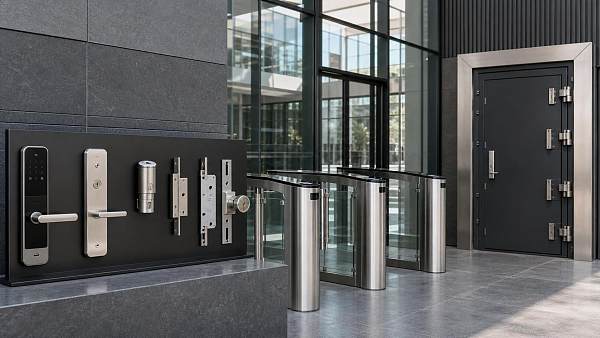
Germany combines industrial procurement discipline with mature building standards, strong insurance influence, and a wide base of commercial, logistics, and residential applications.
That makes security hardware trends Germany especially relevant beyond one national market. Product decisions made here often shape wider European positioning.
This is visible across several segments. High-security safes and vault systems face strict resistance expectations. Smart locks face scrutiny around spoofing, firmware reliability, and integration.
Mechanical cylinders remain important because many projects still value proven anti-picking and anti-drill performance without depending entirely on networked systems.
Access control turnstiles, speed gates, and protective doors are also gaining attention as offices, transport nodes, campuses, and mixed-use properties tighten entry management.
Compliance is no longer a supporting detail
A major driver behind security hardware trends Germany is the move from broad safety messaging to evidence-based compliance review.
In practice, buyers want more than product brochures. They want test references, certification status, installation conditions, and clarity on where claims actually apply.
For safes and vault systems, standards such as EN 1143-1 remain highly influential. Resistance grading affects not only product perception, but also insurability and deployment suitability.
For doors, cylinders, and electromechanical locking systems, the same logic applies. Materials, internal structures, and hardware design must align with recognized testing pathways.
Smart hardware faces an added layer. Connectivity, biometric performance, electronic lock durability, and software maintenance all shape compliance confidence.
A lock with advanced fingerprint recognition may look competitive. Yet weak liveness detection, uncertain update policy, or unclear data handling can quickly limit adoption.
This is where specialized intelligence platforms such as SHPS become useful. They connect testing language, engineering concepts, and commercial relevance into one assessment framework.
What compliance review now tends to include
- Applicable EN, UL, or local certification references
- Test scope versus marketing scope
- Material claims, including anti-drill or composite construction evidence
- Electronic component reliability and maintenance cycle
- Integration limits with existing building or access platforms
- Installer requirements and after-sales technical support
Demand is shifting from standalone products to verified solutions
Another clear feature of security hardware trends Germany is the move away from isolated hardware selection toward scenario-based system evaluation.
A safe is not judged only by storage volume. A smart lock is not judged only by app control. A turnstile is not judged only by throughput speed.
Decision quality increasingly depends on how each component performs within a real environment, including misuse risk, maintenance burden, and interoperability.
For example, parcel locker networks are drawing more interest because last-mile delivery security remains a live operational issue.
But hardware strength alone is not enough. Operators also assess electronic lock consistency, remote monitoring, 4G or 5G connectivity stability, and user access traceability.
In entrance control, anti-tailgating performance matters more when buildings want both speed and accountability. Infrared safety curtains and reliable sensor logic become part of the buying case.
In residential and mixed-use developments, biometric smart locks attract interest, but expectations are more practical than promotional.
Stakeholders compare false acceptance risk, fallback methods, battery behavior, mechanical override security, and service response before treating biometrics as a trusted upgrade.
Where demand is becoming more selective
Export risk is changing the supplier conversation
Security hardware trends Germany are also being shaped by export risk, especially for suppliers serving cross-border projects or entering Europe from outside the region.
Risk now includes more than tariffs or freight costs. It also includes certification delays, documentation inconsistency, component traceability, and regulatory interpretation.
For electronic and smart security hardware, component origin can affect lead times and after-sales continuity. That matters when projects require stable replacement cycles.
For mechanical and structural products, export risk often appears in a different way. Factory capability may be strong, yet market acceptance can stall without recognized testing alignment.
This means suppliers are increasingly compared on commercial readiness, not only manufacturing competence.
A technically advanced biometric lock or protective door can lose ground if the supplier cannot present audit-ready files, installation guidance, and clear service pathways.
Common export risk signals
- Certification claims that do not match the exact delivered configuration
- Heavy dependence on single-source electronic components
- Insufficient German or EU market documentation
- Limited clarity on warranty execution and spare parts supply
- Weak installer training or commissioning support
How to read the market by application, not by category alone
Looking at security hardware trends Germany through application scenarios gives a better view than watching product categories in isolation.
Financial facilities still prioritize certified resistance, controlled access, and layered protection. Here, vault systems, reinforced doors, and traceable access controls remain central.
Commercial offices lean toward integrated entry management. Speed gates, visitor control, biometric verification, and building platform compatibility shape demand.
Residential and multifamily projects often balance convenience with liability concerns. Smart locks, mechanical backup strength, and retrofit practicality matter more than feature quantity.
Logistics and parcel operations focus on uptime, compartment security, user authentication, and remote fault handling. The hardware is part of a service chain, not a standalone asset.
Critical sites and restricted areas put extra weight on anti-tailgating, event logging, fail-safe behavior, and physical resilience under repeated heavy use.
SHPS is relevant in this context because it frames products through performance questions, deployment conditions, and compliance logic rather than surface-level promotion.
Practical evaluation points for current supplier screening
In the current market, a useful screening method starts with mismatch detection. The aim is to identify where product claims, project conditions, and risk tolerance do not align.
That approach helps across all major security hardware segments in Germany.
Questions worth testing early
- Does the certification evidence match the exact model and configuration?
- Are resistance claims linked to verifiable materials and construction methods?
- Can the smart system maintain secure operation during connectivity loss?
- Is the product suitable for retrofit, high-cycle use, or exposed environments?
- What happens during maintenance, battery failure, or sensor malfunction?
- How credible is the supplier’s support model inside Germany or the wider EU?
These points sound basic, but they often separate attractive catalog offerings from deployable solutions.
They also make the phrase security hardware trends Germany more useful, because the trend is not simply toward smarter products. It is toward more defensible decisions.
What to watch next
Over the next phase, expect stronger convergence between physical resistance, digital trust, and lifecycle support.
Mechanical excellence will remain valuable, especially in cylinders, safes, and protective structures. At the same time, connected hardware will face deeper scrutiny around software reliability and data security.
That combination will keep reshaping security hardware trends Germany across both domestic procurement and export competition.
A sensible next step is to map product categories against application risk, compliance exposure, and service dependency before comparing suppliers.
From there, it becomes easier to identify where additional testing, certification review, or scenario-based benchmarking is needed.
In a market like Germany, better outcomes usually come from disciplined evaluation rather than broad product shortlists.
- high-security safes
- biometric smart locks
- security hardware trends
- speed gates
- infrared safety curtains
- parcel locker networks
- access control turnstiles
- physical security
- smart security hardware
- vault systems
- protective doors
- liveness detection
- EN 1143-1
- last-mile delivery security
- security hardware
- security hardware trends Germany
Have questions about this sector analysis, or seeking best practices specific to your niche? Drop us a line below and let the senior consultants at MHLS assist you.
We respect your privacy. Your information is strictly confidential.
Recommended News
 Physical Security System Engineering: From Risk Assessment to System DesignUnmanned Terminal FellowExplore physical security system engineering, from risk assessment to integrated design, procurement and testing. Build a safer, more resilient facility.
 Apple Home Collection Smart Lock and Other Accessories Open for Preorder November 13Biometric Auth ScientistApple Home Collection preorders open November 13, 2026. Explore the LG smart lock’s Matter and Aliro support and what buyers should verify before ordering.
 Choosing Servo-Driven Flap Barriers: Throughput, Safety and Access ControlAccess Control StrategistServo-driven flap barriers can balance throughput, safety and access control. Discover how to compare lanes, test performance and choose with confidence.
 Parcel Locker Network Pricing: Setup Costs, Fees and Contract TermsUnmanned Terminal FellowCompare parcel locker networks pricing, from setup costs and recurring fees to contract terms. Discover hidden charges and choose the right model.
 JR East Plans UWB Walk-Through Gates at 40 Stations in Spring 2028Access Control StrategistJR East plans UWB walk-through gates at 40 stations in spring 2028. Explore the rollout timeline and what suppliers should watch.
 Bank Vault Security Standards: UL and EN Ratings ExplainedVault Structural ArchitectExplore bank vault security standards and learn how UL 608 classes and EN 1143-1 grades differ, what they test, and how to verify certification before you buy.
 Mechanical Lock Hardware Prices: What Buyers Should Budget for Bulk OrdersMr. Gideon CrossMechanical lock hardware price is just the starting point. Discover what drives bulk-order costs and how to compare supplier quotes with confidence.
 IndexBox Forecasts Steady Global Security Keypad Market Growth Through 2035Dr. Valerius ThorneGlobal security keypad market growth is forecast at 3.3% annually through 2035. Explore the smart home and replacement trends shaping demand.
 Choosing an Infrared Safety Sensors Manufacturer: What Buyers Should CheckUnmanned Terminal FellowChoosing an infrared safety sensors manufacturer? Compare safety evidence, integration, environmental performance and lifecycle costs before you buy.
 Choosing a Security Material Testing Service: What to Check for Lock and Safe MaterialsProf. Elara SterlingChoose a security material testing service with confidence. Learn what to check for lock and safe materials, from attack methods and accreditation to reliable reports.
 How Precision Anti-Pick Lock Cylinders Resist ManipulationSecurity Metallurgy ExpertDiscover how precision anti-pick lock technology resists manipulation, and learn what to check when comparing security features, test evidence, and everyday reliability.
 Dermalog Joins NIST FastCAP Program for Contactless Fingerprint TestingProf. Elara SterlingDermalog joins the NIST FastCAP program for contactless fingerprint testing. Discover what this means for biometric identification and digital identity.











