Sourcing Security Hardware from China: Supplier Checks to Reduce Supply Chain Risk
A competitive quotation can hide an expensive procurement problem: the company selling a smart lock may not control its firmware, the safe offered may differ from the tested model, or the factory may substitute a critical component after sample approval. These gaps can lead to rejected deliveries, inconsistent security performance, delayed installation, and replacement costs that exceed the initial saving.
Before placing an order, verify the supplier’s legal identity, manufacturing responsibilities, model-specific compliance evidence, and control over production changes. Assessing the security hardware supply chain China offers requires more than comparing factory prices. The practical objective is to establish who is accountable, what configuration you are buying, and how you will confirm that shipped units match the approved specification.
Start by connecting the quotation to the actual manufacturer
A trading company is not automatically a poor choice, and a factory is not automatically a reliable one. A trader may coordinate several specialist manufacturers effectively. The risk arises when responsibilities are concealed or when the contracting party cannot enforce corrective action at the production site.
Request the supplier’s Chinese business license and Unified Social Credit Code, then check the legal entity through an official enterprise registration source. Compare the registered name with the quotation, contract, invoice, and payment beneficiary. English trading names alone are insufficient for matching entities.
- Contracting entity: Which legal company accepts the purchase order and warranty obligations?
- Manufacturing site: Where are assembly, critical machining, programming, and final testing performed?
- Payment recipient: Does the beneficiary match the agreed entity, or is there a documented explanation for an affiliate?
- Export arrangement: Who handles export documentation, and does that arrangement affect your contractual recourse?
Verify bank-detail changes through an independently established contact channel, not solely through the email announcing the change. A legitimate supplier relationship does not eliminate payment-diversion risk.
When the seller and manufacturer differ, obtain written confirmation of factory access, inspection rights, specification ownership, and responsibility for defects. Refusal to identify the production site should stop qualification until the relationship is clarified.
Build the compliance file around the exact configuration
A certificate logo on a catalog page does not establish that the quoted product meets your purchasing requirement. Ask for the underlying certificate or test report, its scope, the issuing organization, the applicable standard and edition, and the exact model designation. Confirm authenticity with the issuer or its official verification service where available.
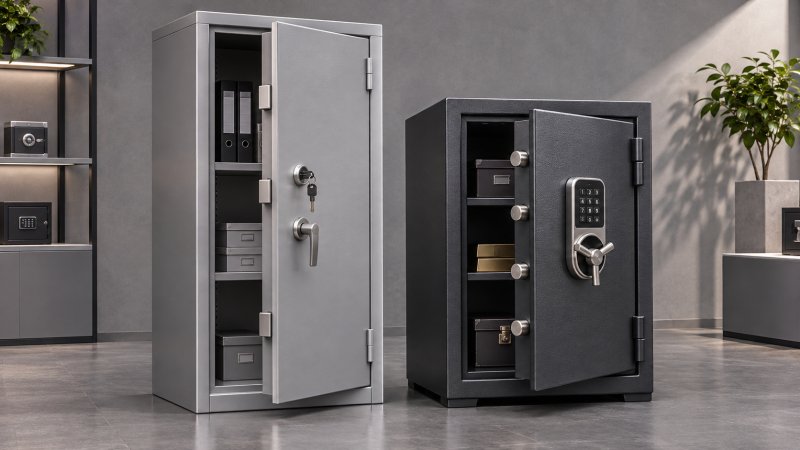
For safes, an EN 1143-1 burglary-resistance claim should be supported by evidence covering the relevant model and resistance grade. A reference to “UL tested” needs clarification of the specific standard, product, and certification status. Neither wording alone establishes suitability for an insurer’s acceptance criteria.
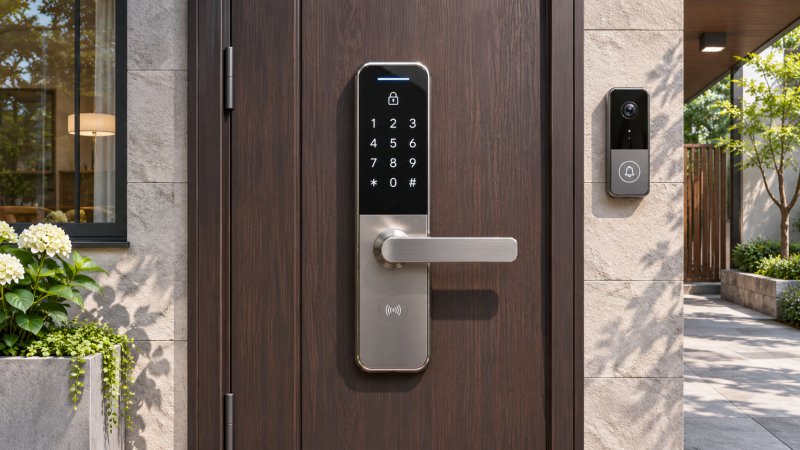
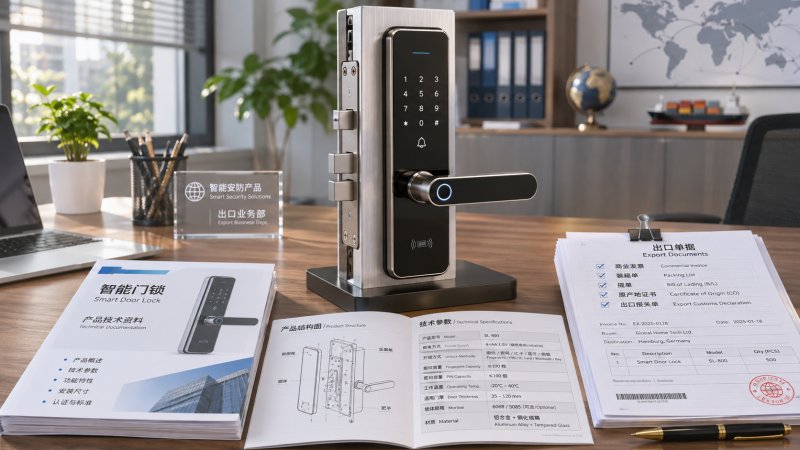
Smart locks and connected access products require a different review. Depending on the destination and design, relevant obligations may concern radio equipment, electrical safety, electromagnetic compatibility, batteries, or restricted substances. CE marking is not a burglary-resistance rating; the applicable declaration and supporting evidence must match the supplied configuration.
Where requirements affect building egress, fire performance, or insurance acceptance, confirm suitability with the relevant authority, insurer, or qualified specialist before ordering. A supplier’s export history is not a substitute for destination-specific approval.
Audit the process that could change product performance
A showroom visit demonstrates product availability, not process control. Structure the factory review around the failure modes that matter to your order: inconsistent cylinder tolerances, inadequate safe-body construction, unreliable electronic locks, or unsafe turnstile behavior.
Follow a product through incoming inspection, assembly, testing, rework, and packing. Ask the factory to retrieve records for an actual production batch rather than showing blank forms. Check whether measuring equipment has appropriate calibration records and whether failed units are segregated from accepted stock.
Subcontracting deserves particular attention. Heat treatment, casting, plating, circuit-board assembly, and firmware development may take place elsewhere. The useful question is not whether subcontractors exist, but which processes are outsourced, how suppliers are approved, and what evidence verifies their output.
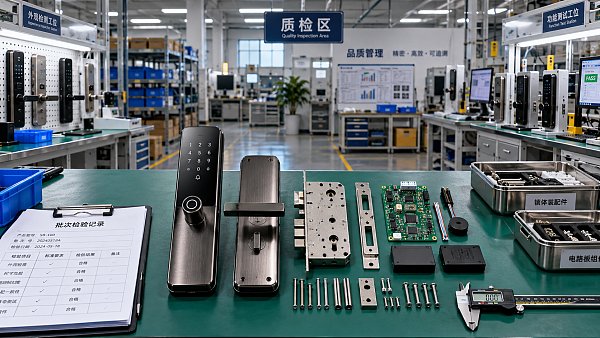
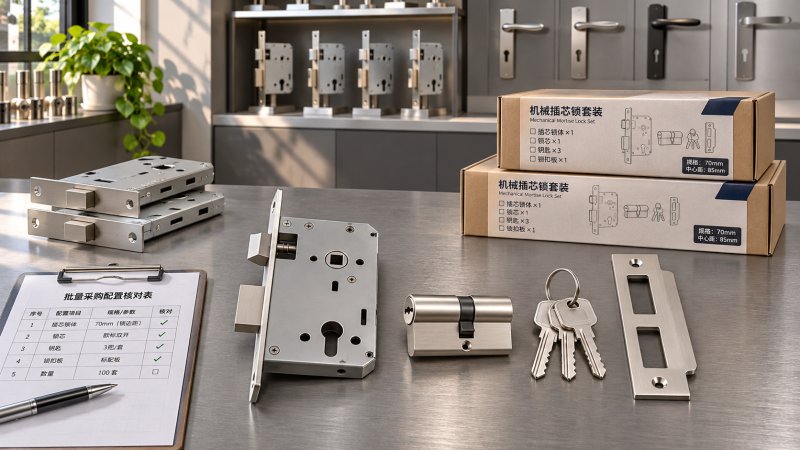
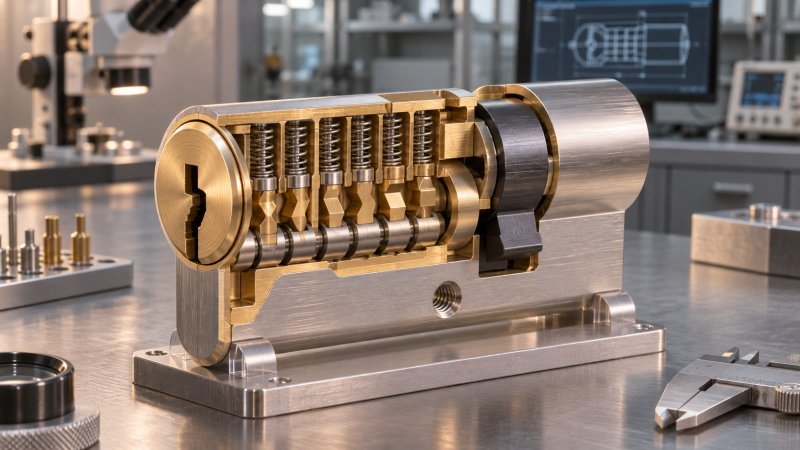
For a safe, inspect how specified plate thickness, reinforcement placement, and composite filling are controlled. For a mechanical cylinder, focus on dimensional consistency, material specifications, and assembly verification. For a smart lock, examine motor operation, sensor checks, battery-contact inspection, and firmware loading. These checks reveal more than a general statement that every unit is “quality tested.”
Make component substitution a contractual issue
An approved sample can become irrelevant if mass production uses a different motor, sensor, lock body, radio module, or material grade. Some substitutions affect compatibility or service life; others may invalidate test evidence or weaken resistance to attack.
Create a controlled specification that identifies security-critical components and acceptable alternatives. It does not need to expose every proprietary design detail, but it must define enough to detect a consequential change. Include drawings, interfaces, material requirements, firmware versions, and measurable performance criteria where relevant.
Require written approval before changes to critical components, production sites, tooling, firmware, or subcontracted processes. The agreement should state what supporting evidence is needed and when requalification is required. “Equivalent component” should not be left to the supplier’s interpretation.
Traceability should connect finished-product serial numbers or batch codes to relevant component lots and test records. Ask the supplier to demonstrate this connection for a selected unit. Traceability is only useful when records can identify the affected population after a defect appears.
Test ordinary operation and failure conditions separately
A lock that opens reliably during a sales demonstration may still fail under low battery, poor alignment, interrupted connectivity, or repeated use. Approve a written test plan before sampling so that both parties understand the installation conditions, equipment, acceptance criteria, and treatment of failures.
Match the checks to the product’s security function
- Smart locks: Check authorized and unauthorized access behavior, mechanical override, low-battery warnings, offline operation, and recovery after power interruption. Treat biometric accuracy claims separately from spoof-resistance evidence.
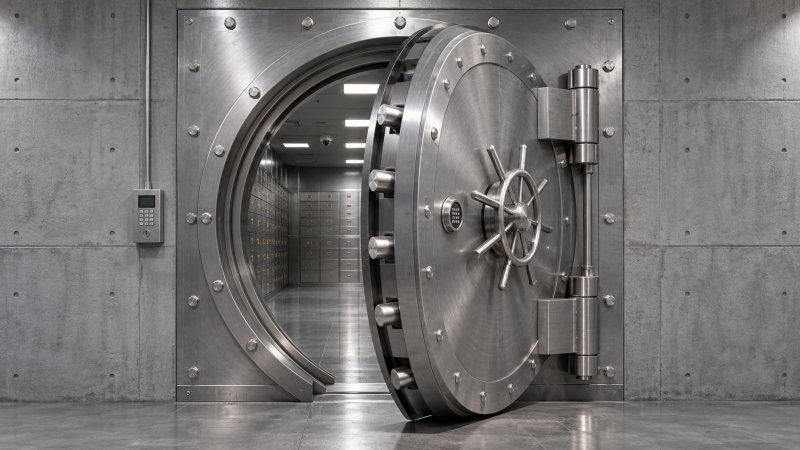
- Safes and vault equipment: Verify the specified construction, locking configuration, dimensions, and anchoring provisions. Routine factory inspection cannot reproduce accredited burglary-resistance testing.
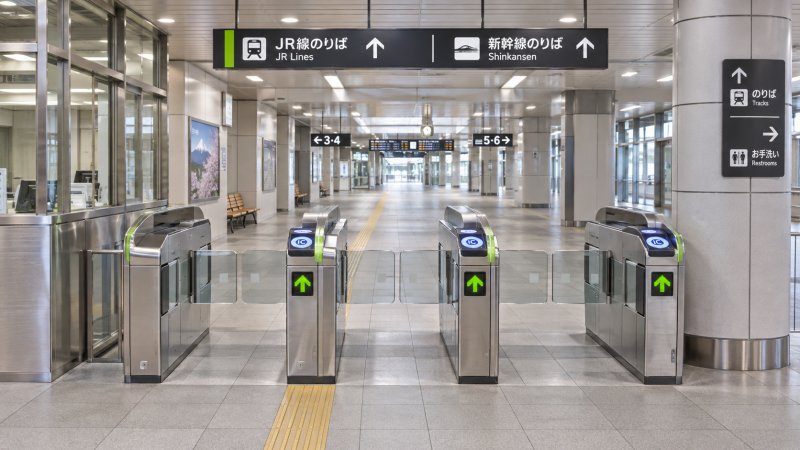
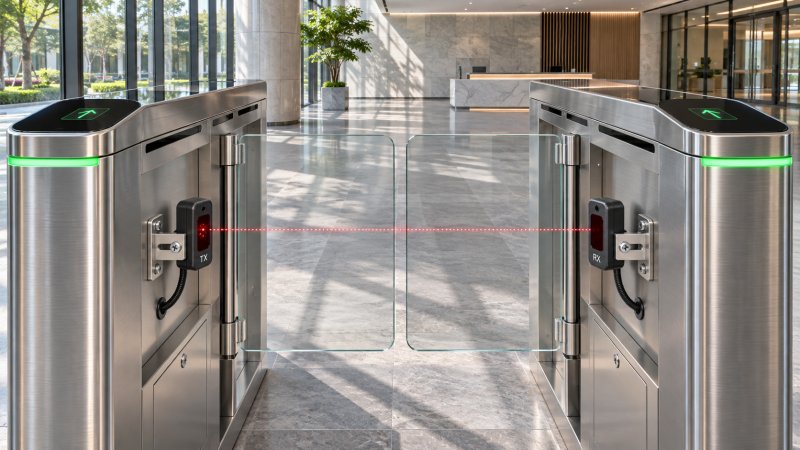
- Turnstiles and speed gates: Assess obstruction detection, emergency interfaces, alarm behavior, and the required state during power loss. Resolve fail-safe and fail-secure requirements against the installation’s egress obligations.
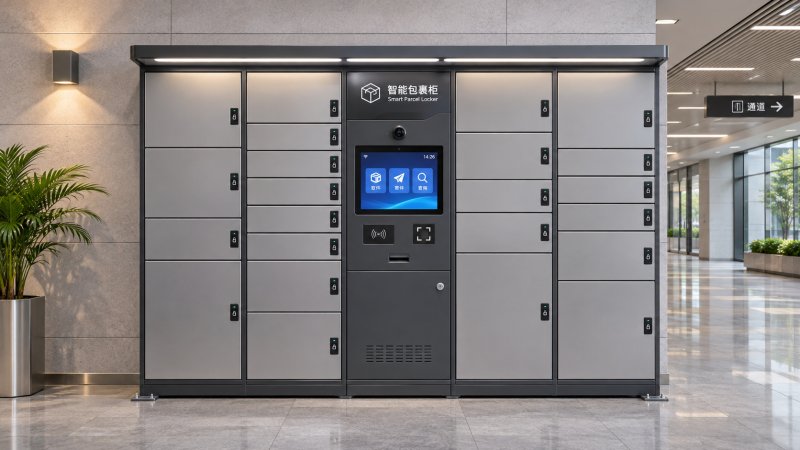
- Parcel lockers: Test door-state sensing, lock release confirmation, interrupted transactions, network loss, and controlled maintenance access.
Use an approved reference sample alongside the controlled specification, but do not rely on appearance alone. A pilot order should represent normal production materials, tooling, and firmware. Hand-built demonstration units may not reveal assembly variation or production bottlenecks.
Define pre-shipment sampling by defect severity and agreed acceptance rules. Sampling supports lot decisions; it does not prove that every unit is defect-free. Where practical, require recorded unit-level checks for functions whose failure creates unacceptable safety or security exposure.
Connected products need an ownership and support review
For smart locks, access controllers, and networked lockers, procurement risk continues after delivery. Establish who controls device credentials, cloud accounts, mobile applications, firmware signing, and software updates. Hardware ownership does not necessarily provide operational independence.
Ask whether deployment requires a supplier-hosted service, whether accounts and device records can be transferred, and what happens if that service becomes unavailable. Confirm data locations, administrative access, relevant privacy obligations, and any recurring license or connectivity charges before comparing quotations.
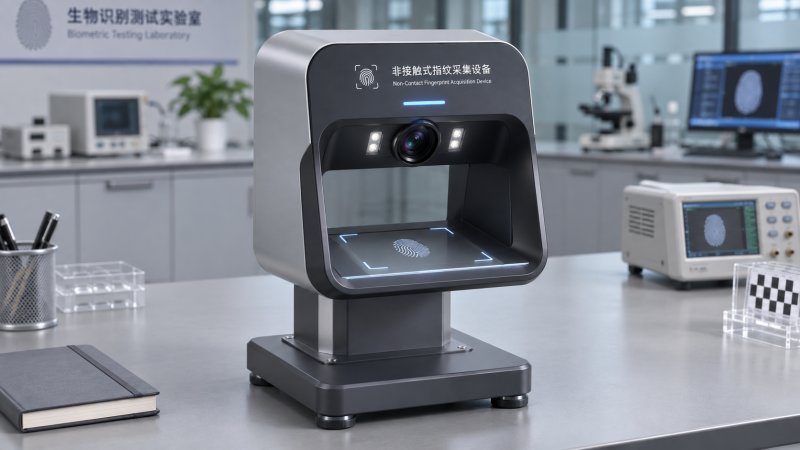
Minimum security expectations should address unique credentials, protected communications, authorized update mechanisms, vulnerability reporting, and a defined support period. Request evidence appropriate to the deployment rather than accepting “encrypted” as a complete answer. For biometric products, clarify where templates are stored, who can access them, and how deletion works.
Clarify which functions remain available without connectivity and how access events are reconciled after reconnection. A low unit price may conceal dependence on a service that is expensive or difficult to replace.
Compare landed and lifecycle costs on the same basis
Quote comparisons become misleading when one supplier includes testing, export packaging, and replacement parts while another excludes them. Normalize the specification and commercial terms before negotiating price.
Separate the comparison into product cost, qualification and inspection, freight and import charges, installation, software fees, maintenance, and likely recovery costs. Use supplier quotations and your own logistics assumptions rather than generic estimates. For heavy safes or assembled turnstiles, packaging dimensions, handling requirements, and installation access can materially change the delivered cost.
Specify the Incoterms rule, named place, and version, while separately addressing payment, title, acceptance, and warranty. Incoterms do not settle all of those issues. Include tooling ownership, spare-parts availability, replacement-part pricing, and responsibility for return freight or field repairs.
Also ask what warranty handling requires in practice. Returning a heavy security product internationally may be commercially impractical even when the warranty appears generous. An agreed local repair process, diagnostic procedure, and spare-parts package may matter more than the stated warranty duration.
Release orders against evidence, not assurances
Use qualification gates that correspond to financial exposure. Before a production deposit, resolve legal identity, factory responsibility, specifications, and compliance scope. Before authorizing volume production, approve representative samples and close material audit findings. Before shipment or the agreed payment milestone, review inspection results, configuration records, packing details, and required documentation.
Not every discrepancy requires rejecting a supplier. Missing paperwork may be correctable; an unexplained model mismatch needs technical review. Falsified certification evidence, refusal to permit agreed inspection, or undisclosed substitution of security-critical parts are stronger reasons to suspend the order.
Record unresolved issues with an owner, deadline, and acceptance condition. Do not convert a failed requirement into an informal promise merely to preserve the shipping date. If a deviation is accepted, document its technical impact and whether it changes compliance, installation suitability, warranty coverage, or price. That record gives procurement a defensible release decision and a usable reference if the delivered product differs from what was agreed.
Have questions about this sector analysis, or seeking best practices specific to your niche? Drop us a line below and let the senior consultants at MHLS assist you.
We respect your privacy. Your information is strictly confidential.
Recommended News
 Parcel Locker Network Pricing: Setup Costs, Fees and Contract TermsUnmanned Terminal FellowCompare parcel locker networks pricing, from setup costs and recurring fees to contract terms. Discover hidden charges and choose the right model.
 JR East Plans UWB Walk-Through Gates at 40 Stations in Spring 2028Access Control StrategistJR East plans UWB walk-through gates at 40 stations in spring 2028. Explore the rollout timeline and what suppliers should watch.
 Bank Vault Security Standards: UL and EN Ratings ExplainedVault Structural ArchitectExplore bank vault security standards and learn how UL 608 classes and EN 1143-1 grades differ, what they test, and how to verify certification before you buy.
 Mechanical Lock Hardware Prices: What Buyers Should Budget for Bulk OrdersMr. Gideon CrossMechanical lock hardware price is just the starting point. Discover what drives bulk-order costs and how to compare supplier quotes with confidence.
 IndexBox Forecasts Steady Global Security Keypad Market Growth Through 2035Dr. Valerius ThorneGlobal security keypad market growth is forecast at 3.3% annually through 2035. Explore the smart home and replacement trends shaping demand.
 Choosing an Infrared Safety Sensors Manufacturer: What Buyers Should CheckUnmanned Terminal FellowChoosing an infrared safety sensors manufacturer? Compare safety evidence, integration, environmental performance and lifecycle costs before you buy.
 Choosing a Security Material Testing Service: What to Check for Lock and Safe MaterialsProf. Elara SterlingChoose a security material testing service with confidence. Learn what to check for lock and safe materials, from attack methods and accreditation to reliable reports.
 How Precision Anti-Pick Lock Cylinders Resist ManipulationSecurity Metallurgy ExpertDiscover how precision anti-pick lock technology resists manipulation, and learn what to check when comparing security features, test evidence, and everyday reliability.
 Dermalog Joins NIST FastCAP Program for Contactless Fingerprint TestingProf. Elara SterlingDermalog joins the NIST FastCAP program for contactless fingerprint testing. Discover what this means for biometric identification and digital identity.
 Choosing Security Export Compliance Services: What Providers Should CoverMr. Gideon CrossSecurity export compliance services can help prevent costly delays. Discover what to look for in classification, licensing, screening, and documentation.
 European Security Compliance Standards for Safes: EN 1143-1 vs EN 14450Dr. Valerius ThorneExplore security compliance standards Europe buyers need to know. Compare EN 1143-1 and EN 14450 to choose the right safe with confidence.
 HID Global Acquires inepro ID to Expand RFID and BLE Access SolutionsUnmanned Terminal FellowHID Global acquires inepro ID to expand RFID and BLE access solutions for printers, smart lockers and shared devices. Explore what the deal could mean for your organization.