
Anti Spoofing Design for Locks: Core Detection Methods, Failure Risks, and Testing Priorities
Anti spoofing design for locks now sits at the center of physical security reliability. As biometric entry expands across homes, offices, parcel systems, and restricted facilities, the real question is no longer whether a lock can recognize a user, but whether it can reject a convincing fake.
That shift matters across the SHPS landscape, where smart locks, access control devices, protective doors, and connected locker networks must balance convenience with resistance to real attack methods. A weak sensor can undermine a strong lock body, just as a poor test plan can hide field risks until deployment.
Why anti spoofing design has become a front-line issue
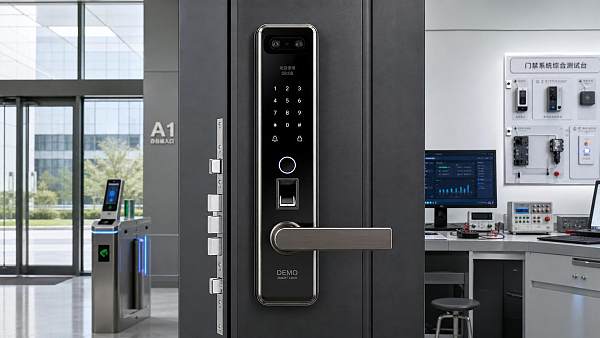
Biometric unlocking was once treated as a convenience feature. Today, it is part of the attack surface.
Fingerprint molds, lifted latent prints, high-resolution face images, video replay, and silicone replicas are widely discussed because they are practical, low-cost, and increasingly accessible.
In anti spoofing design for locks, the challenge is not just identifying a face or a finger. The system must determine whether the presented sample comes from a living, legitimate person under normal use conditions.
This is especially relevant in entrances with mixed traffic, shared access rights, remote administration, and limited onsite supervision. Smart apartment doors, office interiors, server rooms, logistics lockers, and managed properties all fall into that category.
From an industry perspective, anti spoofing design for locks also affects certification readiness, return rates, brand trust, insurance confidence, and procurement decisions. A lock that unlocks quickly but fails basic spoof resistance may still become a liability.
What anti spoofing design for locks actually includes
The term covers hardware sensing, signal processing, matching logic, decision thresholds, and response behavior after a suspicious attempt.
It is not limited to biometric algorithms. Sensor quality, optical path design, illumination control, firmware timing, tamper awareness, and fallback rules all influence the result.
A lock may include one or more of these layers:
- Liveness detection for fingerprints, faces, or veins
- Material analysis to detect silicone, gel, paper, or screen replay
- Depth or 3D structure checks for facial systems
- Texture analysis to distinguish natural skin from printed surfaces
- Behavioral rules, such as retry limits, abnormal sequence detection, or forced re-verification
In practical terms, anti spoofing design for locks should be understood as a system-level defense. No single detection trick is enough when deployment conditions vary.
Core detection methods used in modern lock platforms
Different lock categories use different combinations. The most common methods appear below.
Fingerprint liveness detection
This method looks for signs associated with living tissue. Depending on the sensor, it may analyze capacitance, sub-dermal patterns, pulse response, perspiration behavior, or dynamic skin conductivity.
Capacitive sensors can resist some printed or flat replicas, but advanced molds may still imitate enough surface detail to pass weak systems.
Optical and texture-based analysis
Optical systems inspect ridge clarity, reflectivity, micro-texture, and edge transitions. They try to detect materials that look fingerprint-like but do not behave like real skin under light.
This approach becomes more effective when paired with multispectral imaging rather than a single visible-light capture.
3D face and depth verification
For facial unlocking, depth mapping checks whether the presented face has real contour, distance variation, and structure. It helps block flat photos, tablet replay, and many printed masks.
Structured light and time-of-flight methods often perform better than simple RGB cameras in higher-risk installations.
Near-infrared and vein-based methods
Near-infrared imaging can reveal patterns beneath the skin surface. Vein recognition is harder to spoof with ordinary surface replicas because it depends on subcutaneous features, not only outer appearance.
This is one reason SHPS often treats liveness detection and near-infrared recognition as linked security topics rather than separate product features.
Challenge-response logic
Some systems ask for movement, angle change, blink response, or multi-step verification. The goal is to force a spoof sample into a dynamic situation where it becomes easier to expose.
This can improve resilience, though it also affects user flow and may not suit every high-throughput entrance.
Where failure risks usually appear
Most failures come from interaction between algorithm assumptions and real environments, not from a complete absence of anti spoofing logic.
A common mistake is treating spoof resistance as a software metric only. In field conditions, coating wear, lens contamination, moisture, user angle, and enclosure design can all change outcomes.
Another risk appears when biometric resistance is strong, but the surrounding system is weak. Remote app override, unsecured enrollment, poor log visibility, or exposed maintenance mode can cancel the value of anti spoofing design for locks.
Testing priorities that deserve more attention
A useful test program should reflect both attack realism and daily operating friction. One without the other creates misleading confidence.
Build a meaningful spoof sample set
Test with multiple fabrication materials, different image resolutions, varied skin conditions, and diverse replica quality. A narrow spoof set often produces inflated results.
Measure both security and usability
Spoof detection rate matters, but so do false reject rate, unlock latency, retry behavior, and recovery flow. Users who are blocked too often may shift to weaker access methods.
Include environmental stress conditions
Run tests under bright backlight, low light, wet fingers, dry fingers, dust, temperature variation, and partial contamination. Locks on exterior doors or parcel stations need this even more.
Check lifecycle consistency
A good result on day one is not enough. Re-test after wear, cleaning cycles, firmware updates, and power instability. Reliability drift often appears later.
Test the whole access path
Enrollment, credential reset, app-based remote release, emergency override, and audit logging should be reviewed alongside the sensor. This is where physical security and digital control actually meet.
How application context changes the design choice
Not every lock needs the same anti spoofing depth. Risk exposure, traffic pattern, and business consequence should shape the design target.
- Residential smart locks often need balanced liveness, fast response, and low false rejection.
- Office or coworking systems need stable performance across many enrolled users and repeated daily use.
- Financial, archive, and restricted infrastructure sites need stronger spoof resistance, tighter logging, and controlled fallback methods.
- Smart parcel lockers need resistance to both credential abuse and physical tamper, especially in unmanned outdoor deployments.
This is where SHPS context becomes useful. Anti spoofing design for locks cannot be separated from door construction, lock body security, IoT connectivity, compliance review, and deployment conditions.
A biometric front end on a poorly protected enclosure is incomplete. So is a strong lock body paired with weak liveness detection.
What to examine before comparing solutions
When evaluating anti spoofing design for locks, several questions usually reveal more than headline specifications.
- Which spoof types were tested, and how realistic were they?
- Was the data collected in lab conditions only, or in installation-like environments?
- What happens after repeated suspicious attempts?
- Does the system log anti spoofing events in a usable way?
- How does the lock behave during network loss, low battery, or sensor contamination?
- Are firmware updates likely to change decision thresholds or matching behavior?
These checks support more grounded comparison across biometric locks, access terminals, and connected entry systems. They also help separate marketing claims from operational evidence.
A practical next step for stronger deployment decisions
The most useful next move is to map spoof risk against actual site conditions. That means reviewing attack exposure, user volume, fallback paths, maintenance realities, and required audit depth together.
From there, anti spoofing design for locks can be judged as part of a full security stack, not a standalone feature. The stronger decisions usually come from combining test evidence, environmental fit, and system-level consistency before rollout.
In a market shaped by connected hardware and growing scrutiny, that approach offers a clearer basis for validation, comparison, and long-term risk control.
Have questions about this sector analysis, or seeking best practices specific to your niche? Drop us a line below and let the senior consultants at MHLS assist you.
We respect your privacy. Your information is strictly confidential.
Recommended News
 Physical Security System Engineering: From Risk Assessment to System DesignUnmanned Terminal FellowExplore physical security system engineering, from risk assessment to integrated design, procurement and testing. Build a safer, more resilient facility.
 Apple Home Collection Smart Lock and Other Accessories Open for Preorder November 13Biometric Auth ScientistApple Home Collection preorders open November 13, 2026. Explore the LG smart lock’s Matter and Aliro support and what buyers should verify before ordering.
 Choosing Servo-Driven Flap Barriers: Throughput, Safety and Access ControlAccess Control StrategistServo-driven flap barriers can balance throughput, safety and access control. Discover how to compare lanes, test performance and choose with confidence.
 Parcel Locker Network Pricing: Setup Costs, Fees and Contract TermsUnmanned Terminal FellowCompare parcel locker networks pricing, from setup costs and recurring fees to contract terms. Discover hidden charges and choose the right model.
 JR East Plans UWB Walk-Through Gates at 40 Stations in Spring 2028Access Control StrategistJR East plans UWB walk-through gates at 40 stations in spring 2028. Explore the rollout timeline and what suppliers should watch.
 Bank Vault Security Standards: UL and EN Ratings ExplainedVault Structural ArchitectExplore bank vault security standards and learn how UL 608 classes and EN 1143-1 grades differ, what they test, and how to verify certification before you buy.
 Mechanical Lock Hardware Prices: What Buyers Should Budget for Bulk OrdersMr. Gideon CrossMechanical lock hardware price is just the starting point. Discover what drives bulk-order costs and how to compare supplier quotes with confidence.
 IndexBox Forecasts Steady Global Security Keypad Market Growth Through 2035Dr. Valerius ThorneGlobal security keypad market growth is forecast at 3.3% annually through 2035. Explore the smart home and replacement trends shaping demand.
 Choosing an Infrared Safety Sensors Manufacturer: What Buyers Should CheckUnmanned Terminal FellowChoosing an infrared safety sensors manufacturer? Compare safety evidence, integration, environmental performance and lifecycle costs before you buy.
 Choosing a Security Material Testing Service: What to Check for Lock and Safe MaterialsProf. Elara SterlingChoose a security material testing service with confidence. Learn what to check for lock and safe materials, from attack methods and accreditation to reliable reports.
 How Precision Anti-Pick Lock Cylinders Resist ManipulationSecurity Metallurgy ExpertDiscover how precision anti-pick lock technology resists manipulation, and learn what to check when comparing security features, test evidence, and everyday reliability.
 Dermalog Joins NIST FastCAP Program for Contactless Fingerprint TestingProf. Elara SterlingDermalog joins the NIST FastCAP program for contactless fingerprint testing. Discover what this means for biometric identification and digital identity.











