
Biometric Anti-Spoofing Design Explained: Detection Methods and System Limits
Biometric anti-spoofing design has moved from a niche algorithm topic to a practical security requirement across locks, access control, parcel lockers, and protected building infrastructure.
The reason is straightforward. Biometric convenience is attractive, but every fingerprint reader or face terminal creates a new attack surface if spoof resistance is weak.
For physical security projects, the real question is not whether biometrics work. It is how reliably a system can separate a real person from a fake presentation under daily operating conditions.
Why anti-spoofing design matters in deployed systems
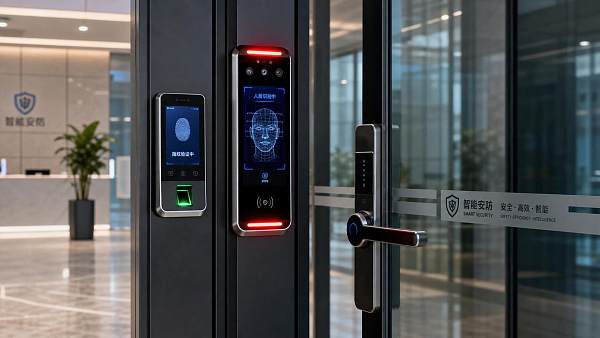
A biometric sensor can be accurate in a lab and still fail in the field. Lighting changes, dirty fingers, reflective masks, and rushed traffic all affect risk and performance.
That is why biometric anti-spoofing design should be viewed as a system discipline, not only a feature inside one sensor module.
Across the SHPS landscape, this matters in several places. Smart door locks need resistance against low-cost fake fingerprints. Turnstiles need fast decisions without creating unsafe queues. Parcel lockers need trusted identity checks without frustrating pickup flows.
In higher-security environments, anti-spoofing also affects insurance confidence, audit readiness, incident review, and compliance discussions, especially when biometric entry protects assets or restricted zones.
What biometric anti-spoofing design actually includes
At a basic level, biometric anti-spoofing design aims to detect presentation attacks. These are attempts to fool a biometric device using replicas, recordings, masks, molds, prints, or synthetic media.
A strong design usually combines three layers. The first is sensor-level capture. The second is liveness or authenticity analysis. The third is decision logic tied to access rules.
This is important because no single signal is sufficient in every case. A fingerprint may look real in texture but fail in pulse response. A face may match shape but fail in depth analysis.
Common biometric modalities involved
- Fingerprint recognition using capacitive, optical, ultrasonic, or multispectral capture.
- Face recognition using RGB, infrared, structured light, or time-of-flight sensing.
- Vein recognition using near-infrared imaging of subcutaneous patterns.
- Multimodal combinations that compare two or more biometric signals before granting access.
Each modality has a different spoofing profile, cost structure, user experience, and environmental sensitivity. That is why direct comparison by headline accuracy is rarely enough.
Detection methods used in modern systems
The phrase biometric anti-spoofing design often sounds abstract, but most deployed methods fall into a manageable set of technical approaches.
Physical property detection
Some systems check measurable human traits such as conductivity, temperature, perspiration, blood flow, skin elasticity, or sub-surface pattern structure.
This approach can block simple replicas effectively. It is especially relevant in fingerprint smart locks and compact door-entry devices.
Image texture and pattern analysis
Algorithms inspect reflectance, pore detail, edge noise, print artifacts, moire effects, and micro-texture inconsistencies that often appear in fake samples.
This method is common because it can work with existing sensors. Its weakness is that better forgeries and better generative media keep raising the difficulty.
Depth and three-dimensional verification
Face systems increasingly use structured light, stereo vision, or time-of-flight sensing to check whether the target is a real three-dimensional face.
This is more robust than a 2D camera alone. It is also more expensive and can be affected by outdoor light, glasses, and installation angle.
Challenge-response liveness checks
Some terminals ask the user to blink, turn, smile, or follow motion prompts. The goal is to prove live interaction during capture.
This can improve spoof resistance, but it also slows throughput and may not suit high-flow gates, shared entrances, or unattended parcel operations.
Multispectral and fused detection
Higher-end systems combine visible, infrared, and sub-surface data. Others fuse biometrics with PINs, cards, mobile credentials, or behavioral rules.
From a project perspective, this layered approach usually gives the best balance between resistance and operational continuity.
Where system limits still remain
No biometric anti-spoofing design is absolute. The practical limit depends on attack sophistication, environment control, sensor quality, software tuning, and maintenance discipline.
This is where many procurement decisions become too optimistic. Vendor claims often describe peak performance against known attack samples, not real mixed conditions.
In other words, anti-spoofing claims should be treated as conditional evidence. They are useful, but only when the test conditions resemble the intended operating environment.
How this affects physical security applications
The same biometric anti-spoofing design does not fit every asset or entrance. Risk, user flow, supervision level, and fallback options change the correct design choice.
Smart locks and residential or small commercial entry
Compact devices face tight cost and power limits. They need enough spoof resistance to stop casual attacks without causing frequent lockout events.
In these cases, fingerprint liveness plus a secure mechanical or digital fallback often makes more sense than overcomplicated facial systems.
Turnstiles, speed gates, and managed building access
High throughput changes the equation. Detection must be fast, reliable, and integrated with anti-tailgating logic, door states, and alarm policy.
A face terminal with strong liveness detection may still fail the site if it slows morning entry or increases safety intervention at peak flow.
Safes, vault-related access, and restricted assets
Here the tolerance for spoofing is low, but so is the tolerance for mistaken denial during legitimate use. That often pushes designs toward multimodal verification and detailed event logging.
Smart parcel lockers and unattended collection points
These systems need frictionless identity checks in exposed environments. Lighting variability, device vandalism, and network interruptions matter almost as much as spoof resistance.
What to examine before specification or procurement
A useful review goes beyond the match rate headline. The key is to connect biometric anti-spoofing design to the actual access workflow, not to a standalone product brochure.
- Check which spoof types were tested, including prints, silicone molds, video replay, masks, and synthetic face media.
- Review whether the test was supervised, indoor, outdoor, dry, humid, or high-traffic.
- Confirm how false acceptance and false rejection shift when anti-spoofing thresholds are raised.
- Examine fallback paths such as card, PIN, mechanical override, remote release, or dual authentication.
- Ask how firmware updates, model retraining, and new attack samples are handled after installation.
- Verify integration with access control logs, alarms, door sensors, and incident reporting tools.
It is also worth checking whether the biometric layer is solving the right problem. Some sites gain more from stronger door hardware, better cylinder resistance, or improved vestibule control.
SHPS often frames this broader point well. Physical security performance usually comes from combined design choices, not from one high-profile technology alone.
A practical way to move forward
Biometric anti-spoofing design should be judged as part of a real operating system: sensor, software, user behavior, physical hardware, and site conditions working together.
The most useful next step is to map each entrance or asset by threat level, traffic pattern, environmental exposure, and tolerance for delay or manual override.
From there, compare vendors on tested attack coverage, deployment fit, update policy, and integration depth rather than on convenience claims alone.
That approach creates a clearer basis for specification, pilot testing, and phased rollout, especially in projects where biometrics must support both security credibility and smooth daily use.
Have questions about this sector analysis, or seeking best practices specific to your niche? Drop us a line below and let the senior consultants at MHLS assist you.
We respect your privacy. Your information is strictly confidential.
Recommended News
 Parcel Locker Network Pricing: Setup Costs, Fees and Contract TermsUnmanned Terminal FellowCompare parcel locker networks pricing, from setup costs and recurring fees to contract terms. Discover hidden charges and choose the right model.
 JR East Plans UWB Walk-Through Gates at 40 Stations in Spring 2028Access Control StrategistJR East plans UWB walk-through gates at 40 stations in spring 2028. Explore the rollout timeline and what suppliers should watch.
 Bank Vault Security Standards: UL and EN Ratings ExplainedVault Structural ArchitectExplore bank vault security standards and learn how UL 608 classes and EN 1143-1 grades differ, what they test, and how to verify certification before you buy.
 Mechanical Lock Hardware Prices: What Buyers Should Budget for Bulk OrdersMr. Gideon CrossMechanical lock hardware price is just the starting point. Discover what drives bulk-order costs and how to compare supplier quotes with confidence.
 IndexBox Forecasts Steady Global Security Keypad Market Growth Through 2035Dr. Valerius ThorneGlobal security keypad market growth is forecast at 3.3% annually through 2035. Explore the smart home and replacement trends shaping demand.
 Choosing an Infrared Safety Sensors Manufacturer: What Buyers Should CheckUnmanned Terminal FellowChoosing an infrared safety sensors manufacturer? Compare safety evidence, integration, environmental performance and lifecycle costs before you buy.
 Choosing a Security Material Testing Service: What to Check for Lock and Safe MaterialsProf. Elara SterlingChoose a security material testing service with confidence. Learn what to check for lock and safe materials, from attack methods and accreditation to reliable reports.
 How Precision Anti-Pick Lock Cylinders Resist ManipulationSecurity Metallurgy ExpertDiscover how precision anti-pick lock technology resists manipulation, and learn what to check when comparing security features, test evidence, and everyday reliability.
 Dermalog Joins NIST FastCAP Program for Contactless Fingerprint TestingProf. Elara SterlingDermalog joins the NIST FastCAP program for contactless fingerprint testing. Discover what this means for biometric identification and digital identity.
 Choosing Security Export Compliance Services: What Providers Should CoverMr. Gideon CrossSecurity export compliance services can help prevent costly delays. Discover what to look for in classification, licensing, screening, and documentation.
 European Security Compliance Standards for Safes: EN 1143-1 vs EN 14450Dr. Valerius ThorneExplore security compliance standards Europe buyers need to know. Compare EN 1143-1 and EN 14450 to choose the right safe with confidence.
 HID Global Acquires inepro ID to Expand RFID and BLE Access SolutionsUnmanned Terminal FellowHID Global acquires inepro ID to expand RFID and BLE access solutions for printers, smart lockers and shared devices. Explore what the deal could mean for your organization.











