
Biometric Anti-Spoofing Design Explained: How Liveness Detection Stops Fake Access
Biometric Anti-Spoofing Design Explained: How Liveness Detection Stops Fake Access
Biometric anti-spoofing design has become a core checkpoint in access security reviews.
As biometric credentials move into locks, gates, safes, and restricted entries, fake presentation attacks are rising too.
That is why liveness detection now matters as much as matching accuracy.
A system may recognize a face or fingerprint correctly, yet still fail if it accepts a replica.
This article breaks down how biometric anti-spoofing design works, what threats it addresses, and how to evaluate it in practice.
Why Biometric Anti-Spoofing Design Matters
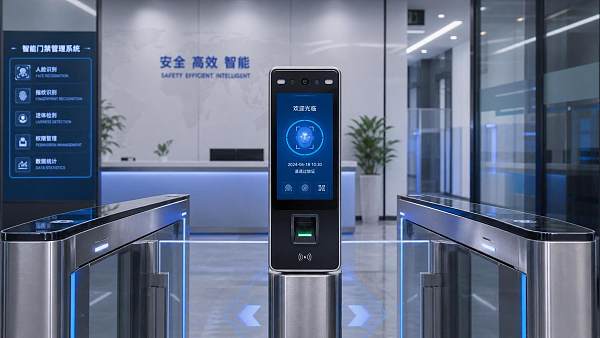
A biometric system usually answers one question first: does this sample match an enrolled identity?
Biometric anti-spoofing design adds a second question: is this sample coming from a real, live person?
That second check blocks presentation attacks using photos, masks, lifted prints, molded fingers, or synthetic signals.
In physical security, the risk is concrete.
A spoofed biometric can open a smart lock, release a parcel locker, or grant entry through a turnstile.
For high-value areas, that weakness becomes a business, compliance, and insurance problem.
More importantly, biometric anti-spoofing design is not a single feature.
It is a layered design approach involving sensors, signal analysis, challenge logic, decision thresholds, and environmental adaptation.
What Counts as a Spoofing Attack
The most common attacks depend on the biometric modality.
Fingerprint Systems
Attackers may use silicone molds, gelatin casts, latex films, or latent print transfers.
Some try conductive materials to mimic skin response on capacitive sensors.
Face Recognition Systems
Basic attacks include printed photos and screen replays.
More advanced attempts use 3D masks, deepfake video streams, or infrared pattern manipulation.
Vein and Near-Infrared Systems
These are harder to spoof, but not impossible.
Attackers may attempt printed vein images, artificial hands, or optical interference.
From a technical review angle, the attack taxonomy matters.
Biometric anti-spoofing design should be tested against likely attack materials, not just ideal lab inputs.
How Liveness Detection Actually Works
Liveness detection checks whether the presented biometric carries signs of real biological activity.
There are two broad methods: passive detection and active detection.
Passive Liveness Detection
Passive methods analyze natural signals without asking the user to do anything special.
For faces, that may include skin texture, reflectance, depth cues, micro-movements, and light response.
For fingerprints, it may include pore detail, perspiration patterns, elasticity, ridge deformation, and sub-surface response.
Passive methods improve convenience, but weak models can be easier to bypass.
Active Liveness Detection
Active methods request a reaction or capture a dynamic change.
A face system may ask for blinking, head turning, or gaze shifts.
A vein system may verify blood-flow-related absorption behavior under near-infrared illumination.
Active checks often strengthen biometric anti-spoofing design, but may slow throughput.
Multi-Signal Fusion
The strongest systems combine several signals instead of trusting one indicator.
That can include depth sensing, infrared imaging, texture analysis, thermal response, and behavioral timing.
This layered biometric anti-spoofing design is harder to fool because an attacker must defeat several checks at once.
Sensor Design and Decision Logic
Liveness detection is only as good as the sensor and the decision engine behind it.
In real deployments, hardware limitations often shape security performance more than algorithms alone.
Sensor Factors
- Resolution quality affects texture detail and artifact detection.
- Spectral range matters for infrared, vein, and skin-response analysis.
- Capture speed affects motion analysis and user throughput.
- Noise control matters under glare, dust, moisture, and outdoor lighting.
Algorithm Factors
- Training data should include diverse spoof materials and real environmental variation.
- Threshold tuning should balance false rejects and false accepts by scenario.
- Model updates should address new attack patterns without destabilizing field performance.
- Fallback logic should not create an easy bypass path.
This is where many products look strong in demos but weaker in deployment.
If the spoof score is poorly calibrated, the device may either frustrate valid users or accept crafted artifacts.
How to Evaluate Real-World Reliability
A technical review should go beyond vendor claims such as “AI liveness” or “high anti-fake performance.”
The better question is how the biometric anti-spoofing design behaves under realistic pressure.
Key Evaluation Points
- Check which spoof types were tested, and which were not.
- Ask whether testing covered replay attacks, 3D artifacts, and mixed-material spoofs.
- Review performance under low light, strong sunlight, dry skin, wet fingers, and dusty surfaces.
- Verify throughput impact for doors, turnstiles, and shift-change traffic peaks.
- Confirm whether firmware updates can improve anti-spoofing without replacing hardware.
Useful Metrics
Look for presentation attack detection performance, false acceptance trends, and nuisance rejection rates.
Also examine repeatability across devices, not just a best-case reference sample.
Standards-based evaluation is especially useful here.
ISO/IEC 30107 is often referenced for presentation attack detection concepts and testing structure.
Even when reports are not fully public, the test method says a lot about product maturity.
Application Differences Across Physical Security
The right biometric anti-spoofing design depends on the use case.
Smart Locks and Residential Entry
Convenience matters, so passive liveness and fast response are often prioritized.
Still, spoof resistance cannot be weak because unattended doors invite trial attacks.
Turnstiles and Commercial Access
High-speed people flow changes the design balance.
Liveness checks must be strong, but they cannot create queues or unsafe crowding.
Safes, Vault Areas, and Critical Rooms
Here, higher friction is acceptable.
Multi-factor authentication and stronger active liveness detection are usually justified.
Parcel Lockers and Shared Infrastructure
Outdoor conditions, screen glare, gloves, and network variability all affect performance.
In these environments, biometric anti-spoofing design must tolerate rough usage without opening spoof gaps.
Common Procurement Mistakes
Several mistakes appear again and again during product comparison.
- Buying on match speed alone, while ignoring spoof resistance.
- Accepting vague marketing claims without attack-type evidence.
- Assuming one biometric modality fits every security layer.
- Ignoring maintenance, recalibration, and firmware update policy.
- Overlooking how environmental stress changes liveness performance.
In practice, the better choice is often the one with balanced security, stable throughput, and transparent testing data.
What Strong Design Looks Like
A strong biometric anti-spoofing design usually shows several traits at once.
- It uses sensor data that is difficult to replicate with low-cost artifacts.
- It combines liveness signals instead of relying on a single clue.
- It documents testing against realistic presentation attacks.
- It keeps secure performance under lighting, temperature, and usage variation.
- It supports update paths as spoofing methods evolve.
That combination matters more than any isolated feature label.
In other words, good biometric anti-spoofing design is not only about detection.
It is about consistent risk control across the full access workflow.
Final Takeaway
As biometric access expands across physical security, liveness detection has moved from optional enhancement to design requirement.
The real value of biometric anti-spoofing design lies in stopping fake access before identity matching even matters.
When comparing systems, focus on attack coverage, sensor quality, threshold logic, standards alignment, and field reliability.
That approach leads to better security decisions for locks, turnstiles, safes, lockers, and controlled entry infrastructure.
If evaluation starts with realistic spoof risk, procurement choices become clearer, safer, and much easier to defend.
Have questions about this sector analysis, or seeking best practices specific to your niche? Drop us a line below and let the senior consultants at MHLS assist you.
We respect your privacy. Your information is strictly confidential.
Recommended News
 Physical Security System Engineering: From Risk Assessment to System DesignUnmanned Terminal FellowExplore physical security system engineering, from risk assessment to integrated design, procurement and testing. Build a safer, more resilient facility.
 Apple Home Collection Smart Lock and Other Accessories Open for Preorder November 13Biometric Auth ScientistApple Home Collection preorders open November 13, 2026. Explore the LG smart lock’s Matter and Aliro support and what buyers should verify before ordering.
 Choosing Servo-Driven Flap Barriers: Throughput, Safety and Access ControlAccess Control StrategistServo-driven flap barriers can balance throughput, safety and access control. Discover how to compare lanes, test performance and choose with confidence.
 Parcel Locker Network Pricing: Setup Costs, Fees and Contract TermsUnmanned Terminal FellowCompare parcel locker networks pricing, from setup costs and recurring fees to contract terms. Discover hidden charges and choose the right model.
 JR East Plans UWB Walk-Through Gates at 40 Stations in Spring 2028Access Control StrategistJR East plans UWB walk-through gates at 40 stations in spring 2028. Explore the rollout timeline and what suppliers should watch.
 Bank Vault Security Standards: UL and EN Ratings ExplainedVault Structural ArchitectExplore bank vault security standards and learn how UL 608 classes and EN 1143-1 grades differ, what they test, and how to verify certification before you buy.
 Mechanical Lock Hardware Prices: What Buyers Should Budget for Bulk OrdersMr. Gideon CrossMechanical lock hardware price is just the starting point. Discover what drives bulk-order costs and how to compare supplier quotes with confidence.
 IndexBox Forecasts Steady Global Security Keypad Market Growth Through 2035Dr. Valerius ThorneGlobal security keypad market growth is forecast at 3.3% annually through 2035. Explore the smart home and replacement trends shaping demand.
 Choosing an Infrared Safety Sensors Manufacturer: What Buyers Should CheckUnmanned Terminal FellowChoosing an infrared safety sensors manufacturer? Compare safety evidence, integration, environmental performance and lifecycle costs before you buy.
 Choosing a Security Material Testing Service: What to Check for Lock and Safe MaterialsProf. Elara SterlingChoose a security material testing service with confidence. Learn what to check for lock and safe materials, from attack methods and accreditation to reliable reports.
 How Precision Anti-Pick Lock Cylinders Resist ManipulationSecurity Metallurgy ExpertDiscover how precision anti-pick lock technology resists manipulation, and learn what to check when comparing security features, test evidence, and everyday reliability.
 Dermalog Joins NIST FastCAP Program for Contactless Fingerprint TestingProf. Elara SterlingDermalog joins the NIST FastCAP program for contactless fingerprint testing. Discover what this means for biometric identification and digital identity.











