
Biometric Anti-Spoofing for Access Control: Liveness Detection Methods Compared
Biometric anti-spoofing for access control is no longer a niche feature reserved for flagship devices. In higher-risk entrances, it has become a practical test of whether a biometric system can distinguish a real person from a presentation attack.
That shift matters across smart locks, turnstiles, secure doors, vault anterooms, parcel locker networks, and integrated building access platforms. A fast match is useful, but a fast false acceptance can turn convenience into a physical security gap.
For technical evaluation, liveness detection sits between algorithm performance and field reliability. It affects spoof resistance, user friction, sensor cost, compliance readiness, and the credibility of security claims in procurement review.
Why liveness detection now carries more weight
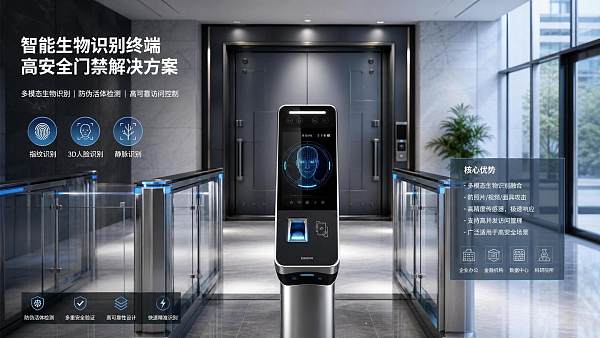
Physical security systems are becoming more connected and more exposed. Biometric readers now appear at residential doors, commercial entrances, logistics cabinets, data rooms, and restricted industrial zones.
At the same time, attack tools are more accessible. High-resolution prints, silicone casts, replayed face videos, 3D masks, and synthetic image generation have lowered the barrier for presentation attacks.
This is where biometric anti-spoofing for access control changes the conversation. It moves evaluation away from simple recognition accuracy and toward resistance under adversarial conditions.
In the SHPS landscape, that matters because access hardware is rarely assessed in isolation. A biometric lock, speed gate, or access terminal must work within a wider security chain that includes door structures, lock bodies, alarms, network control, and incident response.
What biometric anti-spoofing for access control actually means
In simple terms, anti-spoofing measures whether the presented trait comes from a live human source rather than an artifact. Liveness detection is the mechanism used to make that judgment.
The distinction is important. A biometric engine may match a face or fingerprint correctly, yet still accept a fake if no liveness layer challenges the input.
Most systems use one of two approaches. Passive liveness evaluates the captured signal without requiring user action. Active liveness asks for interaction, such as blinking, head movement, pressure change, or multi-angle capture.
Neither approach is universally best. The right choice depends on throughput targets, threat level, environmental stability, and the tolerance for added user steps.
How the main methods compare
Different biometric modalities rely on different physiological signals. That is why biometric anti-spoofing for access control should be compared by attack surface, not by marketing labels alone.
Fingerprint liveness
Fingerprint systems typically use capacitance, pulse response, perspiration patterns, skin deformation, temperature, or sub-dermal imaging. More advanced designs combine several indicators.
Their strength is mature hardware availability and compact integration into smart locks and door readers. Their weakness is exposure to molded replicas when sensing depth is limited.
Face liveness
Face systems may use RGB texture analysis, blink detection, challenge response, depth sensing, structured light, time-of-flight, or near-infrared imaging. Higher-end devices combine 2D and 3D signals.
Face recognition suits fast-moving entrances and touchless operation. However, simple camera-only implementations are more exposed to replay attacks and image-based spoofing under poor lighting.
Vein-based liveness
Finger vein and palm vein systems rely on near-infrared imaging of subcutaneous vascular patterns. Because the target pattern is internal, spoofing is usually harder than with surface traits.
This makes vein recognition attractive for higher-security doors, financial areas, and controlled internal spaces. The tradeoff is greater hardware cost, more specific alignment needs, and less familiarity in some projects.
What deserves closer scrutiny in technical evaluation
Claims around biometric anti-spoofing for access control often sound stronger than the available evidence. A useful review starts by separating demo success from repeatable performance.
The first question is attack coverage. A vendor should clarify which presentation attacks were tested, such as printed faces, OLED replay, 3D masks, gel fingerprints, or lifted latent prints.
The second question is threshold behavior. Strong anti-spoofing can reduce false acceptance, but poor tuning may raise false rejection and slow entry during peak traffic.
The third question is environmental resilience. Camera-based liveness may change under backlight, night entry, reflective surfaces, or outdoor heat. Contact sensors may drift with dry skin, dust, or wear.
The fourth question is system architecture. On-device processing improves latency and privacy, while cloud dependence may complicate uptime, cybersecurity controls, and restricted-site deployment.
- Look for published test protocols rather than generic statements about “AI security.”
- Check whether liveness stays active in fallback modes or only in premium enrollment paths.
- Confirm how the device logs spoof attempts for audit and incident investigation.
- Review firmware update policy, because spoof resistance can degrade as attack methods evolve.
Business fit depends on the entrance, not only the sensor
A biometric reader is part of an operational environment. The right liveness method for a residential smart lock may be wrong for a speed gate, a secure records room, or a parcel locker cluster.
In lower-friction residential and office applications, fingerprint or 3D face systems often balance convenience and adequate protection. In high-value storage or restricted internal zones, stronger anti-spoofing justifies more cost.
For turnstiles and speed gates, throughput becomes critical. Active prompts that delay passage may improve liveness assurance, yet they can also disrupt people flow and create tailgating pressure.
For smart parcel lockers, the threat model is different. The concern may be account takeover, pickup fraud, or unattended outdoor exposure, so biometric anti-spoofing for access control should be assessed alongside mobile identity and remote audit features.
This broader view aligns with how SHPS frames physical security. Biometrics are meaningful when connected to door resistance, lock reliability, access logs, alarm linkage, and deployment discipline.
Where standards, compliance, and integration come into play
Not every project needs the same certification path, but compliance readiness still matters. Security buyers increasingly ask for traceable test evidence, data handling clarity, and device behavior under abnormal conditions.
That makes biometric anti-spoofing for access control part of a larger due diligence process. Evaluation should include template protection, encrypted communication, edge storage policy, and compatibility with access control software.
Integration questions are often underestimated. A strong liveness engine may still create deployment friction if it cannot synchronize with turnstile controllers, elevator permissions, visitor systems, or emergency override logic.
In export-oriented hardware programs, documentation quality also matters. Clear reporting on spoof testing, environmental limits, and update cycles can influence trust just as much as raw biometric performance.
A practical way to compare options
A useful comparison starts with the site’s real exposure, not the vendor’s strongest demo case. Entrances protecting financial assets, controlled inventory, personal data, or restricted operations deserve tighter spoof resistance criteria.
Then map that exposure against user flow, environmental conditions, and fallback procedures. A system that performs well in a clean lab may struggle in dusty loading zones, bright lobbies, or mixed indoor-outdoor transition points.
From there, compare methods with a short decision framework:
- What attack types are realistic at this entrance?
- How much delay is acceptable per authentication event?
- What evidence supports the liveness claim under field conditions?
- How does the reader interact with the surrounding mechanical and electronic security layer?
- What happens during network loss, sensor contamination, or emergency release?
That process usually reveals whether a lower-cost fingerprint device is enough, whether 3D face is a better fit for flow control, or whether vein recognition is justified by asset value and attack tolerance.
The most effective next step is to build a comparison matrix around threat level, liveness method, environmental fit, integration burden, and documented test evidence. That turns biometric anti-spoofing for access control from a marketing checkbox into a measurable selection standard.
From there, field validation becomes easier to structure. A short pilot with realistic spoof scenarios, entry volume, and exception handling will usually say more than a long feature sheet.
Have questions about this sector analysis, or seeking best practices specific to your niche? Drop us a line below and let the senior consultants at MHLS assist you.
We respect your privacy. Your information is strictly confidential.
Recommended News
 Physical Security Infrastructure Cost: Budgeting for Installation and MaintenanceUnmanned Terminal FellowUnderstand physical security infrastructure cost and build a smarter budget for installation, maintenance, and long-term ownership.
 Financial Facility Security: Choosing Vault Doors for Bank BranchesVault Structural ArchitectStrengthen financial facility security with the right bank vault door. Explore certification, installation, locking controls and maintenance before you buy.
 MACO Acquires Majority Stake in Fingerprint Access Provider ekeyProf. Elara SterlingMACO acquires a majority stake in ekey, bringing fingerprint access and door hardware closer together. Discover what the deal could mean for smart buildings.
 Physical Security System Engineering: From Risk Assessment to System DesignUnmanned Terminal FellowExplore physical security system engineering, from risk assessment to integrated design, procurement and testing. Build a safer, more resilient facility.
 Apple Home Collection Smart Lock and Other Accessories Open for Preorder November 13Biometric Auth ScientistApple Home Collection preorders open November 13, 2026. Explore the LG smart lock’s Matter and Aliro support and what buyers should verify before ordering.
 Choosing Servo-Driven Flap Barriers: Throughput, Safety and Access ControlAccess Control StrategistServo-driven flap barriers can balance throughput, safety and access control. Discover how to compare lanes, test performance and choose with confidence.
 Parcel Locker Network Pricing: Setup Costs, Fees and Contract TermsUnmanned Terminal FellowCompare parcel locker networks pricing, from setup costs and recurring fees to contract terms. Discover hidden charges and choose the right model.
 JR East Plans UWB Walk-Through Gates at 40 Stations in Spring 2028Access Control StrategistJR East plans UWB walk-through gates at 40 stations in spring 2028. Explore the rollout timeline and what suppliers should watch.
 Bank Vault Security Standards: UL and EN Ratings ExplainedVault Structural ArchitectExplore bank vault security standards and learn how UL 608 classes and EN 1143-1 grades differ, what they test, and how to verify certification before you buy.
 Mechanical Lock Hardware Prices: What Buyers Should Budget for Bulk OrdersMr. Gideon CrossMechanical lock hardware price is just the starting point. Discover what drives bulk-order costs and how to compare supplier quotes with confidence.
 IndexBox Forecasts Steady Global Security Keypad Market Growth Through 2035Dr. Valerius ThorneGlobal security keypad market growth is forecast at 3.3% annually through 2035. Explore the smart home and replacement trends shaping demand.
 Choosing an Infrared Safety Sensors Manufacturer: What Buyers Should CheckUnmanned Terminal FellowChoosing an infrared safety sensors manufacturer? Compare safety evidence, integration, environmental performance and lifecycle costs before you buy.











