
How Fast Is Near-Infrared Vein Recognition? Speed Factors, Accuracy, and Use Cases
Near-infrared vein recognition is often discussed as a high-security biometric, but speed matters as much as security in real deployments.
A fast unlock or access decision can improve flow, reduce queue pressure, and support better user acceptance across doors, lockers, safes, and controlled entry points.
At the same time, near-infrared vein recognition speed cannot be judged by headline milliseconds alone.
Recognition time depends on imaging quality, algorithm design, template matching, spoof resistance, hardware stability, and how the biometric module interacts with the wider access system.
What near-infrared vein recognition is actually measuring
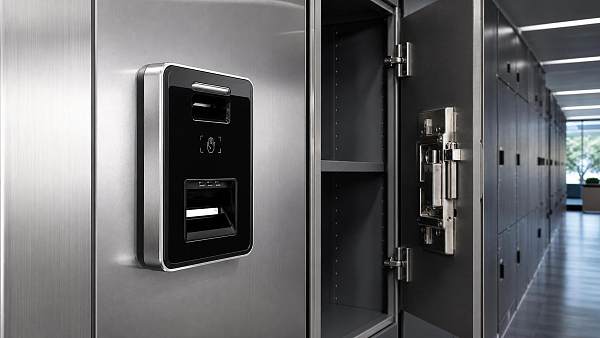
Near-infrared vein recognition captures subcutaneous vein patterns using light that penetrates the skin and highlights blood vessel structures.
Because the pattern is internal, it is usually harder to copy than surface biometrics.
This is one reason it appears in higher-trust physical security environments.
In practice, the process includes image acquisition, feature extraction, template comparison, and final decision output.
Each step contributes to near-infrared vein recognition speed, and each step can introduce trade-offs.
A very fast capture is not helpful if it produces unstable images.
A very strict matching threshold can improve confidence, but it may extend processing time or increase retries.
How fast is it in real systems
Vendors often present recognition in fractions of a second, typically from about 0.3 to 1.5 seconds under controlled conditions.
Real-world performance is usually wider than that range.
A realistic evaluation should separate three timings.
- User positioning time, which includes hand placement and alignment.
- Sensor and algorithm time, which covers capture, enhancement, and matching.
- System response time, including lock actuation, network calls, and event logging.
This distinction matters for access control, smart locks, and parcel locker interfaces.
A biometric engine may be fast, while the overall opening event feels slow because of relay delay, cloud verification, or gate control logic.
That is why near-infrared vein recognition speed should be measured at the workflow level, not only at the algorithm level.
A practical timing view
The main factors behind near-infrared vein recognition speed
Sensor quality is the first major variable.
A stable near-infrared light source, good optical design, and strong noise control reduce recapture events.
Environmental conditions also matter.
Temperature, ambient light leakage, skin condition, circulation differences, and placement angle can all influence capture quality.
Algorithm and matching strategy
Near-infrared vein recognition speed depends heavily on whether the system uses one-to-one verification or one-to-many identification.
One-to-one verification is usually faster.
The system compares the presented biometric with a claimed identity or stored local credential.
One-to-many identification searches a larger template set and can slow down as enrollment scale grows.
Database indexing and processor capability then become more important.
Liveness and anti-spoof controls
Security systems rarely evaluate speed in isolation.
Liveness detection, blood flow checks, or multi-signal validation may add milliseconds, but they often reduce spoofing risk significantly.
For high-security doors, vault-related controls, and sensitive internal zones, that trade-off is often justified.
Integration architecture
A standalone biometric lock can feel faster than a networked system because it avoids extra communication layers.
By contrast, a building access platform may require controller validation, time schedule checks, alarm linkage, and audit recording.
Those steps support compliance and traceability, but they affect perceived speed.
Why speed cannot be separated from accuracy
The real question is not simply how fast near-infrared vein recognition speed can be.
The better question is how fast it remains while preserving low false acceptance and manageable false rejection rates.
In physical security, a fast but unreliable match can create more operational friction than a slightly slower, more stable process.
Repeated failures lead to user hesitation, fallback handling, and service burden.
That can slow throughput more than the raw recognition time itself.
This is especially relevant when comparing vein recognition with fingerprint or facial recognition.
Fingerprint systems may unlock faster in ideal conditions.
Face systems may support hands-free flow.
Yet vein recognition can maintain stronger spoof resistance and consistent identity assurance in selected environments.
Where it fits best
Near-infrared vein recognition speed is most valuable where a short interaction must still support a high-trust decision.
Several physical security applications stand out.
- Biometric smart locks for premium residential or office entry, where stronger anti-spoofing is preferred over ultra-light consumer convenience.
- Access control doors in data rooms, laboratories, financial spaces, and restricted back-of-house zones.
- Smart parcel lockers and high-value storage units that require traceable access and lower credential sharing risk.
- Integrated safe, vault, and secure cabinet systems where identity confidence matters more than mass throughput.
It is less ideal where users are moving quickly with minimal pause, such as very high-flow transit gates.
In those cases, face recognition or credential-based access may fit the throughput target better.
That does not reduce the value of vein recognition.
It simply places the technology where its speed and assurance balance makes the most sense.
What to check during evaluation
A useful assessment should go beyond vendor timing claims.
The following points usually reveal whether near-infrared vein recognition speed will hold up after deployment.
- Measure total door-to-decision time, not only matching time.
- Test first-attempt success rate across different users and environmental conditions.
- Check performance in one-to-many searches if the template database will grow.
- Review lock, relay, and controller response because mechanical delay can dominate user perception.
- Ask how liveness protection affects recognition time and false rejects.
- Confirm whether processing is local, edge-based, or cloud-assisted.
- Examine recovery paths when recognition fails, including PIN, card, or supervised override.
For platforms such as SHPS that track smart hardware and physical security systems, this broader view is essential.
Biometric speed only becomes meaningful when linked to door hardware, access software, compliance expectations, and operational risk.
A grounded way to compare options
Near-infrared vein recognition speed should be judged against the application, not against a generic ideal.
A luxury residential lock may prioritize smooth local unlocks.
A restricted facility may accept slightly longer recognition if audit quality and spoof resistance improve.
A parcel locker network may need a balance between fast handoff and centralized control.
In other words, speed is not a fixed benchmark.
It is part of a performance envelope that includes reliability, security, throughput, and integration cost.
The next step is to define the acceptable transaction time for the site, then test whether the biometric stack meets it under realistic conditions.
That approach gives a much clearer answer than any isolated speed claim.
Have questions about this sector analysis, or seeking best practices specific to your niche? Drop us a line below and let the senior consultants at MHLS assist you.
We respect your privacy. Your information is strictly confidential.
Recommended News
 Physical Security System Engineering: From Risk Assessment to System DesignUnmanned Terminal FellowExplore physical security system engineering, from risk assessment to integrated design, procurement and testing. Build a safer, more resilient facility.
 Apple Home Collection Smart Lock and Other Accessories Open for Preorder November 13Biometric Auth ScientistApple Home Collection preorders open November 13, 2026. Explore the LG smart lock’s Matter and Aliro support and what buyers should verify before ordering.
 Choosing Servo-Driven Flap Barriers: Throughput, Safety and Access ControlAccess Control StrategistServo-driven flap barriers can balance throughput, safety and access control. Discover how to compare lanes, test performance and choose with confidence.
 Parcel Locker Network Pricing: Setup Costs, Fees and Contract TermsUnmanned Terminal FellowCompare parcel locker networks pricing, from setup costs and recurring fees to contract terms. Discover hidden charges and choose the right model.
 JR East Plans UWB Walk-Through Gates at 40 Stations in Spring 2028Access Control StrategistJR East plans UWB walk-through gates at 40 stations in spring 2028. Explore the rollout timeline and what suppliers should watch.
 Bank Vault Security Standards: UL and EN Ratings ExplainedVault Structural ArchitectExplore bank vault security standards and learn how UL 608 classes and EN 1143-1 grades differ, what they test, and how to verify certification before you buy.
 Mechanical Lock Hardware Prices: What Buyers Should Budget for Bulk OrdersMr. Gideon CrossMechanical lock hardware price is just the starting point. Discover what drives bulk-order costs and how to compare supplier quotes with confidence.
 IndexBox Forecasts Steady Global Security Keypad Market Growth Through 2035Dr. Valerius ThorneGlobal security keypad market growth is forecast at 3.3% annually through 2035. Explore the smart home and replacement trends shaping demand.
 Choosing an Infrared Safety Sensors Manufacturer: What Buyers Should CheckUnmanned Terminal FellowChoosing an infrared safety sensors manufacturer? Compare safety evidence, integration, environmental performance and lifecycle costs before you buy.
 Choosing a Security Material Testing Service: What to Check for Lock and Safe MaterialsProf. Elara SterlingChoose a security material testing service with confidence. Learn what to check for lock and safe materials, from attack methods and accreditation to reliable reports.
 How Precision Anti-Pick Lock Cylinders Resist ManipulationSecurity Metallurgy ExpertDiscover how precision anti-pick lock technology resists manipulation, and learn what to check when comparing security features, test evidence, and everyday reliability.
 Dermalog Joins NIST FastCAP Program for Contactless Fingerprint TestingProf. Elara SterlingDermalog joins the NIST FastCAP program for contactless fingerprint testing. Discover what this means for biometric identification and digital identity.











