
How to Measure Liveness Detection Accuracy: Key Metrics, False Rates, and Real-World Limits
How to Measure Liveness Detection Accuracy in Practical Security Systems
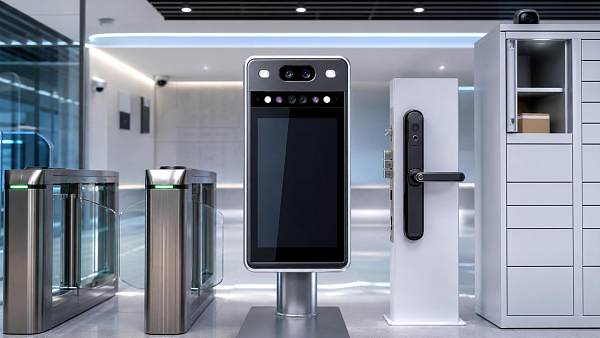
Liveness detection accuracy is often promoted as a single score. In practice, that number means little without test design, attack type, and operating threshold context.
For security hardware and access control deployments, measurement must reflect real conditions. A lab result can look strong while field performance still fails under lighting, user behavior, or spoof pressure.
That is why liveness detection accuracy should be read as a framework, not a headline claim. The useful question is always: accurate against what, and at what cost?
This matters in biometric locks, secure doors, turnstiles, parcel lockers, and restricted areas. In each case, risk tolerance, user flow, and fraud exposure are different.
Start with the Core Metrics Behind Liveness Detection Accuracy
The first step is separating recognition performance from presentation attack detection performance. Many buyers mix the two and misread the system’s actual resistance level.
In plain terms, recognition asks whether the system identifies the right person. Liveness asks whether the presented sample comes from a live human rather than a spoof.
Several metrics are essential when evaluating liveness detection accuracy:
- False Acceptance Rate, or FAR, measures how often unauthorized attempts are accepted.
- False Rejection Rate, or FRR, measures how often legitimate users are blocked.
- Attack Presentation Classification Error Rate shows how often spoof attacks pass as genuine.
- Bona Fide Presentation Classification Error Rate shows how often real users are rejected as attacks.
- Equal Error Rate gives a comparison point where acceptance and rejection errors meet.
These numbers interact. A vendor can lower one error rate by tightening thresholds, but that often raises another rate. There is no free performance gain.
So when a supplier advertises high liveness detection accuracy, threshold settings must be disclosed. Without that, comparisons across products are unreliable.
Why false rates matter more than a single percentage
A system claiming 99 percent liveness detection accuracy may still be weak. If that score hides high spoof acceptance under certain attacks, the result is commercially misleading.
For physical security, false acceptance usually carries the highest consequence. A rejected employee causes friction. A successful spoof can create theft, liability, or compliance exposure.
Still, false rejection cannot be ignored. In busy office gates or shared parcel locker banks, repeated rejection slows throughput and drives user workarounds.
Attack Types Change the Meaning of Liveness Detection Accuracy
A second key issue is attack diversity. Liveness detection accuracy is only meaningful when tied to a defined spoof set.
Basic tests often use flat printed photos or replayed videos. Those attacks are still relevant, but they are no longer the whole problem.
More advanced evaluations should include:
- High-resolution print attacks with texture variation
- Video replay on different screen technologies
- 3D masks or molded facial structures
- Partial occlusion attacks using glasses, hats, or cutouts
- Infrared or depth spoofing attempts against multi-sensor systems
A strong result against printed photos does not guarantee strong liveness detection accuracy against silicone masks or structured-light manipulation.
This also means test reports should state attack instruments, operator skill, and repetition count. Otherwise, two vendors may appear comparable while resisting very different threat levels.
Presentation attack sophistication matters
In low-risk residential settings, simple spoof resistance may be acceptable. In banking rooms, data centers, or restricted industrial zones, it is not enough.
The more motivated the attacker, the less useful generic liveness detection accuracy claims become. Testing must match attacker capability, not just marketing assumptions.
Environmental Variables Can Shift Liveness Detection Accuracy Fast
From recent deployment patterns, a clearer signal is environmental instability. Many systems perform well in controlled rooms, then degrade quickly in real entrances.
Lighting is the obvious factor. Direct sun, backlight, low lux, and nighttime reflections can all distort sensor input and reduce liveness detection accuracy.
But other variables are equally important:
- Camera angle and mounting height
- User distance and approach speed
- Face coverings, helmets, or medical masks
- Outdoor temperature and sensor condensation
- Crowded backgrounds and reflective surfaces
These factors are common in turnstiles, protective doors, and logistics lockers. That is why field calibration is often as important as the base algorithm.
In practical terms, liveness detection accuracy should be measured by scenario. Indoor office entry and outdoor delivery locker use should not share one undifferentiated score.
Operational throughput creates trade-offs
High-security systems often slow interaction to improve verification. That can help spoof resistance, but it may harm lane speed and user acceptance.
This is especially relevant in speed gates and access control turnstiles. A highly strict model with poor throughput can create queues, tailgating pressure, and operator overrides.
How to Compare Test Results More Rigorously
A useful evaluation process asks for structured evidence, not just brochure numbers. The goal is to understand whether liveness detection accuracy is transferable to deployment.
Ask suppliers to disclose the following test elements:
- Population size and demographic diversity
- Sensor type, firmware version, and camera configuration
- Attack categories and materials used
- Threshold setting and operating point
- Environmental conditions during testing
- Retry policy and user guidance steps
- Separate reporting for lab tests and field pilots
Without this detail, liveness detection accuracy cannot be normalized across vendors. It becomes a sales phrase rather than a security metric.
For procurement and technical review, side-by-side comparison tables help reduce ambiguity.
Real-World Limits of Liveness Detection Accuracy
No system delivers perfect liveness detection accuracy. That is the most important practical limit to accept early in a security design process.
Algorithms evolve, but attackers also adapt. Better screens, higher-quality masks, and more available biometric data continue to narrow defensive margins.
This means liveness should be treated as one layer in a broader control stack. It works best when paired with other measures.
- Device binding or secure credential linkage
- Access schedule rules and risk scoring
- Anti-tailgating sensors at gates
- Mechanical hardening of doors and lock structures
- Audit logs and exception review workflows
In other words, strong liveness detection accuracy reduces risk, but it does not eliminate system design responsibility. Security still depends on layered architecture.
Where this is especially important
The limit is more visible in high-value safes, secure facility entry, unmanned parcel locker networks, and mixed indoor-outdoor access points. These environments combine fraud risk with variable operating conditions.
As a result, decisions should focus on acceptable residual risk, not on chasing an unrealistic perfect score.
A Practical Way to Judge Liveness Detection Accuracy Before Deployment
A practical review usually works better than a purely theoretical one. The most reliable approach combines paper evaluation, controlled testing, and a limited field pilot.
A useful checklist looks like this:
- Define threat level by site, asset value, and attacker motivation.
- Match liveness detection accuracy targets to business tolerance for FAR and FRR.
- Test with site lighting, traffic patterns, and actual user behavior.
- Verify results against multiple spoof categories, not one demo attack.
- Check fallback procedures for rejection, network issues, and sensor obstruction.
- Review whether the biometric layer aligns with mechanical and operational controls.
That process produces a more honest view of liveness detection accuracy. It also helps avoid overbuying low-value features or underestimating attack exposure.
The bottom line is simple. Measure liveness detection accuracy through false rates, attack coverage, thresholds, and field conditions, then judge it in the context of the full physical security system.
When that discipline is applied, performance claims become easier to trust, comparisons become fairer, and deployment decisions become much more defensible.
Have questions about this sector analysis, or seeking best practices specific to your niche? Drop us a line below and let the senior consultants at MHLS assist you.
We respect your privacy. Your information is strictly confidential.
Recommended News
 Physical Security System Engineering: From Risk Assessment to System DesignUnmanned Terminal FellowExplore physical security system engineering, from risk assessment to integrated design, procurement and testing. Build a safer, more resilient facility.
 Apple Home Collection Smart Lock and Other Accessories Open for Preorder November 13Biometric Auth ScientistApple Home Collection preorders open November 13, 2026. Explore the LG smart lock’s Matter and Aliro support and what buyers should verify before ordering.
 Choosing Servo-Driven Flap Barriers: Throughput, Safety and Access ControlAccess Control StrategistServo-driven flap barriers can balance throughput, safety and access control. Discover how to compare lanes, test performance and choose with confidence.
 Parcel Locker Network Pricing: Setup Costs, Fees and Contract TermsUnmanned Terminal FellowCompare parcel locker networks pricing, from setup costs and recurring fees to contract terms. Discover hidden charges and choose the right model.
 JR East Plans UWB Walk-Through Gates at 40 Stations in Spring 2028Access Control StrategistJR East plans UWB walk-through gates at 40 stations in spring 2028. Explore the rollout timeline and what suppliers should watch.
 Bank Vault Security Standards: UL and EN Ratings ExplainedVault Structural ArchitectExplore bank vault security standards and learn how UL 608 classes and EN 1143-1 grades differ, what they test, and how to verify certification before you buy.
 Mechanical Lock Hardware Prices: What Buyers Should Budget for Bulk OrdersMr. Gideon CrossMechanical lock hardware price is just the starting point. Discover what drives bulk-order costs and how to compare supplier quotes with confidence.
 IndexBox Forecasts Steady Global Security Keypad Market Growth Through 2035Dr. Valerius ThorneGlobal security keypad market growth is forecast at 3.3% annually through 2035. Explore the smart home and replacement trends shaping demand.
 Choosing an Infrared Safety Sensors Manufacturer: What Buyers Should CheckUnmanned Terminal FellowChoosing an infrared safety sensors manufacturer? Compare safety evidence, integration, environmental performance and lifecycle costs before you buy.
 Choosing a Security Material Testing Service: What to Check for Lock and Safe MaterialsProf. Elara SterlingChoose a security material testing service with confidence. Learn what to check for lock and safe materials, from attack methods and accreditation to reliable reports.
 How Precision Anti-Pick Lock Cylinders Resist ManipulationSecurity Metallurgy ExpertDiscover how precision anti-pick lock technology resists manipulation, and learn what to check when comparing security features, test evidence, and everyday reliability.
 Dermalog Joins NIST FastCAP Program for Contactless Fingerprint TestingProf. Elara SterlingDermalog joins the NIST FastCAP program for contactless fingerprint testing. Discover what this means for biometric identification and digital identity.











