
Liveness Detection Accuracy: Which Test Metrics Matter in Real Access Control Use
In access control, liveness detection accuracy is rarely just a benchmark figure. It shapes spoof resistance, lane speed, false rejections, and operating cost across entrances, smart locks, turnstiles, parcel lockers, and restricted facilities.
That is why practical evaluation now focuses less on headline accuracy and more on whether test metrics reflect field conditions. A system that looks excellent in controlled trials may still struggle with glare, masks, print attacks, aging cameras, or heavy traffic peaks.
Across the SHPS landscape, this matters because biometric trust links directly with physical security performance. The same project may involve doors, speed gates, locker networks, compliance reviews, and security integration decisions, so liveness must be judged as part of a wider risk model.
What liveness detection accuracy really means in deployment
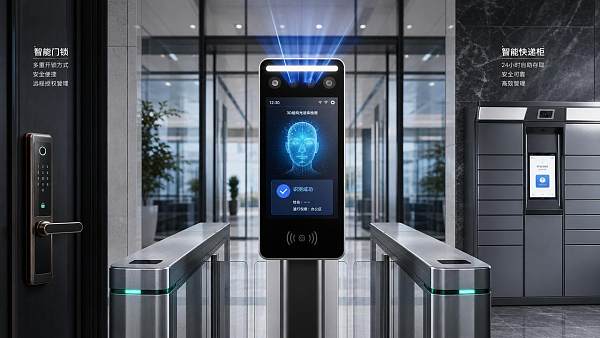
At a basic level, liveness detection checks whether a biometric sample comes from a real person rather than a spoof. In face systems, attacks may include photos, replay videos, masks, or synthetic presentations.
In access control use, accuracy is not one number. It is the balance between stopping presentation attacks and allowing legitimate users through with minimal friction.
This balance becomes critical in high-security hardware environments. A biometric smart lock on a private office door has different tolerance levels than a speed gate at a corporate lobby or a vault-area access point.
For that reason, liveness detection accuracy should be read as an operational profile, not a marketing claim. The main question is how the model behaves when risk, volume, and environmental noise all increase together.
Why the industry is paying closer attention
Face biometrics have moved into broader physical security infrastructure. They now appear in residential entrances, logistics locker terminals, office towers, data rooms, and integrated smart building platforms.
At the same time, attack methods have become cheaper and easier to reproduce. High-resolution displays, printed composites, deepfake-assisted replay, and better mask materials raise the baseline for meaningful testing.
A second pressure comes from system design. Many deployments combine liveness, face matching, mobile credentials, infrared sensing, and gate control logic. Weakness in one metric can create delays, security gaps, or excessive override handling.
This is one reason platforms such as SHPS track liveness alongside broader physical security issues. Biometric performance now affects procurement decisions in the same way material strength, lock durability, and compliance readiness do.
The test metrics that matter most
The most useful metrics are those that reveal trade-offs. A strong evaluation framework should show not only how often attacks fail, but also what operational penalty appears when the system is tuned more aggressively.
Attack detection metrics
APCER, or Attack Presentation Classification Error Rate, measures how often spoof attempts are wrongly accepted. This is often the first metric reviewed because it reflects direct security exposure.
Still, APCER alone can mislead. Some systems perform well against print attacks but weaken against replay video or 3D mask scenarios. Attack-specific breakdowns matter more than a single pooled score.
User-side error metrics
BPCER, or Bona Fide Presentation Classification Error Rate, shows how often genuine users are rejected by liveness checks. This has immediate consequences for throughput, guard intervention, and user acceptance.
In busy entrances, weak BPCER performance may create queues even when security is technically strong. For real access control, liveness detection accuracy must therefore be read together with user friction.
Threshold-sensitive metrics
Equal Error Rate can help compare models during development, but it is not enough for deployment decisions. Real sites rarely operate at an equalized point between user convenience and attack rejection.
More valuable are threshold curves showing how APCER and BPCER move when policy changes. These curves reveal whether a vendor can tune for a lobby gate, a staff-only corridor, or a higher-risk room.
Latency and failure-to-acquire
A technically strong model can still fail operationally if response time is slow. Liveness checks add processing stages, and every delay affects door release timing, turnstile flow, and remote locker interactions.
Failure-to-acquire is equally important. If the camera frequently fails to capture usable input under backlight, motion, or face-angle variation, the effective liveness detection accuracy in the field drops sharply.
Field conditions often matter more than lab scores
The strongest indicator of useful liveness detection accuracy is cross-condition stability. Lighting changes, partial occlusion, seasonal appearance shifts, and camera aging all test whether performance stays consistent.
Near-infrared support, 3D structured light, and multi-spectral capture can improve resilience, but only if test reports show how each technology behaves under realistic deployment constraints.
For example, a smart parcel locker terminal may face outdoor glare and user height variation. A turnstile in a transport hub may face constant motion and rapid sequential captures. A secure office entrance may require stronger spoof resistance than convenience.
These are not edge cases. They are normal operating conditions, and they should shape test design from the start.
How to read vendor results more critically
A good report explains dataset diversity, attack types, environmental conditions, and operating thresholds. If these details are missing, the published liveness detection accuracy may have limited decision value.
- Check whether the test includes print, replay, and 3D attack categories separately.
- Look for performance under low light, side light, and backlight conditions.
- Review capture distance, user motion, and camera placement assumptions.
- Ask whether masks, glasses, aging faces, and partial occlusion were included.
- Confirm whether the reported threshold matches the intended site security policy.
It also helps to compare standalone liveness performance with system-level outcomes. In practice, the user experience depends on the interaction between liveness, matcher confidence, gate logic, and fallback rules.
Where these metrics create business value
Stronger liveness detection accuracy reduces more than spoofing risk. It also improves planning quality for integrated physical security projects, where hardware, software, compliance, and maintenance costs interact.
In a biometric smart lock program, better rejection of presentation attacks supports trust in unattended access. In speed gates, balanced metrics help preserve fast flow without opening a social-engineering gap.
In logistics lockers, robust liveness can protect identity-linked pickup while limiting failed verifications. In higher-security rooms, it can work alongside mechanical barriers, audit trails, and layered authentication.
This broader view fits the SHPS perspective. Physical security decisions rarely depend on one component alone, and biometric metrics become more useful when linked with deployment reality, export requirements, and long-term reliability.
A practical evaluation path
The most reliable way to judge liveness detection accuracy is to build a site-specific test matrix. Start with the access point type, expected throughput, attack exposure, and environmental stress profile.
Then align the metrics with operational priorities. Some sites need lower APCER at all costs. Others need tighter control of BPCER and latency to avoid constant manual intervention.
A useful next step is to compare at least three conditions: controlled indoor baseline, realistic daily variation, and deliberate adversarial testing. Differences across those layers often reveal more than a vendor brochure ever will.
When reviewing options, keep asking a simple question: does the reported liveness detection accuracy still hold when the system is placed in the exact context where it must protect people, spaces, and physical assets?
That question creates a stronger basis for shortlisting solutions, refining test criteria, and deciding whether a biometric access layer is ready for real use.
Have questions about this sector analysis, or seeking best practices specific to your niche? Drop us a line below and let the senior consultants at MHLS assist you.
We respect your privacy. Your information is strictly confidential.
Recommended News
 Parcel Locker Network Pricing: Setup Costs, Fees and Contract TermsUnmanned Terminal FellowCompare parcel locker networks pricing, from setup costs and recurring fees to contract terms. Discover hidden charges and choose the right model.
 JR East Plans UWB Walk-Through Gates at 40 Stations in Spring 2028Access Control StrategistJR East plans UWB walk-through gates at 40 stations in spring 2028. Explore the rollout timeline and what suppliers should watch.
 Bank Vault Security Standards: UL and EN Ratings ExplainedVault Structural ArchitectExplore bank vault security standards and learn how UL 608 classes and EN 1143-1 grades differ, what they test, and how to verify certification before you buy.
 Mechanical Lock Hardware Prices: What Buyers Should Budget for Bulk OrdersMr. Gideon CrossMechanical lock hardware price is just the starting point. Discover what drives bulk-order costs and how to compare supplier quotes with confidence.
 IndexBox Forecasts Steady Global Security Keypad Market Growth Through 2035Dr. Valerius ThorneGlobal security keypad market growth is forecast at 3.3% annually through 2035. Explore the smart home and replacement trends shaping demand.
 Choosing an Infrared Safety Sensors Manufacturer: What Buyers Should CheckUnmanned Terminal FellowChoosing an infrared safety sensors manufacturer? Compare safety evidence, integration, environmental performance and lifecycle costs before you buy.
 Choosing a Security Material Testing Service: What to Check for Lock and Safe MaterialsProf. Elara SterlingChoose a security material testing service with confidence. Learn what to check for lock and safe materials, from attack methods and accreditation to reliable reports.
 How Precision Anti-Pick Lock Cylinders Resist ManipulationSecurity Metallurgy ExpertDiscover how precision anti-pick lock technology resists manipulation, and learn what to check when comparing security features, test evidence, and everyday reliability.
 Dermalog Joins NIST FastCAP Program for Contactless Fingerprint TestingProf. Elara SterlingDermalog joins the NIST FastCAP program for contactless fingerprint testing. Discover what this means for biometric identification and digital identity.
 Choosing Security Export Compliance Services: What Providers Should CoverMr. Gideon CrossSecurity export compliance services can help prevent costly delays. Discover what to look for in classification, licensing, screening, and documentation.
 European Security Compliance Standards for Safes: EN 1143-1 vs EN 14450Dr. Valerius ThorneExplore security compliance standards Europe buyers need to know. Compare EN 1143-1 and EN 14450 to choose the right safe with confidence.
 HID Global Acquires inepro ID to Expand RFID and BLE Access SolutionsUnmanned Terminal FellowHID Global acquires inepro ID to expand RFID and BLE access solutions for printers, smart lockers and shared devices. Explore what the deal could mean for your organization.











