
Liveness Detection Suppliers: What to Compare Before Choosing for Access Control
Choosing among liveness detection suppliers for access control is no longer a narrow biometric decision. It affects door security, user flow, fraud exposure, system uptime, and long-term integration cost across buildings, logistics sites, financial facilities, and restricted zones.
Many vendors present strong demo results, yet real deployment depends on more practical factors. The useful comparison starts with live attack resistance, image quality tolerance, latency, API fit, compliance evidence, and support discipline after installation.
In the broader SHPS landscape, liveness sits beside smart locks, turnstiles, protective doors, and access platforms. That context matters, because access control works best when biometric trust is evaluated as part of physical security infrastructure, not as an isolated software feature.
Why liveness detection has become a supplier-level decision
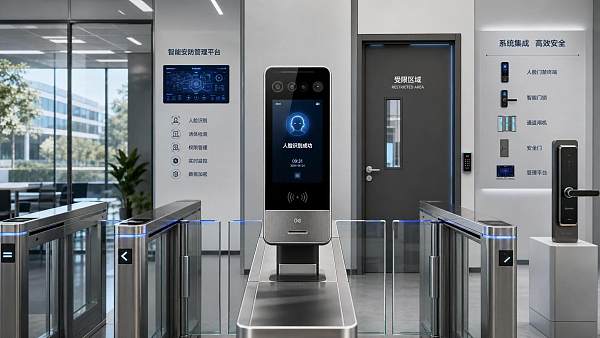
Access control has moved beyond simple face matching. A system now needs to decide whether the presented face belongs to a real, present person rather than a printed image, replayed video, silicone mask, or screen injection.
That is the role of liveness detection. In practice, it is the control layer that reduces spoofing risk before identity matching is trusted for entry.
This has become more important as 3D facial recognition, mobile credentials, smart building platforms, and unattended entry points expand. The supplier decision now shapes both security posture and operational convenience.
Liveness detection suppliers also vary widely in technical depth. Some build sensor-level capabilities, some provide SDK layers, and others package cloud services for easier rollout but with less control over deployment conditions.
What the technology should actually prove
A useful evaluation goes beyond asking whether liveness exists. The better question is what kind of evidence the system can produce under imperfect, high-traffic, or adversarial conditions.
Passive, active, and multi-signal approaches
Passive liveness checks texture, depth, reflectance, motion patterns, and light response without user prompts. It supports faster flow, which matters at gates, lobby lanes, and busy employee entrances.
Active liveness asks for blinking, turning, or other prompts. It can improve attack resistance, but it may slow throughput and reduce convenience in access control environments.
Some liveness detection suppliers combine RGB, near-infrared, depth sensing, or structured light. These multi-signal methods often perform better when lighting changes or spoof attempts become more sophisticated.
Metrics that matter more than headline accuracy
A single accuracy number rarely tells enough. It helps to review false acceptance rates for spoof attacks, false rejection rates for legitimate users, and performance splits by environment.
More useful evidence includes attack presentation categories, low-light performance, eyeglass handling, skin tone robustness, mask response, and camera distance tolerance. That level of detail shows whether testing reflects deployment reality.
How to compare liveness detection suppliers in real projects
In real procurement work, comparison becomes clearer when suppliers are judged across several operational dimensions rather than one technical promise.
Among liveness detection suppliers, the strongest candidates usually explain not only what works, but also where performance degrades and how tuning is handled after rollout.
Operational conditions often expose the real differences
Access control does not happen in a lab. Cameras face backlight, rain carried through entrances, reflective glasses, hurried visitors, rotating shifts, and changing enrollment quality.
That is why field tolerance matters so much. A supplier that performs well only with ideal framing may create false rejects, queue buildup, or bypass behavior at the door.
Environment-specific questions worth asking
- How does the model behave in strong sunlight, dim lobbies, and mixed indoor-outdoor transitions?
- Can it maintain speed when integrated with turnstiles, speed gates, or smart door controllers?
- What happens when users wear helmets, glasses, masks, or seasonal accessories?
- Does performance change across camera vendors, sensor resolutions, or firmware revisions?
- How are failed attempts logged for review, tuning, and incident analysis?
These questions are especially relevant in SHPS-related environments, where liveness may sit beside anti-tailgating sensors, biometric smart locks, elevator control, or locker access networks.
Integration quality is often more important than the algorithm alone
A strong liveness engine can still fail commercially if integration is weak. Access control projects usually involve readers, cameras, controllers, gateways, visitor systems, and event platforms from different vendors.
For that reason, liveness detection suppliers should be compared on software architecture as carefully as on spoof benchmarks.
Integration checkpoints
- Support for edge deployment where bandwidth is limited or privacy rules are strict
- Stable APIs for enrollment, verification, scoring, logs, and policy adjustment
- Compatibility with access control platforms, building systems, and audit workflows
- Clear fallback logic when liveness fails but access must still be managed safely
- Version management that avoids unexpected performance shifts after updates
This is where supplier maturity becomes visible. Better vendors understand the full chain from sensor capture to door release event, not just the biometric model.
Compliance, privacy, and evidence should not be left to the end
Liveness detection suppliers are often screened late on compliance, yet access control deployments may face strict requirements around biometric storage, consent, auditability, and cross-border data handling.
A technically impressive system becomes harder to scale if documentation is thin. Evaluation should include how templates are stored, whether images are retained, what encryption is used, and how logs support investigations.
Suppliers with credible readiness usually provide structured testing records, deployment references, and transparent statements about data processing boundaries. That reduces approval delays and downstream redesign.
A practical way to narrow the shortlist
The most effective comparison method is staged rather than purely paper-based. Shortlists become more reliable when technical review is followed by a controlled field pilot.
Start with use-case mapping. Define whether the target is a corporate lobby, residential entrance, restricted lab, financial room, parcel locker access point, or a high-speed gate line.
Then align the expected threat model. A low-risk office entrance and a high-security vault corridor should not use the same acceptance thresholds or the same supplier scorecard.
After that, request measurable proof instead of product claims. Ask for attack scenario results, edge hardware requirements, integration references, and support commitments during calibration.
- Build a weighted matrix covering security, latency, integration, compliance, and support
- Test at the intended distance, lighting range, and traffic level
- Include exception handling, not only successful recognition cases
- Review lifecycle cost, including tuning, updates, and device replacement
For organizations following SHPS market intelligence, this broader view is essential. Biometric trust, physical barriers, mechanical security, and connected infrastructure increasingly work as one system.
The best next step is to turn comparison points into a project-specific checklist. That makes discussions with liveness detection suppliers more concrete, reveals hidden risk early, and leads to a solution that matches both security intent and operational reality.
Have questions about this sector analysis, or seeking best practices specific to your niche? Drop us a line below and let the senior consultants at MHLS assist you.
We respect your privacy. Your information is strictly confidential.
Recommended News
 Physical Security System Engineering: From Risk Assessment to System DesignUnmanned Terminal FellowExplore physical security system engineering, from risk assessment to integrated design, procurement and testing. Build a safer, more resilient facility.
 Apple Home Collection Smart Lock and Other Accessories Open for Preorder November 13Biometric Auth ScientistApple Home Collection preorders open November 13, 2026. Explore the LG smart lock’s Matter and Aliro support and what buyers should verify before ordering.
 Choosing Servo-Driven Flap Barriers: Throughput, Safety and Access ControlAccess Control StrategistServo-driven flap barriers can balance throughput, safety and access control. Discover how to compare lanes, test performance and choose with confidence.
 Parcel Locker Network Pricing: Setup Costs, Fees and Contract TermsUnmanned Terminal FellowCompare parcel locker networks pricing, from setup costs and recurring fees to contract terms. Discover hidden charges and choose the right model.
 JR East Plans UWB Walk-Through Gates at 40 Stations in Spring 2028Access Control StrategistJR East plans UWB walk-through gates at 40 stations in spring 2028. Explore the rollout timeline and what suppliers should watch.
 Bank Vault Security Standards: UL and EN Ratings ExplainedVault Structural ArchitectExplore bank vault security standards and learn how UL 608 classes and EN 1143-1 grades differ, what they test, and how to verify certification before you buy.
 Mechanical Lock Hardware Prices: What Buyers Should Budget for Bulk OrdersMr. Gideon CrossMechanical lock hardware price is just the starting point. Discover what drives bulk-order costs and how to compare supplier quotes with confidence.
 IndexBox Forecasts Steady Global Security Keypad Market Growth Through 2035Dr. Valerius ThorneGlobal security keypad market growth is forecast at 3.3% annually through 2035. Explore the smart home and replacement trends shaping demand.
 Choosing an Infrared Safety Sensors Manufacturer: What Buyers Should CheckUnmanned Terminal FellowChoosing an infrared safety sensors manufacturer? Compare safety evidence, integration, environmental performance and lifecycle costs before you buy.
 Choosing a Security Material Testing Service: What to Check for Lock and Safe MaterialsProf. Elara SterlingChoose a security material testing service with confidence. Learn what to check for lock and safe materials, from attack methods and accreditation to reliable reports.
 How Precision Anti-Pick Lock Cylinders Resist ManipulationSecurity Metallurgy ExpertDiscover how precision anti-pick lock technology resists manipulation, and learn what to check when comparing security features, test evidence, and everyday reliability.
 Dermalog Joins NIST FastCAP Program for Contactless Fingerprint TestingProf. Elara SterlingDermalog joins the NIST FastCAP program for contactless fingerprint testing. Discover what this means for biometric identification and digital identity.











