
Near-Infrared Vein Recognition Accuracy Explained: Key Factors, FAR/FRR, and Real-World Limits
Near-Infrared Vein Recognition Accuracy Explained
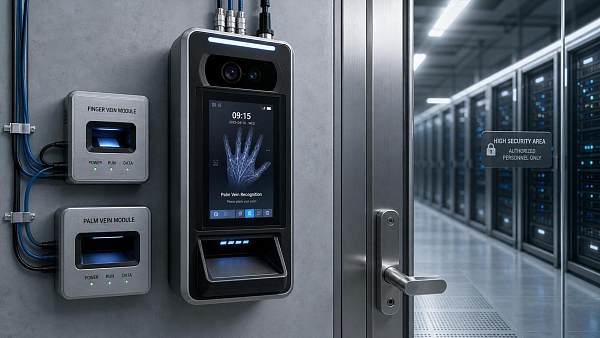
Near-infrared vein recognition accuracy is often marketed as a clean number. In practice, it is a moving result shaped by optics, skin interaction, algorithms, and operating conditions.
That matters in physical security. A biometric smart lock, access terminal, or safe interface must perform under rushed use, uneven lighting, and mixed user populations.
So the central question is not whether a vendor claims high near-infrared vein recognition accuracy. The real question is how that accuracy was measured, tuned, and maintained.
Near-infrared imaging works by illuminating tissue and capturing vein patterns that absorb light differently from surrounding areas. The method is harder to copy than many surface biometrics.
Still, hidden does not mean perfect. Image quality can drop fast when hand placement shifts, blood flow changes, or hardware alignment drifts over time.
This is why technical evaluation should move beyond brochure claims. It should examine the full chain from light source to final match decision.
What Near-Infrared Vein Recognition Accuracy Actually Measures
Near-infrared vein recognition accuracy is not one universal metric. It usually refers to matching performance under a chosen test protocol and a specific decision threshold.
A system first captures an image or short image sequence. Then software enhances contrast, extracts vascular features, and compares them with enrolled templates.
Any stage can affect the outcome. Weak illumination, poor segmentation, or unstable feature extraction can lower genuine match scores and raise failure rates.
That is why reported near-infrared vein recognition accuracy should always be read with three questions in mind:
- What biometric modality was tested, such as finger vein, palm vein, or dorsal hand vein?
- What sample size, demographic spread, and repeat interval were used?
- What threshold setting produced the published result?
Without those details, an accuracy figure has limited procurement value. It may describe ideal lab behavior rather than field performance.
The Key Factors Behind Accuracy Claims
Sensor resolution matters, but it is only one part of near-infrared vein recognition accuracy. Optical design usually has a bigger effect than many buyers expect.
Illumination Wavelength and Stability
Different wavelengths penetrate tissue differently. If the source is poorly selected or unstable, vein contrast becomes inconsistent across skin types and temperatures.
Optical Path and Image Noise
Lens quality, stray light control, and sensor noise shape the raw image. Weak optics can erase small vein branches that support strong template discrimination.
User Positioning
Hand angle, finger pressure, distance, and rotation all change the captured pattern. Guidance grooves or placement aids often improve near-infrared vein recognition accuracy more than software tweaks.
Physiological Variation
Blood circulation, hydration, aging, and ambient temperature can affect visibility. In cold environments, vein contrast may fall enough to slow recognition or increase retries.
Template Quality and Update Logic
Enrollment quality sets the ceiling. If the original template is weak, later comparisons inherit that weakness. Controlled multi-sample enrollment usually raises practical accuracy.
From a technical review perspective, these variables explain why two devices using the same biometric concept can produce very different results in deployment.
FAR, FRR, and the Threshold Trade-Off
No discussion of near-infrared vein recognition accuracy is complete without FAR and FRR. These are the two operating numbers that actually define system behavior.
FAR is the false acceptance rate. It measures how often an unauthorized person is incorrectly accepted.
FRR is the false rejection rate. It measures how often an authorized user is incorrectly rejected.
These values move in opposite directions. Tightening the match threshold lowers FAR but usually increases FRR. Relaxing it improves convenience but raises acceptance risk.
This trade-off is where many accuracy claims become misleading. A vendor may show excellent near-infrared vein recognition accuracy at a threshold that is unsuitable for high-security use.
In real procurement work, threshold selection should reflect the application:
- Data center or vault access usually prioritizes very low FAR.
- Residential or staff convenience systems may tolerate a slightly higher FAR for lower FRR.
- High-throughput access points must also consider speed and retry burden.
Equal Error Rate, or EER, is often cited as a summary point where FAR equals FRR. It is useful for comparison, but it is not the deployed setting.
That also means near-infrared vein recognition accuracy should be reviewed alongside receiver curves, threshold tables, and retry policy, not as a single headline percentage.
Why Lab Results Drift in Real Deployments
The biggest gap in biometric evaluation appears between controlled tests and real usage. Near-infrared vein recognition accuracy usually declines when systems meet uncontrolled human behavior.
Users do not always pause, align, or follow prompts. They may present wet hands, gloves removed in cold air, or fingers carrying dust, oil, or pressure marks.
Hardware aging also matters. LED output can drift, protective windows can scratch, and mechanical alignment can shift under heavy daily cycles.
Then there is workflow pressure. At shift changes or building entry peaks, even a small rise in FRR can cause queues, tailgating risk, and operator override behavior.
In other words, near-infrared vein recognition accuracy is not only a biometric issue. It is also a system design and operational discipline issue.
Practical Limits of Near-Infrared Vein Recognition
Near-infrared vein recognition is strong, but it has limits. Those limits should be understood early, especially in physical security projects with strict reliability targets.
Environmental Limits
Extreme cold, outdoor glare leakage, vibration, and dirt can degrade capture quality. Indoor protected deployments usually produce more stable results.
Population and Inclusivity Limits
Some users have weaker visible vein contrast. Others may have injuries, medical conditions, or occupational wear that complicates enrollment and repeat capture.
Throughput Limits
Near-infrared vein recognition accuracy may remain high while transaction speed drops. For turnstiles and busy staff entrances, that can still be unacceptable operationally.
Fallback Limits
Any biometric system needs a fallback path. If fallback control is weak, the practical security level may be lower than the biometric specification suggests.
This is especially important for smart locks, safes, vault interfaces, and restricted access doors where lockout and override rules affect actual risk.
How to Evaluate Accuracy Claims Before Purchase
A practical review of near-infrared vein recognition accuracy should combine data review, scenario testing, and maintenance assumptions. The goal is to test performance where failure really matters.
- Request FAR and FRR at several thresholds, not one accuracy number.
- Check enrollment method, sample count, and template update policy.
- Test under realistic temperatures, traffic peaks, and user positioning errors.
- Review retry logic, timeout settings, and fallback authentication rules.
- Confirm cleaning, calibration, and optical maintenance requirements.
- Look for long-cycle stability data, not only short pilot results.
For higher assurance projects, it also helps to compare near-infrared vein recognition accuracy against other modalities in the same workflow, including fingerprint and 3D face options.
The right choice depends on spoof resistance, user cooperation, installation environment, and throughput needs, not on a single benchmark line.
Final Takeaway
Near-infrared vein recognition accuracy is meaningful only when it is tied to operating thresholds, test conditions, user behavior, and system maintenance realities.
For technical decision-making, the most useful question is simple: how does the system behave when real users, real traffic, and real security policies are applied together?
When that question is answered clearly, near-infrared vein recognition accuracy becomes a usable engineering metric rather than a marketing claim. That is the standard worth buying against.
Have questions about this sector analysis, or seeking best practices specific to your niche? Drop us a line below and let the senior consultants at MHLS assist you.
We respect your privacy. Your information is strictly confidential.
Recommended News
 Parcel Locker Network Pricing: Setup Costs, Fees and Contract TermsUnmanned Terminal FellowCompare parcel locker networks pricing, from setup costs and recurring fees to contract terms. Discover hidden charges and choose the right model.
 JR East Plans UWB Walk-Through Gates at 40 Stations in Spring 2028Access Control StrategistJR East plans UWB walk-through gates at 40 stations in spring 2028. Explore the rollout timeline and what suppliers should watch.
 Bank Vault Security Standards: UL and EN Ratings ExplainedVault Structural ArchitectExplore bank vault security standards and learn how UL 608 classes and EN 1143-1 grades differ, what they test, and how to verify certification before you buy.
 Mechanical Lock Hardware Prices: What Buyers Should Budget for Bulk OrdersMr. Gideon CrossMechanical lock hardware price is just the starting point. Discover what drives bulk-order costs and how to compare supplier quotes with confidence.
 IndexBox Forecasts Steady Global Security Keypad Market Growth Through 2035Dr. Valerius ThorneGlobal security keypad market growth is forecast at 3.3% annually through 2035. Explore the smart home and replacement trends shaping demand.
 Choosing an Infrared Safety Sensors Manufacturer: What Buyers Should CheckUnmanned Terminal FellowChoosing an infrared safety sensors manufacturer? Compare safety evidence, integration, environmental performance and lifecycle costs before you buy.
 Choosing a Security Material Testing Service: What to Check for Lock and Safe MaterialsProf. Elara SterlingChoose a security material testing service with confidence. Learn what to check for lock and safe materials, from attack methods and accreditation to reliable reports.
 How Precision Anti-Pick Lock Cylinders Resist ManipulationSecurity Metallurgy ExpertDiscover how precision anti-pick lock technology resists manipulation, and learn what to check when comparing security features, test evidence, and everyday reliability.
 Dermalog Joins NIST FastCAP Program for Contactless Fingerprint TestingProf. Elara SterlingDermalog joins the NIST FastCAP program for contactless fingerprint testing. Discover what this means for biometric identification and digital identity.
 Choosing Security Export Compliance Services: What Providers Should CoverMr. Gideon CrossSecurity export compliance services can help prevent costly delays. Discover what to look for in classification, licensing, screening, and documentation.
 European Security Compliance Standards for Safes: EN 1143-1 vs EN 14450Dr. Valerius ThorneExplore security compliance standards Europe buyers need to know. Compare EN 1143-1 and EN 14450 to choose the right safe with confidence.
 HID Global Acquires inepro ID to Expand RFID and BLE Access SolutionsUnmanned Terminal FellowHID Global acquires inepro ID to expand RFID and BLE access solutions for printers, smart lockers and shared devices. Explore what the deal could mean for your organization.











