
Anti-Pick Lock Technology Explained: Pin Design, Tolerances, and Attack Resistance
Anti-pick lock technology sits at the intersection of precision engineering and real-world threat resistance. In mechanical cylinders, security is rarely created by one dramatic feature.
It comes from pin geometry, manufacturing tolerances, material stability, keyway control, and how the whole assembly behaves under manipulation. That makes this topic especially relevant across physical security markets.
For platforms such as SHPS, which track safes, smart locks, lock cylinders, protective doors, access control systems, and security infrastructure, anti-pick lock technology is not a niche detail. It is a practical benchmark for judging whether a cylinder can resist skilled, low-noise attack methods.
Why anti-pick performance matters now
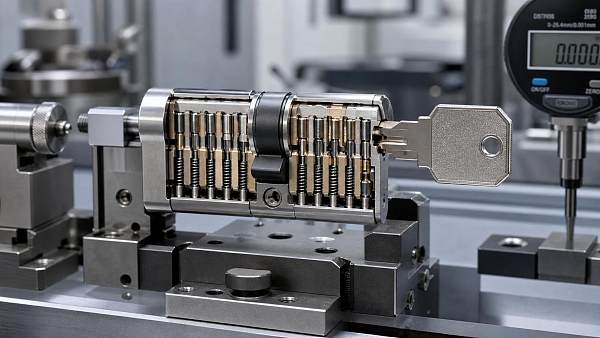
Mechanical cylinders still protect many critical entry points, even in projects that also use biometrics, mobile credentials, or cloud-based access management.
Residential doors, parcel locker compartments, server rooms, cash handling areas, utility cabinets, and internal facility doors often depend on a physical locking core as the last line of defense.
That is why anti-pick lock technology remains important. Picking attacks can be quiet, repeatable, and difficult to detect after the event.
Unlike brute-force entry, manipulation attempts target weaknesses in design consistency. If the cylinder provides clear feedback, overly generous tolerances, or predictable pin behavior, the attack becomes faster and more reliable.
This matters in procurement as well. Products may advertise anti-pick security, yet actual resistance can vary widely between similar-looking cylinders.
In broader security planning, the cylinder must also align with door strength, escutcheon protection, drilling resistance, key control, and maintenance quality. A strong cylinder inside a weak hardware set rarely delivers complete protection.
What anti-pick lock technology really includes
At a basic level, anti-pick lock technology refers to design measures that reduce an attacker’s ability to set pins, decode feedback, or reach the shear line through common manipulation tools.
This includes more than security pins. Effective resistance usually depends on the interaction between several components.
Pin design and false feedback
Security pins such as spool, serrated, mushroom, or hybrid forms are intended to create false sets and unstable feedback during picking.
When designed well, they increase uncertainty. When designed poorly, they may only add marketing value without materially extending attack time.
Tolerances and manufacturing discipline
Tight and consistent machining tolerances are central to anti-pick lock technology. If chambers, plug surfaces, pins, and springs vary too much, an attacker can read binding order more easily.
Inconsistent production can also create performance gaps between samples from the same product line. That is a serious issue for technical evaluation.
Keyway structure and tool access
Restrictive keyways limit the angle and movement of picking tools. Some cylinders combine narrow warding with side pins, sliders, telescopic pins, or interactive elements.
These features do not guarantee immunity, but they can significantly increase manipulation complexity and reduce tool compatibility.
How pin geometry changes attack resistance
Pin geometry shapes the feedback that attackers depend on. In conventional pin tumbler cylinders, each pin stack transmits force, friction, and positional clues.
Anti-pick lock technology works by making those clues less trustworthy.
A spool pin can create a false shear line. A serrated pin can trap the plug at multiple micro positions. A pin-in-pin structure can add sequencing complexity.
Blade displacement and slider-based mechanisms change the attack model even more, because the picker no longer deals only with vertical stacks.
Still, geometry alone is not enough. If spring force is weak, pin surfaces are rough, or chamber edges are inconsistent, the cylinder may leak useful information during manipulation.
That is why experienced reviewers look at the entire operating system rather than counting exotic pin types.
Tolerances are often the real differentiator
In many comparisons, machining quality separates serious anti-pick lock technology from decorative complexity.
A cylinder may include advanced pin features, yet still perform poorly if plug diameter, chamber spacing, pin length, or surface finish drift outside controlled limits.
Tolerances influence binding order, rotational feedback, spring response, and long-term wear. They also affect how the lock behaves after temperature shifts, contamination, or repeated use.
From a business perspective, this has direct consequences. A sample tested in a showroom may differ from delivered production, especially when quality control is weak.
For this reason, anti-pick lock technology should be reviewed at both design level and manufacturing level. Factory capability, process control, and consistency data matter as much as the cylinder cutaway.
Where these decisions matter in real deployments
Cylinder selection is not limited to front-door hardware. Anti-pick lock technology appears across several security layers tracked within the SHPS ecosystem.
- Protective doors and secure rooms, where covert entry resistance supports broader burglary-delay strategies.
- Smart locks with mechanical override cylinders, where digital convenience still depends on physical fallback security.
- Parcel locker systems and service compartments, where repeated public exposure increases manipulation risk.
- Commercial and mixed-use buildings, where key control and maintenance conditions vary across large estates.
- Financial or restricted facilities, where evidence-light bypass methods create insurance and compliance concerns.
In these settings, anti-pick lock technology should be judged alongside anti-drill inserts, hardened bodies, credential management, and door assembly integration. Isolated cylinder performance is only one part of attack resistance.
What to check during technical evaluation
A useful review goes beyond brochure language. The goal is to understand how the cylinder fails, not just how it is described.
Look for measurable resistance
- Check whether the product has relevant test evidence under recognized standards or credible internal protocols.
- Ask whether anti-pick lock technology is verified on production units, not hand-selected samples.
- Review cycle durability, because wear can reduce manipulation resistance over time.
Study the whole cylinder system
- Assess pin types, side elements, keyway restriction, spring quality, and plug materials together.
- Check whether anti-pick lock technology is combined with anti-bump, anti-drill, and key duplication control.
- Note serviceability, because contamination or poor lubrication can distort field performance.
Compare by use case, not by claims
A residential smart lock override cylinder does not face the same risk profile as a high-traffic access point, a parcel locker bank, or a secure records room.
The right anti-pick lock technology depends on attack exposure, maintenance conditions, and the value of the protected asset.
A practical way to move from interest to judgment
The most useful next step is to build a comparison framework. Start with the cylinder architecture, then map the design to real deployment risk.
From there, review tolerance control, independent testing, keyway restriction, and compatibility with the surrounding hardware set.
For organizations following SHPS coverage, anti-pick lock technology is best understood as one part of a broader physical security intelligence picture. It connects mechanical engineering, standards awareness, product consistency, and application fit.
That approach makes comparisons more defensible. It also helps identify which cylinders offer real attack resistance, and which only look secure in a catalog.
When the next review begins, focus on evidence, repeatability, and scenario fit. Those three filters usually reveal more than any headline claim about anti-pick lock technology.
Have questions about this sector analysis, or seeking best practices specific to your niche? Drop us a line below and let the senior consultants at MHLS assist you.
We respect your privacy. Your information is strictly confidential.
Recommended News
 Financial Facility Security: Choosing Vault Doors for Bank BranchesVault Structural ArchitectStrengthen financial facility security with the right bank vault door. Explore certification, installation, locking controls and maintenance before you buy.
 MACO Acquires Majority Stake in Fingerprint Access Provider ekeyProf. Elara SterlingMACO acquires a majority stake in ekey, bringing fingerprint access and door hardware closer together. Discover what the deal could mean for smart buildings.
 Physical Security System Engineering: From Risk Assessment to System DesignUnmanned Terminal FellowExplore physical security system engineering, from risk assessment to integrated design, procurement and testing. Build a safer, more resilient facility.
 Apple Home Collection Smart Lock and Other Accessories Open for Preorder November 13Biometric Auth ScientistApple Home Collection preorders open November 13, 2026. Explore the LG smart lock’s Matter and Aliro support and what buyers should verify before ordering.
 Choosing Servo-Driven Flap Barriers: Throughput, Safety and Access ControlAccess Control StrategistServo-driven flap barriers can balance throughput, safety and access control. Discover how to compare lanes, test performance and choose with confidence.
 Parcel Locker Network Pricing: Setup Costs, Fees and Contract TermsUnmanned Terminal FellowCompare parcel locker networks pricing, from setup costs and recurring fees to contract terms. Discover hidden charges and choose the right model.
 JR East Plans UWB Walk-Through Gates at 40 Stations in Spring 2028Access Control StrategistJR East plans UWB walk-through gates at 40 stations in spring 2028. Explore the rollout timeline and what suppliers should watch.
 Bank Vault Security Standards: UL and EN Ratings ExplainedVault Structural ArchitectExplore bank vault security standards and learn how UL 608 classes and EN 1143-1 grades differ, what they test, and how to verify certification before you buy.
 Mechanical Lock Hardware Prices: What Buyers Should Budget for Bulk OrdersMr. Gideon CrossMechanical lock hardware price is just the starting point. Discover what drives bulk-order costs and how to compare supplier quotes with confidence.
 IndexBox Forecasts Steady Global Security Keypad Market Growth Through 2035Dr. Valerius ThorneGlobal security keypad market growth is forecast at 3.3% annually through 2035. Explore the smart home and replacement trends shaping demand.
 Choosing an Infrared Safety Sensors Manufacturer: What Buyers Should CheckUnmanned Terminal FellowChoosing an infrared safety sensors manufacturer? Compare safety evidence, integration, environmental performance and lifecycle costs before you buy.
 Choosing a Security Material Testing Service: What to Check for Lock and Safe MaterialsProf. Elara SterlingChoose a security material testing service with confidence. Learn what to check for lock and safe materials, from attack methods and accreditation to reliable reports.











